Clark Art Exhibition on French Artists Who Challenged Realism
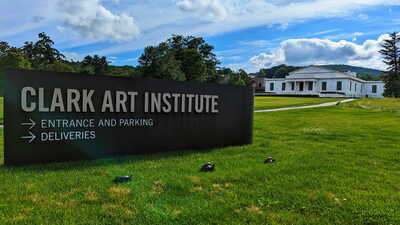 |
WILLIAMSTOWN, Mass. — The Clark Art Institute presents an exhibition on mid-nineteenth-century French artists who looked beyond realistic subject matter.
Their work encompasses the Gothic nostalgia of architectural photography, the social critique embedded in searing allegorical illustrations, and the literary connections with fantastical art. "Shadow Visionaries: French Artists Against the Current, 1840–70" is on view Dec. 20, 2025 through March 8, 2026 in the Clark Center lower level.
According to a press release:
Although Realism is often seen as the dominant aesthetic of mid-nineteenth-century France, many artists working outside of painting embraced imagination, dreams, and allegory instead. Working against the grain, figures such as Victor Hugo (1802–1885), Charles Meryon (1821–1868), and Rodolphe Bresdin (1822–1885)—and a roster of early photographers—offered an alternate vision anchored in memory, fantasy, and longing. These "shadow visionaries" recognized the potential of prints and photographs to construct a spiritual consciousness in the art of mid-1800s France.
"This exhibition gives us a wonderful opportunity to explore some of the treasures in our works on paper collection, along with a wide group of special loans from key French and American museums, through a fascinating lens," said Olivier Meslay, Hardymon Director of the Clark. "The style and subject matter of the works included in the exhibition explore the strange and the surreal, but above all, they provide a rare opportunity to appreciate the singular beauty of the work these artists were producing."
The exhibition features some 95 prints, drawings, and photographs drawn from the Clark’s collection along with important loans from the Metropolitan Museum of Art, New York; the Art Institute of Chicago; the National Gallery of Art, Washington, D.C.; the Museum of Fine Arts, Boston; the Yale University Art Gallery, and Musée des Arts Décoratifs, Paris among others.
"Realism has been a stubborn watchword for French art of the mid-1800s, so it is fascinating and surprising to examine a group of artists from that moment who embraced a radically different style. Despite (or maybe because of) feeling out of sync with their times, these artists found beautiful and original modes of expression, using printmaking and photography to represent interior visions rather than visible reality," said exhibition curator Anne Leonard, Manton Curator of Prints, Drawings, and Photographs.
Tags: Clark Art,