North Adams' Average Tax Bill Climbs $126; McCarron Sworn in as Councilor
The City Council on Wednesday (because of Veterans Day) approved a split tax rate that maintains a shift of 1.715 to business and commercial properties.
"I'd like to thank the assessment team for being here tonight. Great job to our new assessor and her mentor at Jessica Lincourt. Ciera [Dowling] did a great job, and we look forward to working with you in the future," said Mayor Jennifer Macksey. "And thank you all to the Council for your support."
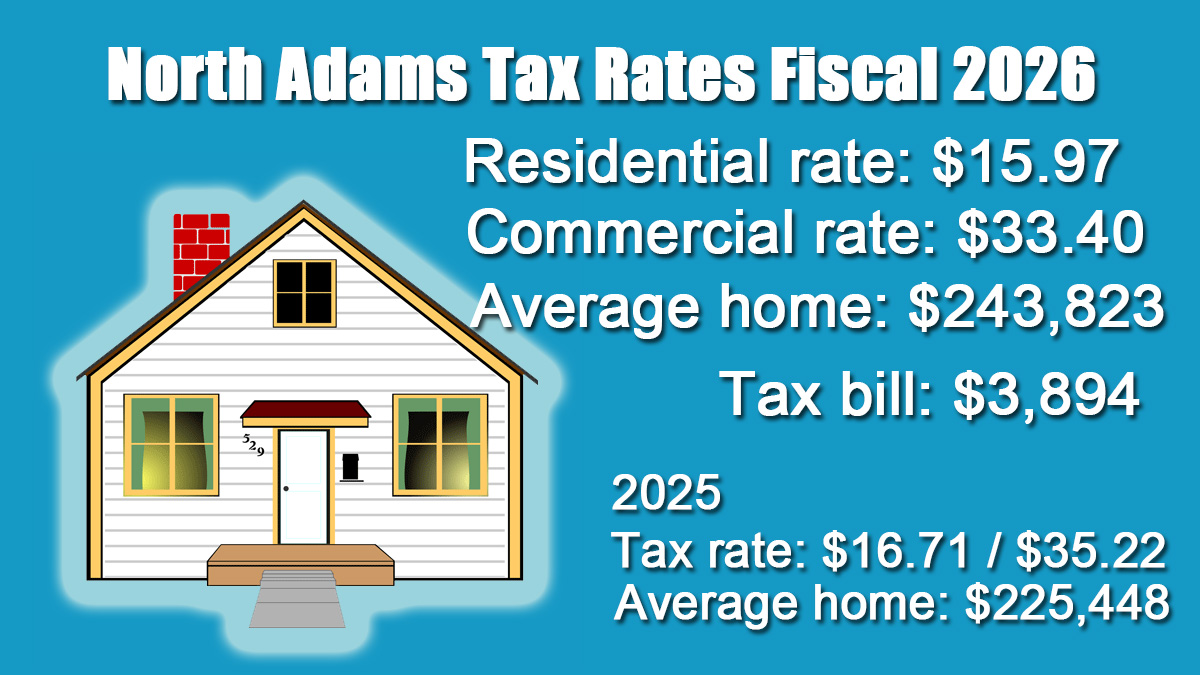
The average single-family home assessed at $243,823 would see a tax bill of $3,894. The value is up about $18,375, and the tax bill $126 218. (Corrected math error)
The residential rate for fiscal 2026 is $15.97 per $1,000 property valuation, down 74 cents from last year, and commercial/industrial is $33.40, down $1.82. Last year's rates were $16.71 and $35.22.
If the council adopted a single tax rate, it would be $19.48.
Residential makes up 65.5 percent of the city's tax levy, commercial and industrial about 23 percent, and personal property 11.5 percent.
Assessor Ciera Dowling noted that this was a recertification year, during which a comprehensive review and analysis of assessed values was done to ensure alignment with the current market.
"This occurs every five years and focuses on an in-depth sales analysis with [the Department of Revenue]," she said. "And this is in addition to our monthly reviews; the Division of Local Services reviews these values to certify that they are fair cash value."
Properties are assessed at a fair cash value, which is the price of the buyer and seller settle upon in an open market transaction at arms' length.
"I also want to note that the price of utility bills, gas prices and groceries do not play any role in assessed values or the market value," she said. "Some examples of non-arms' length sales are sales within a family, foreclosure sales or donations."
Total new growth was $15,734,521, of which $2,962,500 was in residential improvements and construction. Personal property accounted for another $12.5 million.
The city saw an increase in residential valuations of $91 million, for a total of $958,068,333. Personal property valuation was up $12.5 million. Several industrial properties were reclassified — one was a parking lot, another the former Crane building that is now a commercial lumberyard.
Dowling pointed to the completion of four condominium units at Greylock Works as contributing to the residential improvements and eight new units at 25 percent completion, plus a new single-family home and several other smaller buildings and improvements.
"So the residential total of new growth for the city is $2,962,500, which calculates to $49,503.38 for taxes," she said.
Dowling also went through a number of frequently asked questions, such as why values went up when no improvements were made, that multi-unit buildings and short-term rentals are taxed as residential,
and that exemptions are allowed certain nonprofits such as Massachusetts Museum of Contemporary Arts.
But, she added, businesses on the museum campus "are also subject to taxes on personal property associated with the businesses. In fiscal year 2025, we assess $43,437.88 in taxes for real estate and personal property."
Councilor Peter Breen, who has been beating the drum on developing a payment-in-lieu of taxes program, quizzed Dowling on the tax-exempt properties. Based on the commercial rate, he calculated the city could be getting $12 million from the 363 tax-exempt properties.
The total assessment of 900 Class, or tax-exempt properties, is $306,502,758. This includes city property such as schools, parks and City Hall. Breen asked for a breakdown that didn't include city properties.
Councilor Lisa Blackmer said it was more complicated and that the largest tax-exempt property was Massachusetts College of Liberal Arts and that the "state's not going to pay us anything other than what they already pay us through a very inappropriate formula that state already sets. Second one is going to be the hospital, but I don't really want to risk losing my hospital over getting some taxes."
A quick look at the city's assessor data show MCLA's property is valued at $78,776,685 and its foundation at $3.7 million; North Adams Regional Hospital is $35.7 million and the museum is $10.8 million.
Councilor Keith Bona noted residential values have increased close to 45 percent while commercial/industrial only about 13 since 2022.
"Obviously where it puts more in the residential it just has to do more with values, a house is selling considerably more than it did a few years ago, versus a commercial space is not jumped up too much," he said.
He asked about the increase in personal property; Macksey said the cyclical review picked up some of that, including second homes.
Councilor Andrew Fitch said his concern was the high commercial rate that he felt could be a hindrance to business growth. He thought it was something they should look at in the future.
"We're the fourth highest in the state in terms of commercial property tax rate, after Holyoke, Pittsfield and Springfield," he said. "What is concerning to me is the high commercial tax rate here. I don't see it necessarily holding us back. It just doesn't really feel like a good look if we want to be a business-friendly community."
In other business:
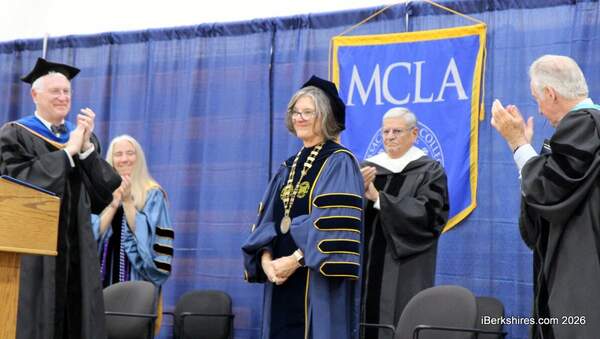
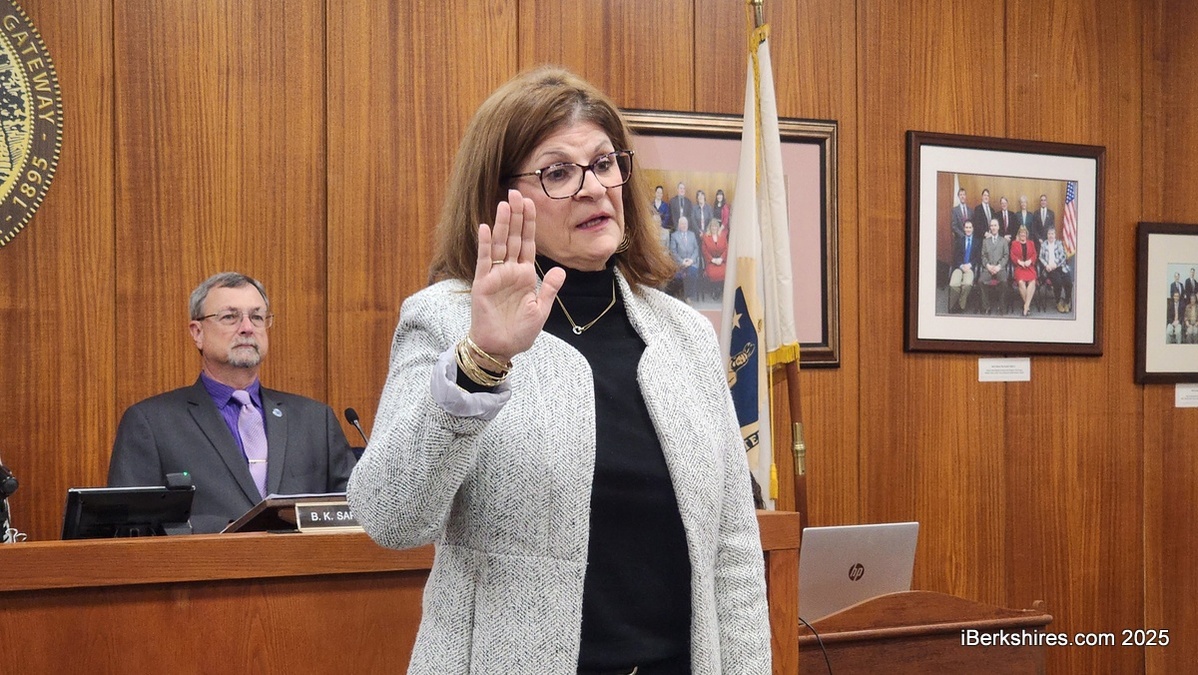
• Marie McCarron was sworn in to fill the seat left vacant by Deanna Morrow. The council had determined to take letters of interest from citizens seeking to complete the last four meetings of the term.
Joshua Vallieres and McCarron were the only applicants. Vallieres used his time to recommend McCarron, citing her "voracious determination" in earning 1,584 votes in last week's election to win a two-year term beginning January. McCarron said she had a hard time following that but said she was grateful for the support of the community.
• The mayor read a proclamation in support of International Transgender Day of Remembrance.
• The council also touched on the private nip bottle redemption that was piloted by Bona. He said the project has received enough donations to cover another 25,000 nip bottles and that more than 5,000 have been redeemed.
• The council discussed a communication from Fitch asking for ways to promote better transparency; it was referred to General Government for further talks and community input.
Tags: fiscal 2026, north adams_budget, property taxes, tax classification,