Health Secretary Updated on Patient Care at North Adams Regional
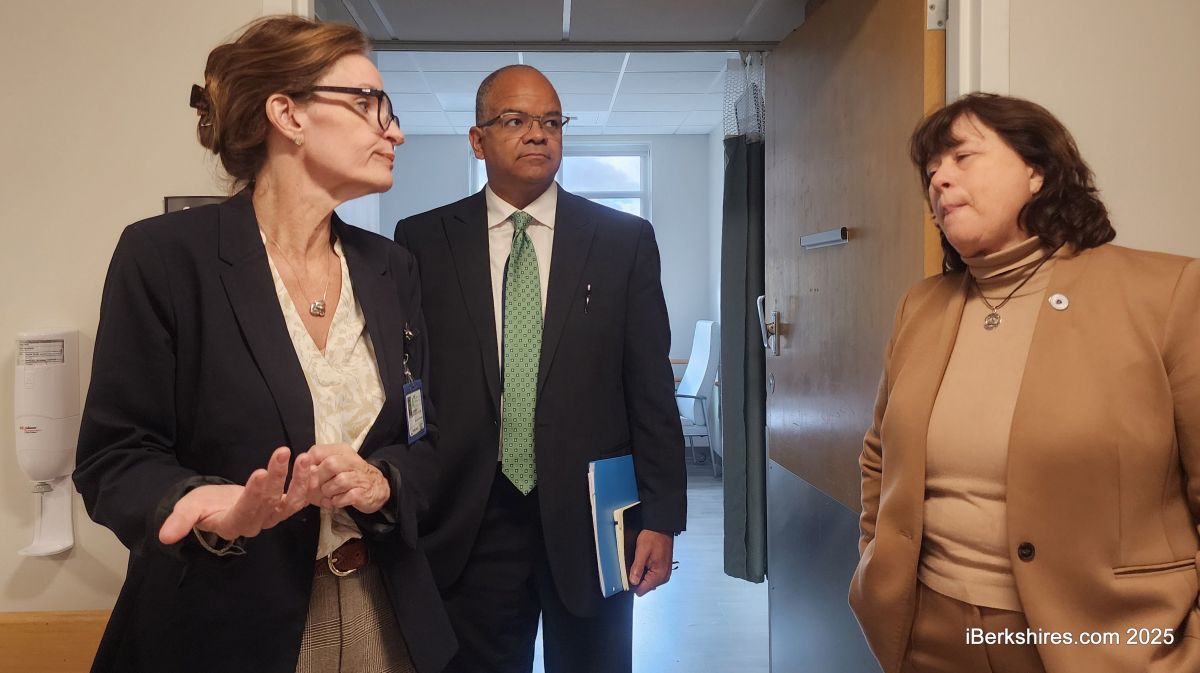
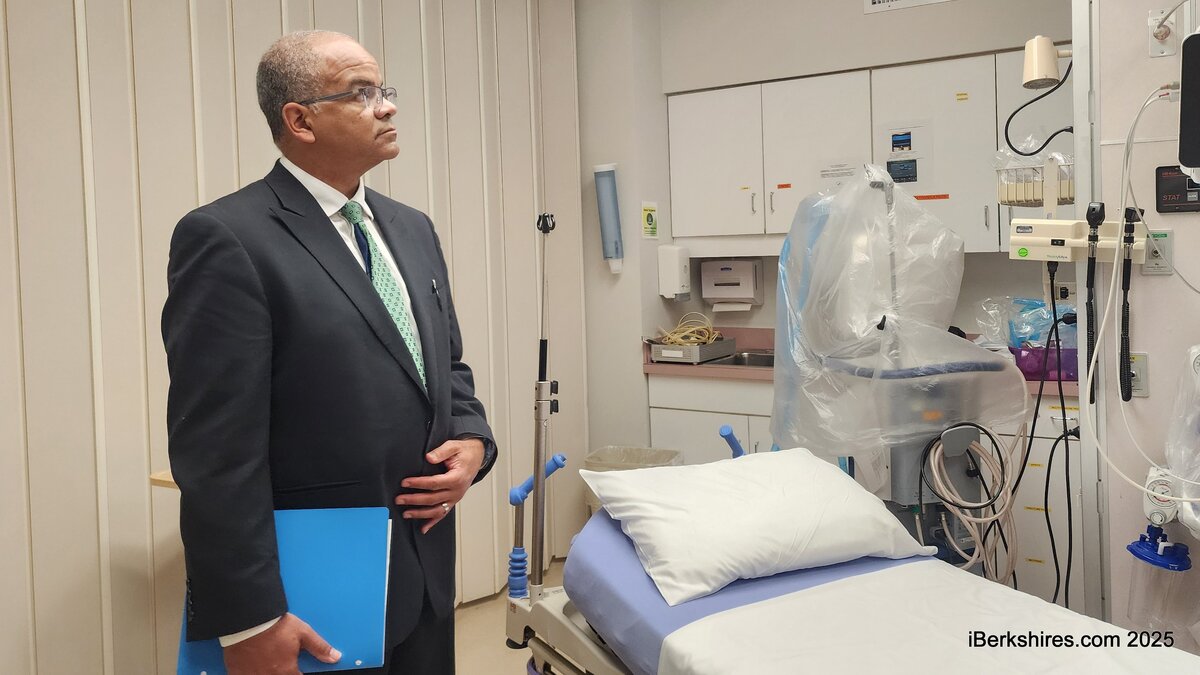
Health Secretary Kiame Mahaniah tours a private room with Jennifer Bach-Guss and state Rep. Tricia Farley-Bouvier.
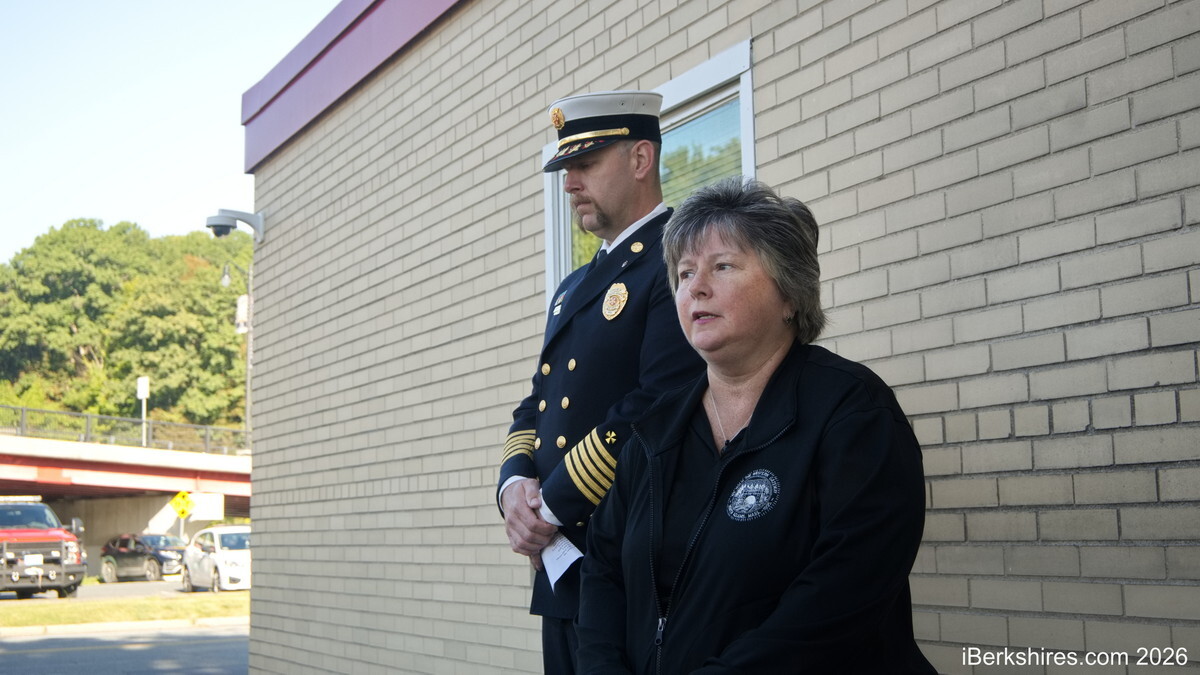
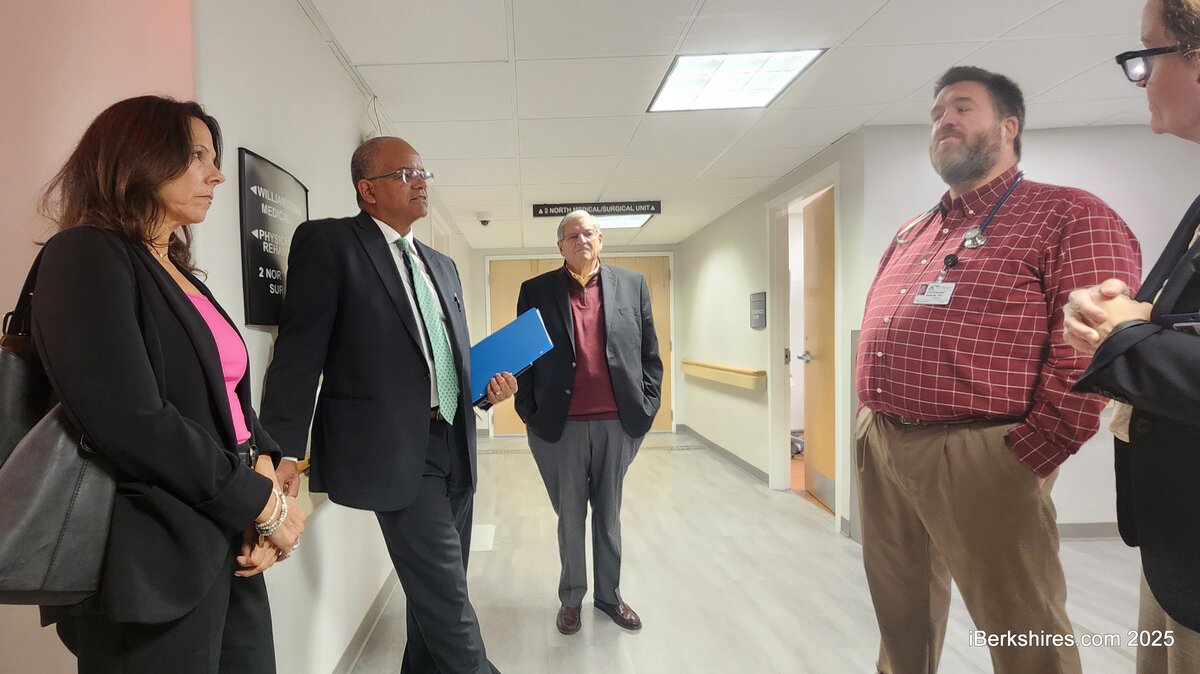
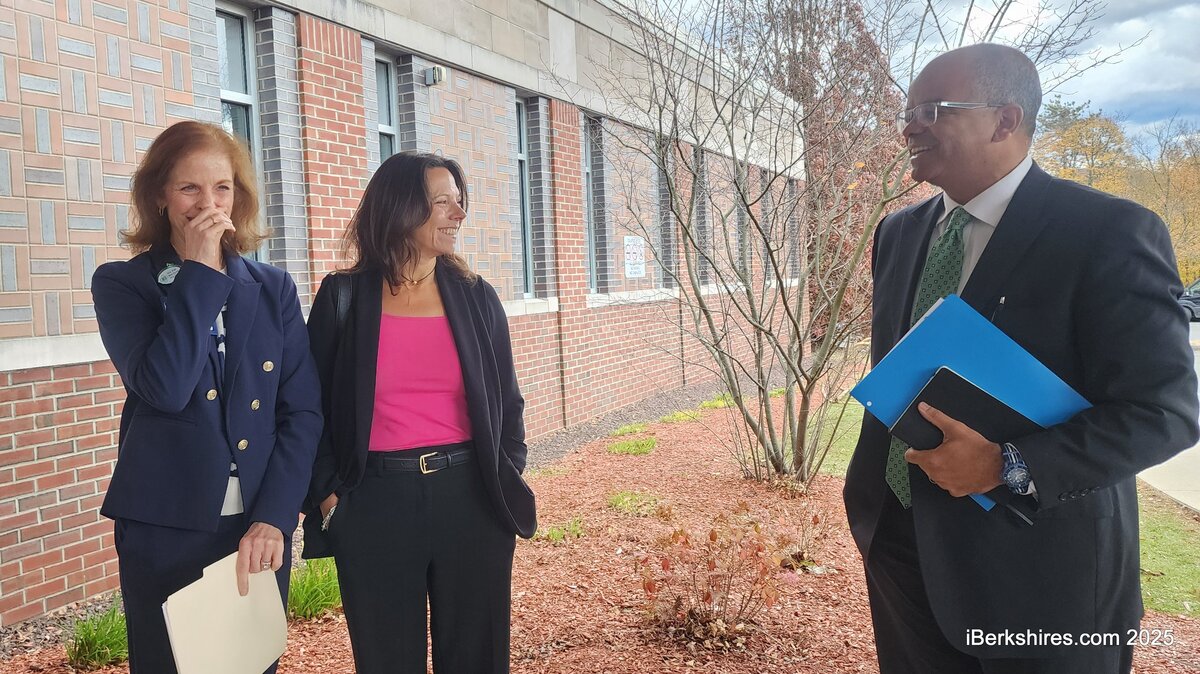
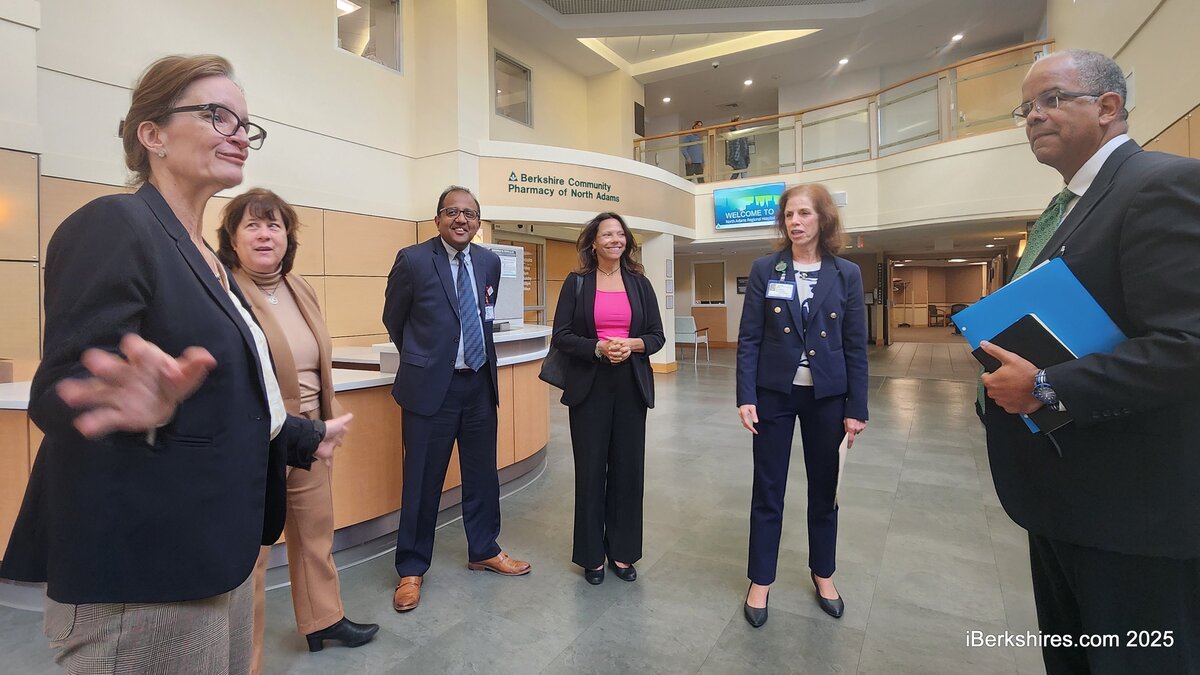
The secretary was in the Pioneer Valley and Berkshires this week for "food-focused" listening sessions, including in Pittsfield and North Adams, but found time to ask questions of officials at the critical access hospital and with mental health-care providers at the Brien Center in North Adams. He was accompanied by state Reps. John Barrett III, Tricia Farley-Bouvier and Leigh Davis.
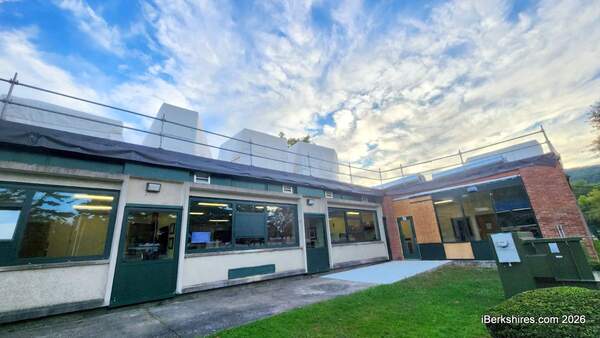
The reopening of the in-patient beds last year at the hospital filled a substantial health-care gap in North County. The hospital closed in 2014 when its parent organization declared bankruptcy; Berkshire Health Systems stepped in to purchase its assets, gradually reopen some of its services and, finally, received the designation of critical access last year to allow for inpatient beds.
"We have 24/7 coverage, position coverage available for our patients that are admitted," explained Jennifer Bach-Guss, associate nursing director. "We have observation patients in patient and swing [units], which is a rehab-type level that is available for patients who live in rural areas, so they don't have to go to nursing home facilities when it's not appropriate."
Patients in the swing units are kept to around three or four, and they may stay for a couple of weeks. They need to show improvement, and the hospital works out a discharge plan. Physical and occupational therapy is available for swing patients and the hospital has a geriatric certification in the Emergency Department, so therapists can do evaluations with patients struggling with mobility and walking and make referrals.
"The patients that are going to nursing home or acute rehab have a little bit different than need," she said. "And I'm hoping that as time goes on, the nursing homes and rehab facilities see that we're not so much of a threat. It's a very specific type of patient that we're looking to keep here."
The critical access designation puts a cap of four days on average, so some observational patients may stay seven days and others two, as long as the average is four.
"We've been averaging about 10 patients, including swing and observation," said Rodowicz. "We can only go up to 25 beds. We've got 18 because that's what the unit can handle with private rooms."
Dr. Christopher Abbott, a hospitalist who rotates with three other physicians, said NARH can't treat patients requiring an intensive care unit, so no intubated patients. Those requiring more intensive care are taken to Berkshire Medical Center in Pittsfield or life-flighted elsewhere from the hospital's helipad.
"They [BMC] know when we have a patient that is having a hard time here, that we need a quick transfer and are always very, very receptive to moving the patients through quickly," said Bach-Guss. "Our biggest, our most significant struggle is just with the transportation piece, is actually getting an ambulance here."
Farley-Bouvier did a "ding ding ding" to point out a problem that the Berkshire delegation has brought up time and again: transportation in the largely rural district. (Transportation to BMC 25 miles away was a hardship on patients, families and ambulances.)
"Yeah, that is something that's always in mind," agreed Bach-Guss. "When we are making a transfer out, either from the inpatient side or from the emergency department, what is the need in the community? Where are our ambulances and how long are we going to be sending them out?"
Rodowicz said a lot of underinsured people use the emergency department as a primary-care stop.
"We, like everybody else, have a significant shortage of primary care," she said. "Definitely throughout the whole county, people are using the emergency department. ... we think that what will be changed in the enrollment at the federal level and eligibility, that we'll see more utilization. We do also offer the same care regardless of coverage, with our primary care offices as does local FQHC [Federally Qualified Health Center, which is CHP.] We have the preponderance of primary care doctors either employed by BHS or by the FQHC. So both practices take everybody."
Rodowicz said it was something she'd like to discuss further with the secretary when they had lunch in the hospital's dining room. The health system is also in need of nurses and other health care staff.
Registered nurse Erynn Fletcher said, "I don't think we'll ever have enough. But, I mean, there is a really good availability of nursing programs."
Fletcher graduated from the licensed practical nursing program at McCann Technical School and then went through Berkshire Community College's RN program. She's been with the health system for two years.
"This is exactly the kind of nurse that we want to keep," Bach-Guss said. "Takes great care of patients, like being at the bedside and that we'll be able to train and precept the next generation of nurses."
"And not go to some big medical center in Albany?" said Mahaniah. Fletcher laughed that she already did with Baystate Medical Center in Springfield, but found the drive was too much and that as someone who's lived her whole life here, her familiarity can bring a lot of comfort to patients.
Rodowicz said there's a real need for community health and social workers and that BHS had used a three-year grant to address that work until the hospital reopened. Barrett told Mahaniah that she was the driving force in getting the hospital reopened; Rodowicz demurred that it was a team effort.
"I think one of the things that was most important to the community was that Darlene and the leadership team were very happy and willing to embrace that this is, this was North Adams Regional Hospital," said Bach-Guss. "And it reopened as North Adams Regional Hospital, and it was an anchor in the community, and that we maintained that identity and that connection."
Tags: NARH, state officials,