image description
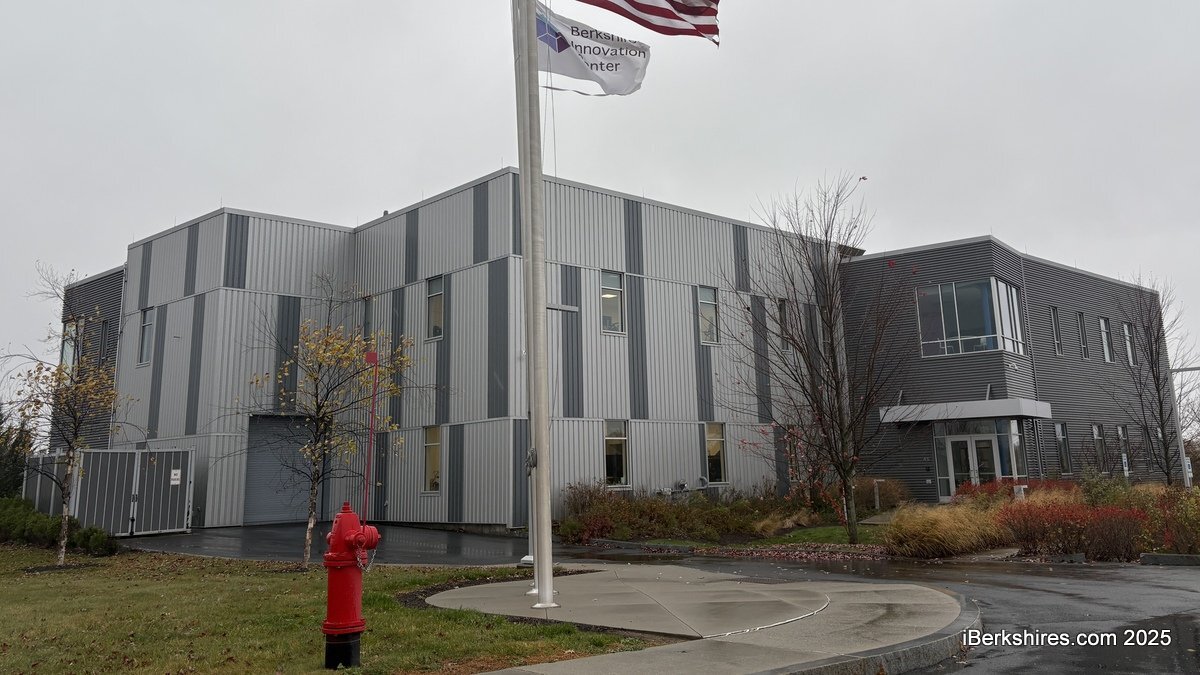
The BIC is pursuing funding for a 7,000-square-foot expansion in conjunction with an Amherst- optics company seeking to establish a tech lab here.

Berkshire Innovation Center Plans Expansion, New Manufacturing Tenant

By Brittany PolitoiBerkshires Staff
Print Story | Email Story

PITTSFIELD, Mass. — A total of $1 million in Pittsfield Economic Development Funds has been requested to build a tech hub at the Berkshire Innovation Center and help to move a company there. 

The BIC is seeking $500,000 to expand and Myrias Optics Inc. is seeking $500,000 to establish a manufacturing laboratory at the BIC. Last week, the City Council referred both requests to the Community and Economic Development subcommittee, which will meet on Nov. 10. 

The BIC plans to build a specialized nanoimprint lithography (NIL) lab to support the Massachusetts-based photonics company that is currently reliant on a space in Austria. The lab would be within a 7,000-square-foot "Advanced Manufacturing for Advanced Optics Tech Hub" expansion. 

"The proposed expansion of the BIC facility is essential to alleviating current space limitations and ensuring the continued growth of programming that serves the local community. With more space, BIC will be able to accommodate larger student groups through dedicated classrooms that reduce congestion and improve accessibility," the project narrative reads. 

"The expansion will also create more flexible environments for Pittsfield companies seeking training, collaboration opportunities, and research support. Importantly, this growth will preserve vital educational and meeting areas that would otherwise be repurposed into laboratory space, ensuring that Pittsfield residents continue to benefit from shared access to public innovation and learning spaces." 

The BIC opened in the William Stanley Business Park in 2020 and is 23,500 square feet. In addition to the $500,000 in economic development funds requested, the BIC is seeking $7 million from the state. 

Funds would be secured through a deferred-payment, forgivable 10-year promissory note and appropriate security. The applicant estimates that the hub could contribute between $113 million and $142 million to the state's gross product, and between $55 million and $69 million in labor income. 


"The goal of the expansion is to create a world-class optics and photonics cluster at the BIC, positioning Pittsfield and Western Massachusetts as a national leader in developing and producing compact, high-performance optical technologies," the project narrative reads. 

"Anchored by two rapidly growing companies — Myrias Optics and Electro Magnetic Applications (EMA) — the Tech Hub will provide shared infrastructure, business development support, and specialized workforce training. The Hub will accelerate innovation in advanced optical systems used in areas like telecommunications, aerospace, defense, medical technology, augmented/virtual reality, and data processing." 

Myrias Optics was born out of the University of Massachusetts at Amherst, and this facility is expected to "dramatically" advance the company's commercialization goals. The manufacturing lab would be modeled after the Austria facility and house NIL tooling, process engineering, and metrology operations. 

By 2028, the company plans to expand from 10 to 55 employees with an average annual salary between $112,000 $127,000, and the annual revenue growth from $1 million to $33 .7 million. 

"As Myrias grows, the BIC will become an anchor for advanced optical manufacturing and commercialization in Western Massachusetts, laying the foundation for a sustainable innovation ecosystem driven by private sector growth," the project narrative reads.

The funds would be released in increments of $250,000 when a 10-year lease is signed and ten full-time jobs with $65,000 minimum salaries are documented, $150,000 six months after an additional ten full-time employees are documented, and $100,000 six months after an additional ten full-time employees are documented. 

The BIC currently has an advanced optics lab in partnership with Electro Magnetic Applications Inc. and UMass Amherst. In 2019, Pittsfield gave EMA $140,000 in economic development funds towards the purchase of a space environment testing chamber and a tax agreement that will curb the taxes EMA pays to the city from fiscal 2020 to fiscal 2026. The agreement is valued at approximately $65,774.


Tags: BIC,   economic development,   GE fund,   
If you would like to contribute information on this article, contact us at info@iberkshires.com.

BRTA Focuses on a New Run Schedule

By Breanna SteeleiBerkshires Staff

PITTSFIELD, Mass. — The Berkshire Regional Transit Authority is still working on maintaining its run schedules after dropping the route realignment proposal.

Last Thursday's meeting was Administrator Kathleen Lambert's first official meeting taking over the reins; retiring director Robert Malnati stayed during a transition period that ended last month.

Lambert is trying to create a schedule that will lessen cancellations. There was a two-hour meeting the week before with the drivers union to negotiate run bids and Lambert is working with the new operating company Keolis, which is taking over from Transdev.

The board spoke about anonymous emails from drivers, which Lambert said she has not seen. iBerkshires was not able to see those letters, but has received some. 

"They were lengthy emails from someone describing themselves as concerning BRTA employee, and there was a signed letter from a whole group of employees basically stating their concerns. So, you know, to me, it was a set of whistleblowers, and that, what my understanding is that this really triggers a need for some type of process to review the merits of these whistleblowers, not going to call them accusations, but basically expressions of concern," said member Stephen Bannon.

A letter iBerkshires received spoke of unhappy drivers who were considering quitting because of decisions being made without "input from frontline staff," frustration and falling morale, and the removal of the former general manager shortly after Lambert came in.

Lambert said it's difficult to navigate a new change. She also noted many drivers don't want to do Saturday runs and it has been hard negotiating with drivers on the new runs.

"I would like you all to keep in mind that the process of change is super difficult. Transdev has been here for 20 years, and some of these drivers have never known any other operating company, the way some of the operations have been handled has been archaic," she said. "So getting folks up to speed on how a modern transit system works is going to be painful for them. So I don't want to say that I'm unsympathetic, because I am sympathetic, but I am trying to coax people along with a system that's going to seem very strange to them."

The board spoke about better communication between them and Lambert, citing cooperation will be best moving forward.

"There's just a lot of stuff in the air right now, and there are a lot of fires to put out to make this a coordinated effort. And if we don't keep our communications open and be straightforward, then you get blindsided about how you know the input that you could get from us about your position, and how you know what's going on in your direction, and we get blindsided. And I think that we have to make sure that this is a collaboration," said member Sherry Youngkin.

"Both sides have responsibilities, because in the long run, this advisory board is going to have to make decisions as to how we brought forward and if we've gone forward in a fair and helpful way. And I think that's hopefully what everybody is looking for also." 

Transdev and Keolis held a three-day recruiting event interviewing almost 40 candidates and offering jobs to eight, but only three stayed on to start training. Lambert said it was disappointing but she will keep trying to retain more people.

In her first report to the board, she noted that ridership dipped a little over 10 percent, but still remains higher than last year, adding that was because of cancellations of services because of the lack of drivers.

Like the last meeting, some of the advisory board members were torn over the start of the Link413 service, worried that the start of the service took drivers away and the numbers of riders are low.

Lambert, however, said the ridership has doubled from last month.

"As I've spoken before, we have, generally, a six-month adoption for brand-new service before you can really go in and evaluate, are you being successful based on the grant that my predecessor wrote along with the team for PBTA and RTA, we are ahead of schedule, which is pretty good, so I'm hoping that will continue to improve," she said.

Member Renee Wood said the board never approved the service, adding the only thing she could find in the minutes was a vote to accept the equipment. She said it was supposed to be put on the agenda to discuss.

"The Link413 service has been three years in the making. It's been a grant that was accepted and has been working with our partners, PVTA and FRTA, to put into place. So I don't have the entire history of how that process worked, but it's been three years in the making, and did we not understand that once we accept that grant that we were going to put in new service?" Lambert said.

The board discussed if Title VI, the Civil Rights Act, was followed with an accurate review and accurate amount of time for public comment period on the service changes and if its attorney should review if the  grant conditions were properly followed.

Lambert said changes had the 60-day comment period included in the proposed route realignment packet, giving the opportunity for the community to respond to that as well but will look into the legality of the situation with their attorney.

View Full Story

More Pittsfield Stories