North Adams Getting $3.1M in State Funding for Walnut St., Heritage Park
NORTH ADAMS, Mass. — The city's getting a downtown boost of $3.1 million for commercial investments, infrastructure and the stabilization of the collapsing Walnut Street.
Mayor Jennifer Macksey has been strongly hinting for weeks about the MassWorks money but hasn't been able to speak until the funds were announced by the state.
"Last year, I was a little bit disappointed with our One-Stop responses. But this year, we cleaned up," she said on Thursday.
The grants through the Community One Stop for Growth Program include:
- $250,000 from the Underutilized Properties Program and $50,000 in Site Readiness Funding for Western Gateway Heritage State Park;
- $50,000 in Real Estate Services Technical Assistance for the Mohawk Theater;
- $700,000 from the MassWorks Infrastructure Program for the downtown;
- $50,000 for North Adams Vacant Storefront Program to fill vacant storefronts
The news had been embargoed until Thursday, and the mayor was pleased that the announcement came with quotes from Gov. Maura Healey and Lt. Gov. Kim Driscoll. The formal announcement will take place next week and the mayor plans to bring her team there for the awards.
"This award cycle represents an extraordinary success for North Adams," she said in a statement. "These grants will allow us to make real progress on long-term priorities — from revitalizing our historic sites and supporting local business growth to improving the essential infrastructure that serves our residents every day."
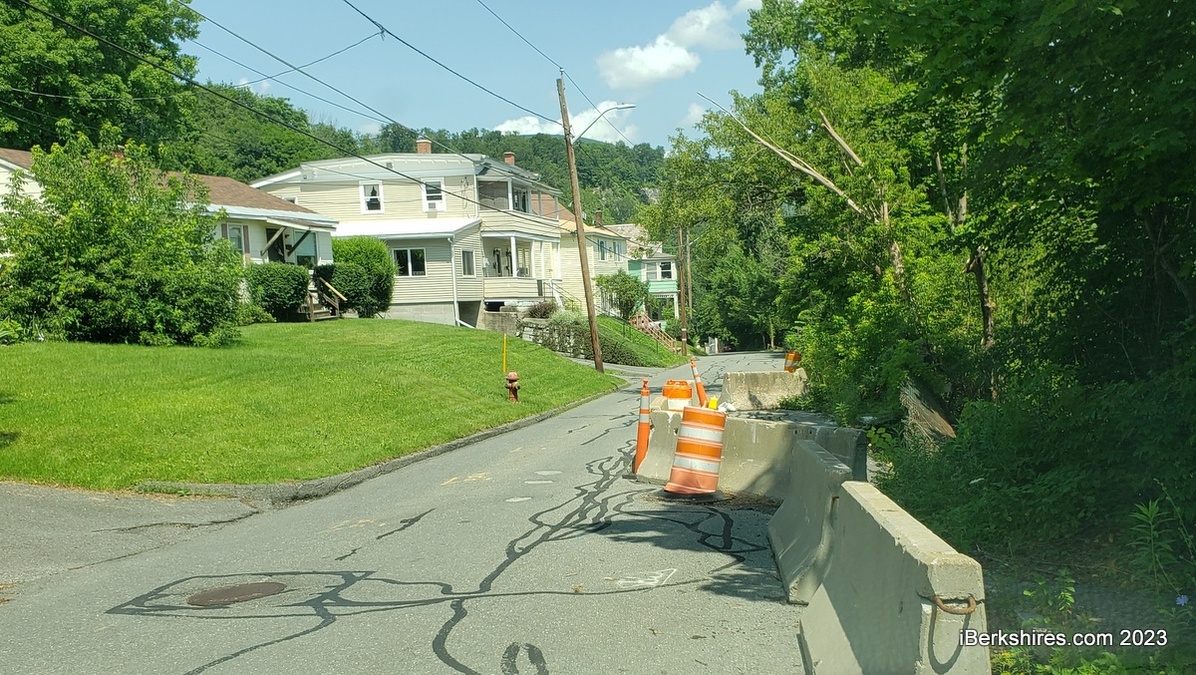
The bulk of the funding, some $2 million, will go toward the reconstruction of Walnut Street. The project is shovel-ready.
Neighbors have complained for years about the deterioration of the road above the 140-year-old dry-stack wall and the supporting infrastructure, particularly after the east edge gave way three years ago. The heavy rains contributed to the undermining of the roadway.
The city had looked to the Federal Emergency Management Agency for funding but was declined.
"We really had to sell this because you have to do a cost-benefit analysis. I think from a FEMA approach, they looked at it well, you could really shut down the road and it would only affect one or two houses, not understanding how the whole neighborhood uses that cut through," the mayor said. "We took the approach that, well, if it really comes down, we're going to wipe out State Street and anything below it. And I think that was really the compelling story that, yeah, it's a wall, but it's an important wall."
The funding for the dormant and decaying Heritage State Park will support architectural and engineering documents necessary to secure future construction funding for the repair and revitalization of the park's historic buildings. The additional Site Readiness Grant will help prepare the property for redevelopment and public use.
This will include replacement and repairs of windows, doors and paint. It will not include the closed Building 4, in which the state has a lifelong tenancy. The mayor said she is hoping that the state Department of Conservation and Recreation will work with the city to get the building back online.
"I've never had $1 really to play with at Heritage Park," she said. "We can do some serious design work and get going and use that as a launching pad for future."
One goal is to position the park as a visitor's center to tie in Mount Greylock to the downtown. This was the vision put forward by former Mayor Richard Alcombright more than a decade ago. (And would also require Walnut Street to be repaired.)
The downtown infrastructure improvements will be for water, sewer, sidewalks and streetscape on Eagle, Main and Marshall, including a major water main repair near the hotel.
"You know, everybody wants things repaired, but I just don't want to put that burden on the taxpayers," said the mayor. "So these are great opportunities for us, and with each of them, they're like building blocks."
The storefront program will provide $50,000 of refundable tax credits to property owners to fill vacant storefronts with new and expanding businesses, working with the North Adams Partnership.
"The Community One Stop for Growth program is all about funding the projects that are going to transform our state's cities and towns," said Healey in the announcement. "This year, we're proud to award North Adams over $3 million to help revitalize key projects that move the city forward. These investments will lead to a stronger economy, a vibrant downtown, and a brighter future."
The mayor said she was grateful to state leaders, state Rep. John Barrett III, state Sen. Paul Mark and MassDevelopment President Navjeet Bal, and particularly to Michael Nuvallie, who, while retired from the Community Development Office, has been working part-time to help shepherd the grants.
On top of the One-Stop grants, the city was also informed on Thursday that it will be receiving $50,000 for a bandstand project in Heritage State Park and that the Massachusetts Museum of Contemporary Art Foundation is getting $190,000 for elevator repair and modernization.
This funding is through the state Office of Travel and Tourism's Destination Development Capital Grant Program.
Tags: Heritage State Park, infrastructure improvements, state grant,