Clark Art Presents Lecture on Laurent D'arveiux and the King's Bible
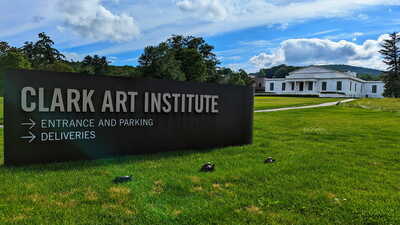 |
WILLIAMSTOWN, Mass. — On Tuesday, Nov. 4 at 5:30 pm, the Clark Art Institute's Research and Academic Program hosts a talk by Julie Harris (Independent Scholar / Clark Fellow) examining French consul Laurent d'Arvieux's 1683 discovery of a Hebrew Bible written and illuminated in medieval Iberia three hundred years earlier.
The talk takes places in the Manton Research Center auditorium.
According to a press release:
His purchase of the codex should not surprise us: d'Arvieux was one of a cadre of European diplomats and travelers in the middle east in search of so-called Oriental manuscripts, particularly early Bibles, to ship back to scholars and royal libraries in their home countries. What is surprising, however, is that in this case d'Arvieux was not content merely to acquire the Bible, which is now in the British Library in London, but also arranged for additions to be made to its decorative program. Three richly painted, full page illuminations comprising a Title Page (8r), a depiction of the Name of God (2r), and a list of the Ten Commandments (7v) are the most sensational of these additions. At first glance, these folios seem related to accepted decorative entities found in other illuminated Iberian Hebrew Bibles. In reality, they reveal an early modern Christian's notion of how a Hebrew Bible should be decorated.
Julie Harris is a specialist in the art of medieval Iberia. She has published on ivory carving, the fate of art and architecture during Reconquest warfare, illuminated Hebrew manuscripts, and the exhibition of pre-Expulsion Jewish ceremonial objects. Recent publications have appeared in Manuscript Studies, Ars Judaica, Gesta, the Journal of Medieval Iberian Studies, Medieval Encounters, and Abstraction in Medieval Art: Beyond the Ornament, edited by Elina Gertsman (2021). She holds a PhD from the University of Pittsburgh. In 2020 she was Center for Spain in America Fellow at the Clark Institute for her project on the decorative Carpet pages of Iberian Hebrew Bibles. Harris served as the Fishman Family Scholar in Jewish Studies at Vassar College in Spring 2024.
Free. Accessible seats available; for information, call 413 458 0524. A 5 pm reception in the Manton Research Center reading room precedes the event.