Clark Art Presents Concert By Davone Tines With Ruckus
Print Story | Email Story
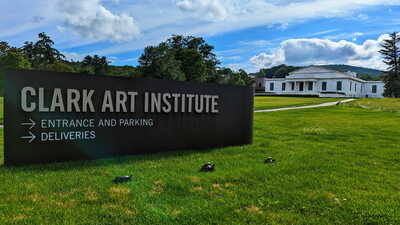
WILLIAMSTOWN, Mass. — The Clark Art Institute welcomes the return of renowned early music band, Ruckus, for a new concert performance featuring acclaimed bass-baritone Davóne Tines on Friday, Oct. 24. 
 
The group will present a new program, "What is Your Hand in This?," as part of a national tour leading up to the 250th anniversary of the Declaration of Independence. The performance takes place at 7 pm in the Clark’s Manton Research Center auditorium.
 
In a biting exploration of American revolutionary music, they time-travel through four centuries of reimagined songs, hymns, and ballads, along with a newly commissioned work by composer Doug Balliett and Tines. It’s an ideal meeting of artistic sensibilities, as Tines—whose eye-opening programming, vulnerable performances, and powerhouse vocals are “redefining the rules and rituals of classical music” (San Francisco Classical Voice)—meets the visceral might of Ruckus, known for combining a baroque band’s questing spirit with the grit, groove, and jangle of American roots music as “the world’s only period instrument rock band” (San Francisco Chronicle).
 
Tickets $25 ($20 members, $16 college students, $5 children 17 and under). Accessible seats available; for information, call 413 458 0524. For tickets and more information, visit clarkart.edu/events. No refunds.
If you would like to contribute information on this article, contact us at info@iberkshires.com.

Discrimination Against Muslim Americans Persists 25 Years After 9/11

By Stephen DravisiBerkshires Staff
WILLIAMSTOWN, Mass. — Dozens of Muslim Americans were among people killed in the Sept. 11 terrorist attacks.
 
Untold numbers of Muslim Americans have suffered countless acts of discrimination in their aftermath.
 
"Of course, you'll find several accounts of Muslims from all over the U.S. describing how they went from the unknown kids in the school to being stereotyped or ridiculed for their Muslim names," Sidra Mahmood recalled recently. "However, many Americans forget that the victims of 9/11 were also Muslim Americans.
 
"I can't forget the time when a classmate broke down in sobs when 9/11 came up in our classroom at the Islamic seminary I went to in Texas, because her father's best friend who was like an uncle to her, died on 9/11."
 
Today, Mahmood is a chaplain at Williams College. In 2001, she was growing up in Karachi, Pakistan, when terrorists forced two passenger jets into the Twin Towers in lower Manhattan and another plane into the Pentagon outside Washington, D.C. A third plane, which terrorists hoped to crash into a D.C. landmark, was brought down in western Pennsylvania after passengers and crew fought back against the hijackers.
 
The attacks, which ultimately claimed 2,976 lives, horrified people around the world, including in Mahmood's native land.
 
"I remember being aghast like anyone who witnessed the fall of the Twin Towers in real time," she said. "However, even as a child, fear gripped me about the possibility of war, especially once we learned that Afghanistan, right adjacent to Pakistan, would be attacked by the U.S. My mother had told me about the 1971 war between India and Pakistan when she remembered hiding in the dark after bomb sirens would go off in Punjab after intentional blackouts.
 
View Full Story

More Williamstown Stories