Climate Activists Demand That Polluters Pay
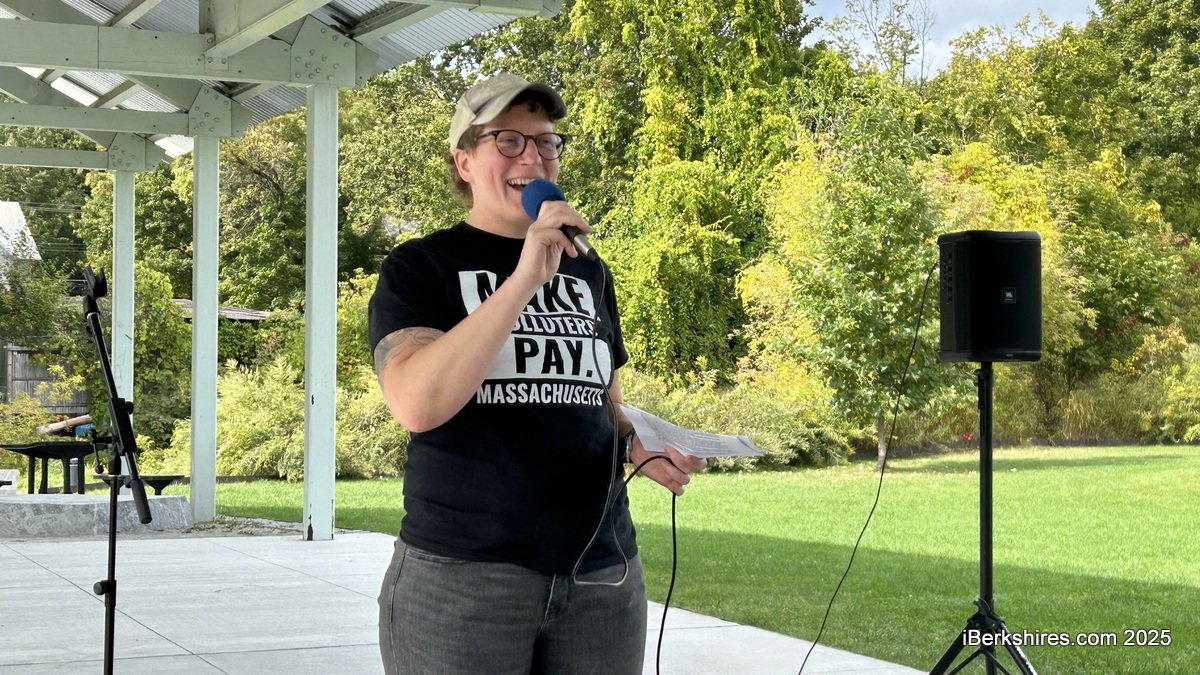
PITTSFIELD, Mass. — Climate activists are demanding that top polluters pay for their impact on the environment.
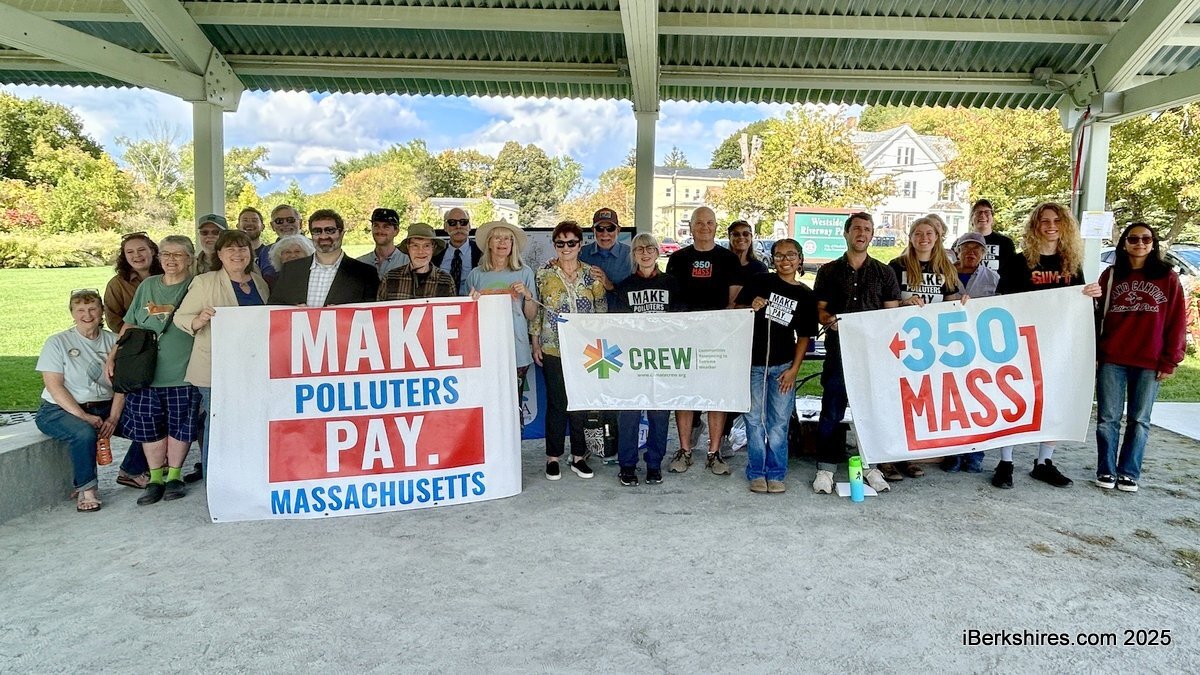
In late September, community members and elected officials gathered at the Westside Riverway Park for a "Bridges to the Future" event, featuring state Sen. Paul Mark, state Rep. Tricia Farley-Bouvier, and grassroots organizations from across the region.
"We're here to meet and learn about the awesome work that incredible change makers in this community are already doing to not only educate community members about the impacts of climate change, but are also doing the necessary work on the ground to help keep our communities safe from what is currently happening and what will only get worse," said Rachael Boyce, co-lead of the Massachusetts Make Polluter's Pay campaign.
"Especially in the face of the federal government that is withdrawing funds that are meant to keep our communities safe."
The Climate Change Superfund bill, or the Make Polluters Pay, would require the worst carbon emitters to pay for climate-related damages through a superfund. This is expected to generate billions of dollars over 25 years to be spent on projects that protect communities from the effects of climate change.
"As we have this political chaos at the federal level. This is a great reminder that we have a tremendous amount of power to enact real change on the local level," Boyce said.
"It does not matter who is in the White House."
She explained that there is not nearly enough money for the work that needs to be done, and policy solutions that have come forward ultimately fall on the taxpayer. Make Polluters Pay intends to fill the gap between resilience, adaptation, and mitigation work being done now and what needs to be done in the future.
"These are the world's top fossil fuel companies that have made trillions off the extraction and exploitation of our environment, and we are paying to clean up their mess," Boyce said.
"They will pay into this fund. It will cover, we're thinking, at minimum, $75 billion over the next 25 years to pay for climate adaptation and mitigation projects across the state, to help bolster the work that is already happening in your communities, as you're about to hear about today."
There were presentations from the Berkshire Environmental Action Team's Breathe Easy Berkshires air quality monitoring program, Greenagers environmental stewardship program, the Housatonic Valley Association, and 350 Mass Berkshire Node, and Sunrise Movement activists from Smith College and the University of Massachusetts Amherst.
"One of the problems with fossil fuel pollution, that we're finding is the most prevalent, whether it's from vehicles or from things like power plants, is particulate matter," Rosemary Wessel, of BEAT, explained while detailing the Breathe Easy Berkshires air quality monitoring program being conducted in Pittsfield.
"Particulate Matter is little specks of material that come when you burn fossil fuels, and there's this one type called PM 2.5, it's actually 2.5 microns, and that's small enough that it can get into the nasal passages, down into the lungs, and into the bloodstream. So it not only affects your lungs, but it can get into the bloodstream and get to other organs, and it starts to have some real consequences, especially over time. It's just a fraction of the width of a human hair."
Erik Reardon, of the Housatonic Valley Association, pointed to the $20 million removal of the Bel Air Dam as an example of the price tag on climate resilience projects. He also cited the 2023 torrential flooding in North Adams that caused more than $4 million in damage to upwards of 20 streets and roads.
He cautioned, "Flooding isn't just a distant worry. It's happening here in Berkshire County, and it's happening with increasing frequency."
"Unfortunately, part of what makes the Berkshire so special also tends to make us uniquely vulnerable in our geography, our topography. We have steep hillsides of the Taconic mountains to our west, with the Berkshire hills to our east," Reardon explained.
"During major storm events, these headwater streams rise, they fill up, they flow down into valley bottoms, where a lot of our towns and communities are located, and we've been, for about two centuries, meddling with the course of rivers as well. We've been straightening them. We've been disconnecting them from their floodplains. That tends to make them less resilient, less able to naturally store and absorb flood water, and so much of our infrastructure, our roads, our culverts, our dams, were built for storms of the past. They are not ready for the climate reality that we know we are facing today."
He pointed to nature-based solutions such as reconnecting floodplains, stabilizing river dams, and keeping culverts and bridges in good shape. While partnering with local towns, HVA has found that a new, 10-foot culvert costs around $800,000.
Legislators pushed for homegrown solutions in Massachusetts, citing federal uncertainties.
Mark said the idea now is to invest in the next four to eight years, "invest in ourselves, invest in our future, and invest in our sustainability."
"The federal government has abdicated its responsibility to pretty much everything, but certainly to progress in the environmental sector and in sustainability and green jobs and renewable energy. And it's a problem, and it's probably a bigger problem than we all realize," he said, explaining that the best-case scenario the United States can hope for is that more climate-friendly candidates win seats in Congress next year.
"... The best we can hope for is three years of less harm happening, because nobody federally is going to be helping us at all. And so the problem with that is, assuming this administration does end in four years and someone more committed to our future and our green renewable future takes office, they're still going to have a lot of work to do to get us back on track so we've been set back at least six to 12 years, and we have to think seriously about what that means all of us as a community, and then all of us in state government specifically."
In Massachusetts, if the federal government is no longer a reliable partner, Mark said that doesn't mean the commonwealth will give in or give up. He explained that Massachusetts knows what it cares about from a philosophical, political, and ideological point of view, and how to have a healthy, green, sustainable state.
"Over the last couple of years, we have seen so often climate events that have become more and more frequent happening, and they're happening here in Western Massachusetts, where most of the communities I represent do not have the resources on their own to make a difference, to make an impact without significant help," he said.
"So the more we can do as a commonwealth, as a state of Massachusetts, to take ownership on our own and make sure we're doing the right thing, the more important it can be."
He cited Pittsfield's pollution from General Electric's former presence as a classic example of why the Climate Superfund is important.
"They took what they wanted, they polluted what they wanted, and they left. And there's been some recourse, and there's been some ability to hold them accountable, but for the most part, we've been on our own," Mark said.
"We can't allow that to happen. We need the people that are causing this, the organizations that are causing this, to be partners into the short, medium, and long term, on helping make sure that we are able to sustain our own infrastructure, our own future, and our own energy future as well."
He has been working on legislation to establish a Green Bank so there is funding available for renewable projects.
Farley-Bouvier added, "We're pretty sick and tired of having people make bajillions of dollars and then we have to clean up their messes, and that's what this bill does," speaking about the Make Polluters Pay bill.
She pointed to increasing environmental disasters and extreme weather events happening as a result of climate change, explaining that people have profited from causing it.
"And so this is something that we are doing to reduce it," she said.
"We are not relying on the federal government to send us those dollars to do it, but we're we have homegrown solutions here in Massachusetts, so for that, that's why this bill does make a lot of sense."
The event was hosted by the Make Polluters Pay campaign, in partnership with BEAT, 350 Mass Berkshire Node, Housatonic Valley Association, and Food & Water Watch.
Tags: climate change, pollution,