Pittsfield Council OKs Short-Term Rental Regulations
PITTSFIELD, Mass. — The city has created regulations for short-term rentals, allowing them for 150 days of the year.
Last week, the City Council approved a zoning amendment that allows the operation of short-term rentals and a licensing process. Popular STR companies such as Airbnb and Vrbo provide a marketplace for units that are rented for 30 consecutive days or less.
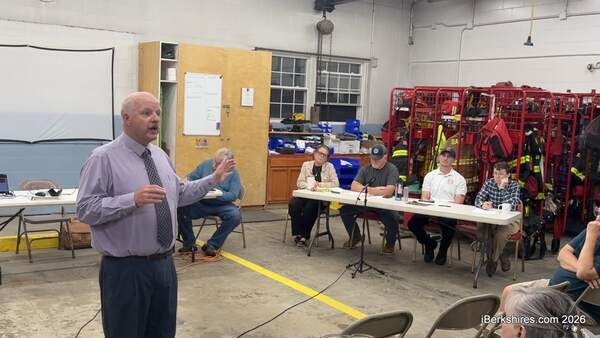
"If you complain about a short-term rental, right now, there is no ordinance, so if you make a zoning complaint, the zoning enforcement officer, our building commissioner, will say, 'There's no ordinance. I can't do anything about this complaint.' He'll drive out to the property, look at the house, say, 'Hey, that's a house. Is it a short-term rental? I don't know. We don't know. We don't have any definition of what a short-term rental is,'" City Planner Kevin Rayner explained.
The complaint would then end up at the Zoning Board of Appeals, where they are "put in a tricky situation," he said, because the city was without formal guidance.
The ordinance gives a definition for short-term rentals and related terms, creates a process for licensing, and provides a standard for the enforcement of any issues. The City Council sent it to the Ordinances and Rules subcommittee, which added a special permit criterion for additional STR units allowed if the original is owner-occupied.
"Other than that, the petition is largely unchanged from the last time the council has heard it," Rayner said.
Ward 2 Councilor Brittany Noto recognized the need for this, "because right now we have sort of this black hole of deregulated activity happening," she said.
Noto had questions about the enforcement of a 150-day cap for rentals, and it was reported that the city will rely on some good-faith reporting and attention from several different departments.
Rayner said there will be dual enforcement, with zoning handled by the building commission and the licensing handled by police, fire, health, and building departments, who would then hand enforcement action to the licensing board.
"The idea here is that there's a lot of different evidence that can go into whether a short-term rental is out of line or not," he said.
"And it's kind of not hard evidence that you can prove, but all these factors go into the Licensing Board's determination that the short-term rental is acting out of order and needs to have their license suspended or restricted."
Noto also had concerns about state tenant laws, in which it takes seven consecutive nights of sleep in place to create a tenancy, overriding local ordinance.
Councilor at Large Alisa Costa cited a recent study from the University of Massachusetts' Donahue Institute that showed that since 2004, 23 percent of Pittsfield home sales have been to investors. She said, "Not all investment is negative," but housing is a critical issue for the city.
"We have a huge shortage of housing in Berkshire County and across the region, even as our population is declining, because we have many more households than we used to have," she said.
"So we need a lot more housing, and we should be concerned about this, and we should keep track of it."
Costa observed that it doesn't take an STR operator in Berkshire County as long to earn the equivalent of a month's expenses as it would in other parts of the state.
Ward 6 Councilor Dina Lampiasi said she unsuccessfully proposed a 90-day cap at O&R.
"As we're talking about the camping ban ordinance, which is tied to so many other social problems that we have in the city that are actually national problems, we have a very real issue of housing, and this is not helping our housing," she said.
"I'm concerned about it, and I would like for us to have a lower threshold there."
She again unsuccessfully motioned to change it to 90 days, but said, "I see no reason not to support it, and I think it's an indicator of how invested we are in addressing the systemic problems here in our city."
Tags: ordinances, short-term rentals,