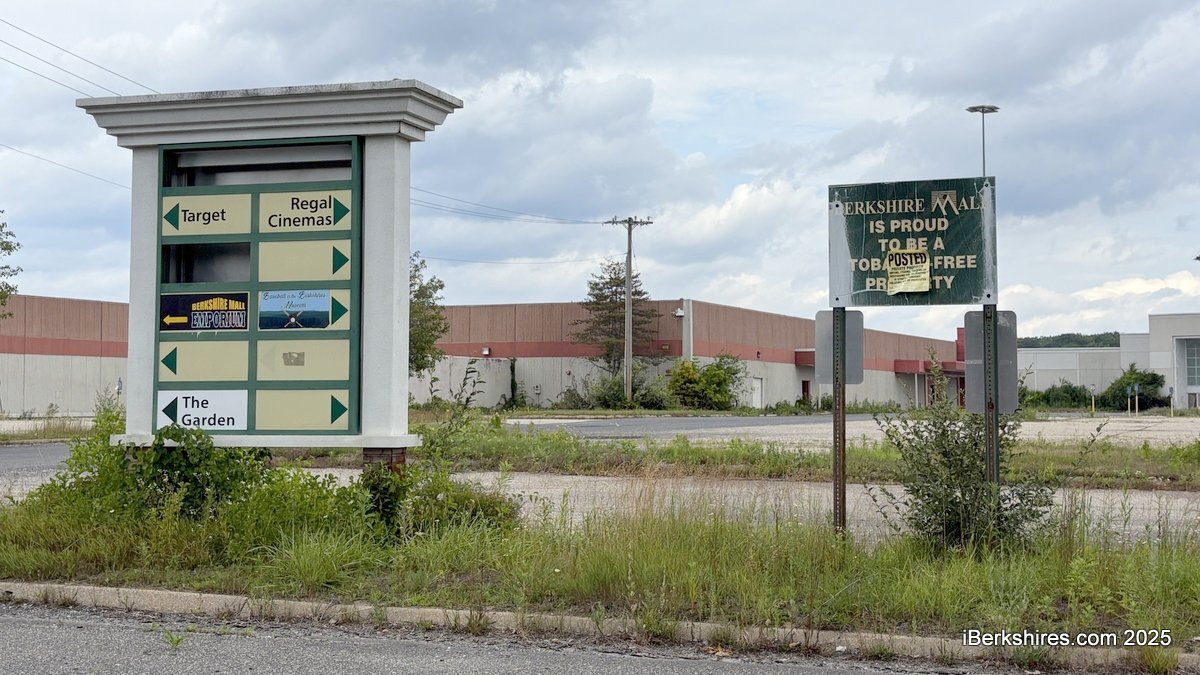
Half-Million Unpaid Mall Bills Could Fall on Lanesborough Taxpayers
PITTSFIELD, Mass.— The Berkshire Mall's unpaid bills to the Baker Hill Road District could fall on taxpayers.
The Select Board has agreed to an executive session with the road district and Finance Committee, if possible, to discuss how they will account for more than $500,000 missing from the approved fiscal 2026 budget.
The road district will sue the mall owners for more than $1 million in unpaid taxes for the Routes 7-8 Connector road and, regarding this year's balance, attorney Mark Siegars advised the town to "treat it as though you might not get it."
This means it would have to be collected through taxes.
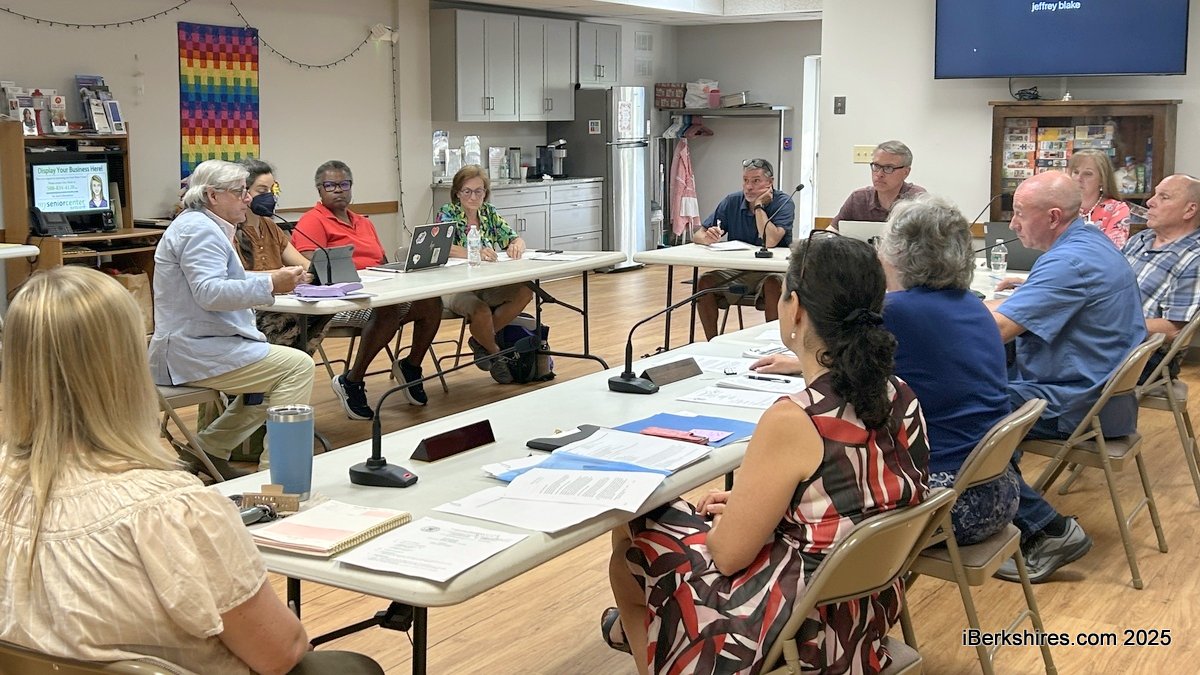
"I think through this process of figuring this problem out, we need to be very clear with the town, with the taxpayers, what we're doing and why," Finance Committee Chair Lyndon Moors said during a joint meeting on Monday.
"They left the town meeting assuming that their taxes would be here, and now we're saying, 'Guess what? Your taxes may be here instead,' But I think there's a rational explanation for it."
The road district is an independent municipal district within the town with a governing body that oversees the maintenance of the connector road as a public way. It is charged with ensuring the timely payment of the Berkshire Mall's bond and that the mall meets obligations to the community regardless of ownership.
A December 2024 lawsuit filed by the road district seeks $545,000 from the mall owner JMJ Holdings for taxes due in May 2024. JMJ has demanded a jury trial, saying it has no contract with the road district and that the BHRD is acting outside its legal authority.
Siegars, who represents the road district, will bring forward another suit to collect $500,000 in 2025 taxes. He reminded the board, "This is the town's money we are talking about. It isn't the road district money."
The mall owners reportedly filed a complaint with the Inspector General's Office, and he advised members of the district's prudential committee not to say much "because one of the things the Inspector General could do is refer the matter for criminal proceedings, and I am not going to let them jeopardize their position."
"Litigation is the answer, and my suggestion to you is, why don't we have a meeting to figure out how the town can help the road district collect the money that the town's owed?" Siegars said.
"I can tell you that I've been to the state Legislature on my own on behalf of the road district to see if we can get some assistance to help the town get paid. I'm asking the town, on behalf of the road district, to join in that effort to collect the town's money."
At the session, which is not yet scheduled, the BHRD will present the budget shortfall after payments from Target, which owns and operates its building. He said that on Wednesday, "certain decisions will be made with regard to payments that can be made based on the income we have."
Select Board member Michael Murphy emphasized the need for a plan.
"An important aspect of that meeting is to have a frank, and at this point, private discussion on what our plan is to recoup that money on behalf of the Baker Hill and ultimately on behalf of the townspeople of Lanesborough," he said.
The budget approved at the annual town meeting designates $322,825 for police services on the road and $143,985 for Department of Public Works services. Select Board Chair Deborah Maynard explained that it was passed with the understanding that the road district could pay its portions, "and that's in question now."
The town could include it in the recap sheet as an estimated receipt and be in a deficit, or have it go into the tax rate.
Maynard reported that a state Division of Local Services representative advised that they don't include the shortfall in estimated receipts and go into deficit.
"To be honest with you, I would rather not see the town go into deficit. I would rather have it not counted as a recurring estimated receipt on the recap, but put in just the total annual budget," she said.
"And I know it will affect taxes this year, but collecting the money then will give us that much more free tax at the end of the year."
The town's counsel, Jeffrey Blake, said it was "probably the best course of action" to assume the town won't collect those funds.
"Litigation, as we all know, takes a long time, so I don't think that you're going to be getting those monies from the mall," he said.
"As attorney Siegars indicated, Target is paying you, and I think you can figure whatever they're going to pay and offset it by that, or whatever the Baker Hill Road District is able to pay from the proceeds that they get from Target."
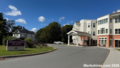
JMJ Holdings is planning a nine-figure overhaul of the shuttered mall property into 420 to 450 units of senior housing. In a May interview with iBerkshires, project consultant Timothy Grogan said the property is not subject to a normal tax rate system because of the Baker Hill Road District, which he said charges the property six times more taxes than other Lanesborough businesses are subject to.
The district anticipates filing a motion for summary judgment to collect the funds within the next 60 to 90 days.
"If we get that and they don't pay, then we will move directly to sell the mall to satisfy that judgment like we have in the past. As a matter of fact, in 2019 we paid, the road district paid, for a lawsuit by the Town of Lanesborough to collect money it was owed by then-current owner, Berkshire Real Estate Holdings LLC, and we all got paid," Siegars said.
"We started that action again with the subsequent owner, and he sold the mall to the current owners, so we all got paid. Typically, what happens with the mall is they get a tax bill, and they sell the real estate and we get paid. There's no certainty that's going to happen this time because this time, there's a mortgage on the property."
Tags: Berkshire Mall, deliquent taxes, fiscal 2026,