New Exhibit Looks to Past, Future at Jacob's Pillow
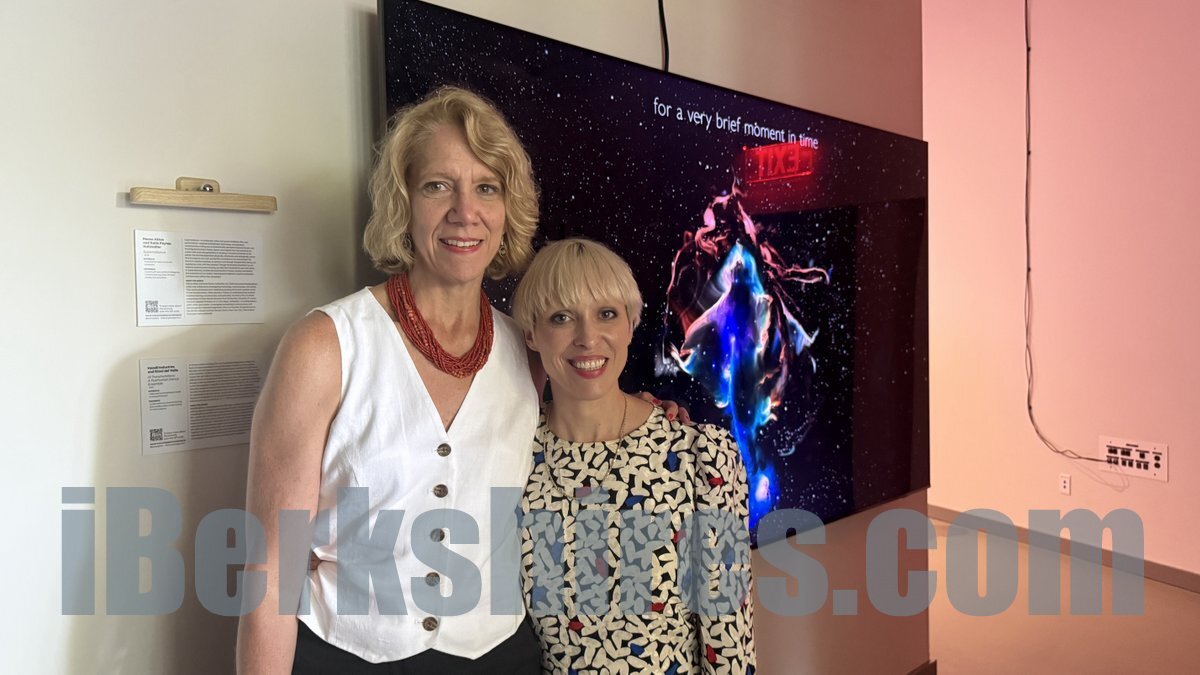
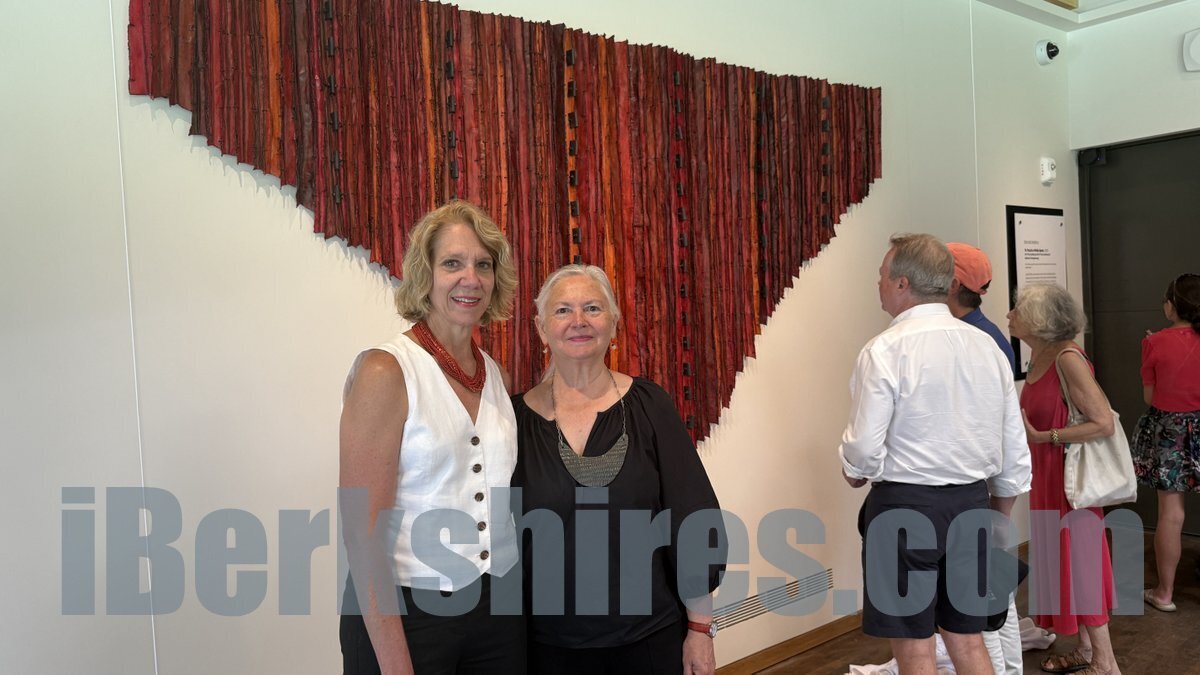
Executive Director Pamela Tatge, left, and Katherine Helen Fisher, whose work 'Dancing the Algorithm' is on display in the Duke Theatre.
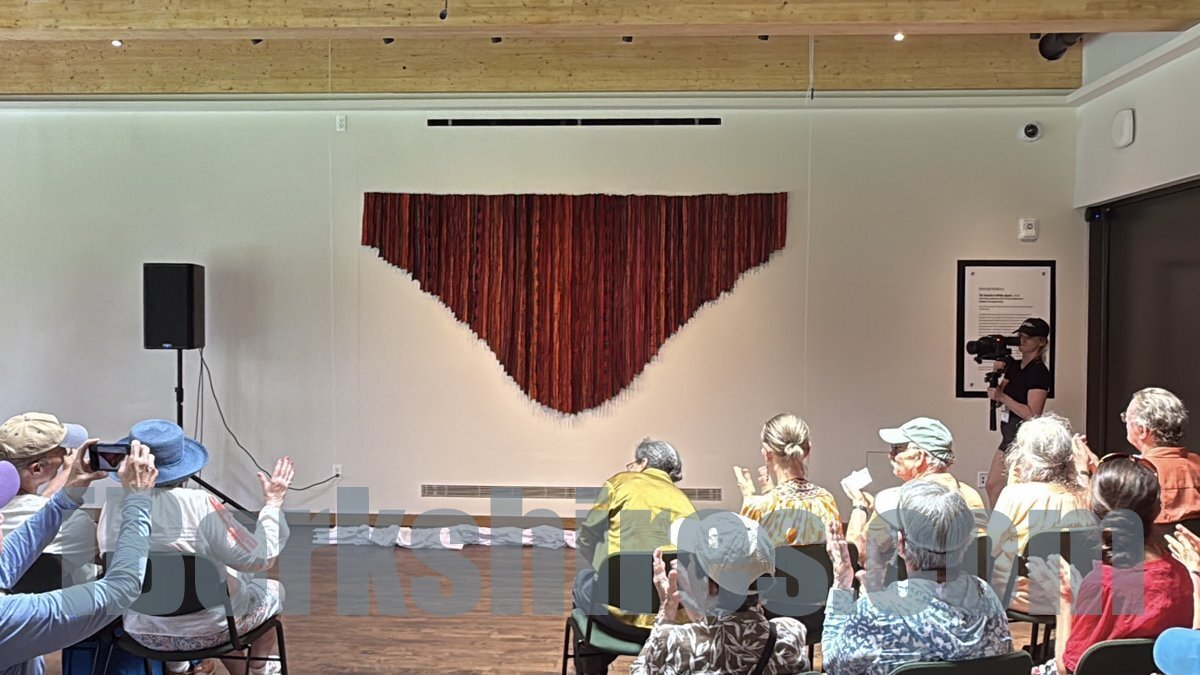
"To Touch a Wide Span" and "Dancing the Algorithm" were unveiled during a community open house on July 6 in celebration of the rebuilt theater's opening.
"By integrating indigenous perspectives and cutting-edge technology, these inaugural exhibits transform the Doris Duke Theater into a forward-thinking cultural space that celebrates artistic evolution," Executive Director Pamela Tatge said.
During the design development of the theater, it was clear that Jacob's Pillow needed ground itself in indigenous values and principles, she sad.
That was demonstrated at the ribbon cutting, as the Pillow had asked that an indigenous artist be included in designing the new dance theater.
"The focus on indigeneity comes from the fact that Jacob's Pillow's identity is completely entwined with land and nature. It is inseparable from our identity," Tatge said.
"How can we not honor that land that for hundreds of years was the land of Mohican tribal peoples and the many other tribes who were here and continue to live here in what is now known as Massachusetts. How can we not be the most responsible environmental stewards of this land."
Cherokee artist Brenda Mallory was commissioned to create a sculpture for the Jameson Family Lobby, which will be on view until 2028.
"It's such an honor to be in this place where they acknowledge the tribes that are here, and do so not with just their words, but with their actions of incorporating indigenous principles into their design and asking us to be part of the facility with our commissions and the garden designs of the other artists," Mallory said.
Using sustainable materials, Mallory explores complex themes of connection and reuniting things that had been broken apart.
In the piece, she uses beeswax from the Stockbridge Munsee tribe in Wisconsin and from the garden at Jacob's Pillow to showcase how this was their original homeland.
"Then, incorporating the two speaks to this connection across time and space," Mallory said.
She also included varying shades of red to address the idea of blood quantum, "which can be a requirement or a strict restriction for being a member of a tribe."
"The hog rings address the ideas of harsh connections, the importance of keeping connections," Mallory said.
She hopes this piece amplifies the architecture of the building, with its natural forms, organic shapes, and sustainable materials.
"A lot of people think of Native art as just something you see in a cultural museum [and this piece demonstrates] that we are Native artists of now, making work that addresses principles of now, principles of the past that were alive and working still," Mallory said.
In addition to the theater, the Pillow now has an Indigenous Garden, designed by Stockbridge-Munsee members, to serve as a way to honor and recognize the land's original inhabitants.
Prior to being destroyed in a fire amid the pandemic, the Doris Duke Theatre was an intimate and flexible space where artists could experiment and present their best work.
The dance community banded together, rising above the ashes, and brought the theater back to life.
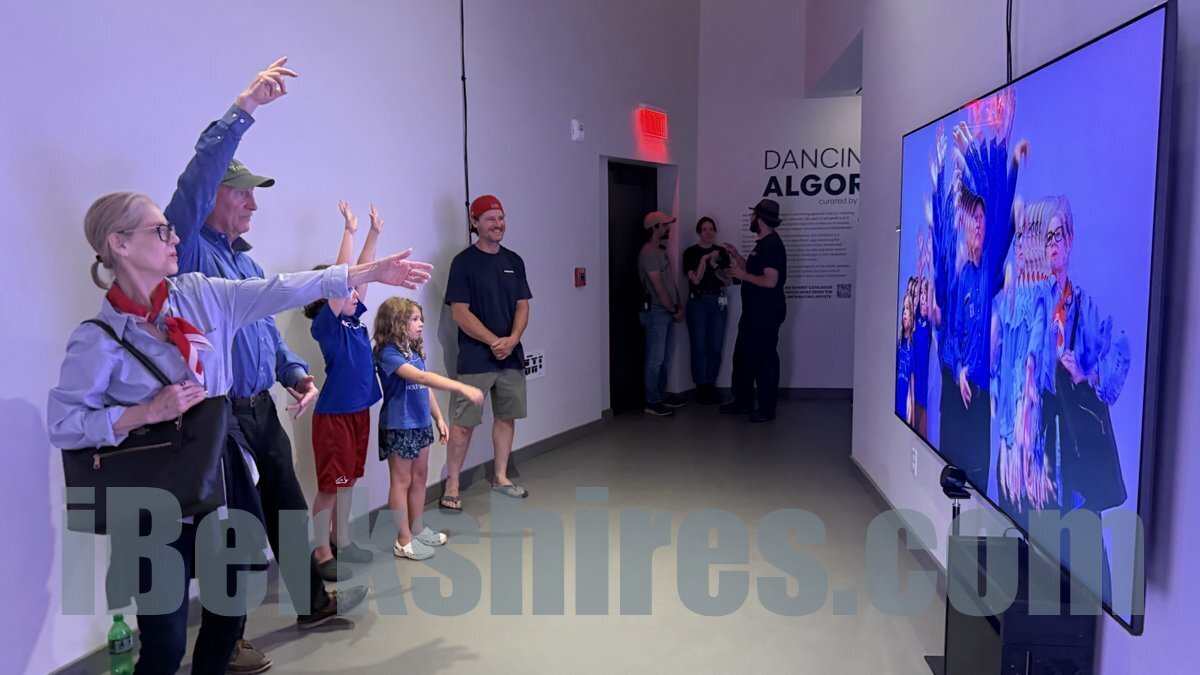
The first exhibit in the Doris Duke Theatre Gallery, "Dancing the Algorithm," curated by Katherine Helen Fisher, redefines "the potential for dance in ways that resonate with how the earliest generations of modern dance artists redefined dance in their eras," Tatge said.
"In the exhibit planning as it evolved, I learned that the intersection of dance and technology is one that centers the human imagination with disparate and seemingly unrelated areas of expertise, and that there's no one area of expertise, of technology, but many, and that we are all learning together."
The exhibit features 11 works created by 19 individual artists and will run through the end of the Jacob's Pillow Dance Festival 2025 on Aug. 24.
"I think that there's an interest in bringing the new theater into the future by engaging with emerging technologies," Fisher said.
The exhibit focuses on real-time choreographic interfaces using computer vision to capture data from the human body and extrapolate it into generative visuals.
"We're interested in having people feel joyous and be able to move their bodies in concert with these technologies, so that it doesn't feel like they're separate from us, but rather that we have an ability to have authorship and agency within the technology," Fisher said.
"I think that people are a lot afraid of technology and I think in dance forms, especially, people are worried about technologies encroaching on the real body and the immediacy of the art but I think that if used properly, these technologies can open dance as a form to much broader audiences."
Tags: art exhibit, jacobs pillow,