Dalton Police Budget Passes on Second Try
DALTON, Mass. — Voters approved all six articles on the special town meeting warrant on Thursday, including a contentious police budget.
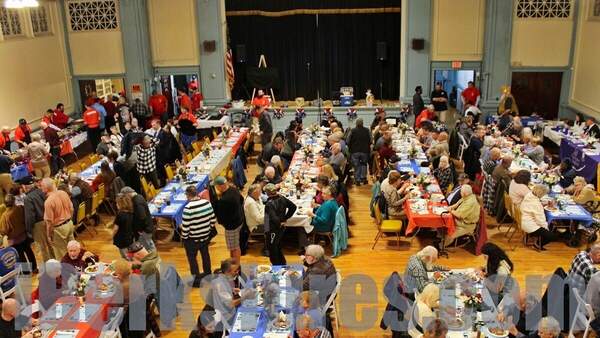
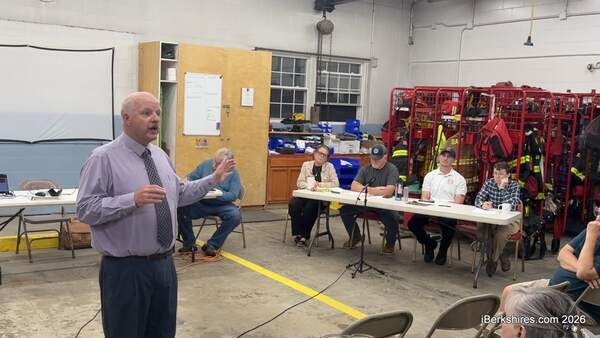
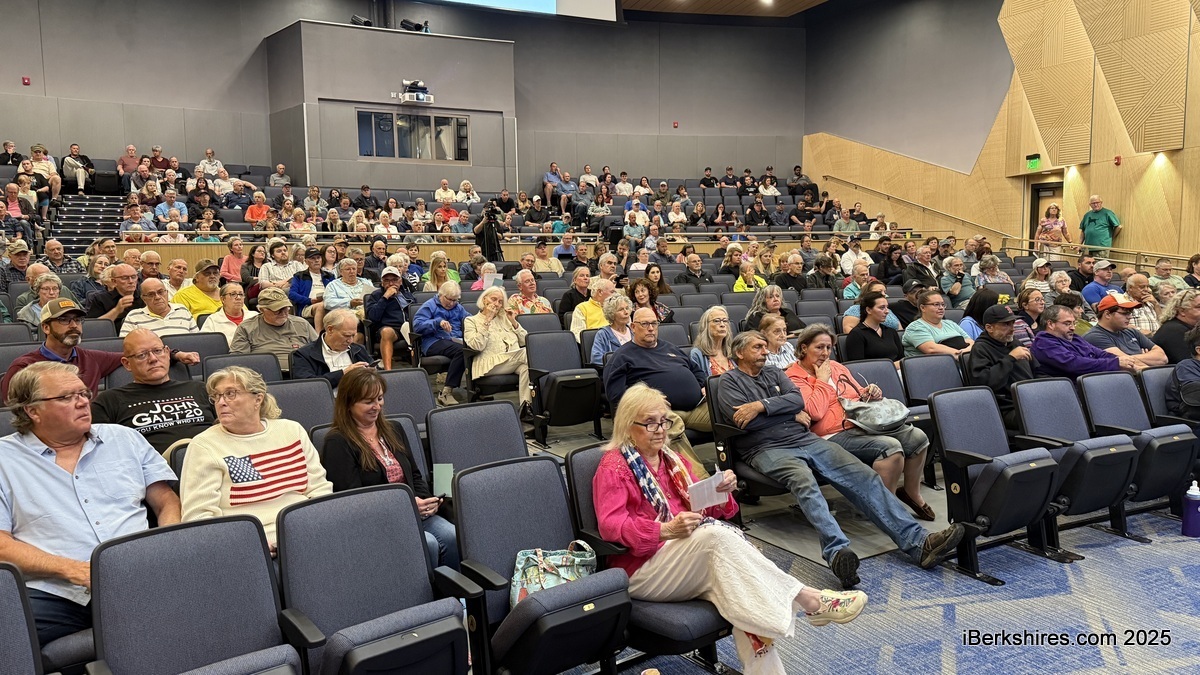
The special town meeting drew 275 voters, a large number of whom shuffled out following the passage of the Police Department's fiscal 2026 spending plan.
The budget had been separated from the operating budget and then rejected at the two-night annual town meeting. The figure presented to voters on Thursday had been reduced by $33,841 during meetings of the Select Board and Finance Committee.
The $1,631,083 budget's passage followed debate with an at times rowdy crowd.
Many voters in favor said the department and its officers are an integral part of the community that protects its residents with professionalism and compassion.
"I've lived in Dalton 18 years, and I've loved every minute of it, except for a night that Chief [Deanna] Strout will remember. They are a class act. I love living in this town because it's a safe town. Someone who is very dear to me lives in a town where there is no police that they have to wait 40 minutes for the state police to arrive," Joe Mindlin said.
"I vote for the Police Department to get what they want. They are class acts. They do their job with compassion, with honesty, with dignity, and they protect all of us here in this town, and that's the reason why I love this town, and I want to stay here, and I think we all should do the right thing."
Several voters shared their experiences with the department, saying officers saved their lives.
"Recently, the quick, coordinated efforts of the Dalton dispatchers [Betsy Balardini and Tiaona Winot, Sgt. James R. Duryea Jr., and Officer Anthony Baroli] as well as the Dalton Fire and other teams, undoubtedly saved the lives of two young boys," voter Lyn Clements said.
"The 12-year-olds were trapped up to their waists in quicksand-style mud. Their young friend went for help. As always, Dalton help quickly arrived. Had it not beed for these often overlooked helpers, Dalton would most certainly be grieving."
Clements said officers als saved her life and comforted her husband during the incident.
Joseph Diver, former Select Board member and strong supporter of the budget leading up to the vote, commended Strout and highlighted the process the town underwent during the search for a new chief.
She passed the chief selection test "with flying colors," has two master's degrees in criminal justice and public administration, and is "well respected, not only in Berkshire County, but across the state," he said.
"I believe that we are honored to have her serve our community. We are lucky. We are very lucky. There are two openings in Berkshire County — Great Barrington and Lee. What if we lost our chief to one of those towns," Diver said.
"Think about what she has delivered to this community and voice your opinion very loud for a yes vote on this budget."
He motioned to increase the budget by $14,000 to address an error that left out the line for new equipment, which Strout discussed during Monday's Select Board meeting.
"I would love to support this $14,000, but we all agreed to this budget. The chief included, and at the meeting, if there was a shortfall, she can always apply for additional funding," said Select Board Chair Robert Bishop
"I think we should stick with our original agreement. I don't like breaking my word."
Diver withdrew his motion to amend.
Voters in opposition pointed to the financial constraints facing the town and some of its residents, and said the department's budget has grown "too much" over the last five years.
Lisa Turner said she believed the police budget should be reduced to $1 million, describing it as more than enough. This sentiment resulted in murmurs from the crowd and some laughter.
"This budget was way too high for this town that has no crime," Turner said.
Strout responded to the assertion of no crime with "you're welcome," which resulted in laughter and some applause from the audience.
Following Moderator Anthony Doyle's reminder to the audience that Turner had the floor, she highlighted two lawsuits against the department and questioned the amount of overtime.
"There are many people in Dalton that are living on Social Security, or less than Social Security. And you may all clap and cheer, and you may all think that's funny, but that is why those people are not allowed or are not able to stay in their own homes," she said.
"They cannot afford it, and it's not a laughing matter, and it's not a joke. That's why people in this town are going to move out, because our Police Department is well in control of that budget."
A motion for a secret ballot failed 162-101 and the budget passed by voice vote.
About half the voters left and the remainder approved all the remaining articles following clarification or with little to no discussion.
The only other article that received more discussion was the request for $59,000 to fund professional and technical work, including the possibility of a lawyer and an engineering company, to ensure the compliance of Berkshire Concrete Corp.'s special permit and town orders.
All comments made were in favor of the article. Speakers repeated comments made during previous meeting — their belief that Berkshire Concrete is violating the Wetlands Protection Act and town bylaws and is causing health issues.
The state Department of Environmental Protection determined that the dust is not an air quality health concern but a nuisance, which the town has the regulatory authority to mitigate.
"I believe when the new permit comes up, or the permit comes up for renewal, one of the conditions could be that Berkshire County Concrete incur the costs of technical review of their plans, but at this time, that's not in their current permit," Select Board Vice Chair Dan Esko said.
"So the town does need to budget some money for this upfront, but it certainly could become part of that permit come November when is up for renewal."
Voter Rachel Branch said she did not think it feasible or acceptable to wait until a permit comes up in the fall.
"You've just heard a woman right here telling you she can't sing anymore, she can't breathe, she can't open her windows. How serious does it have to get for you to take this seriously and find the entity that stops them right now," she said.
The moderator then reminded the audience that the article's purpose is to secure funding for professional services not to critisize town boards for perceived inaction.
Tags: Dalton Police, Dalton_budget, special town meeting,