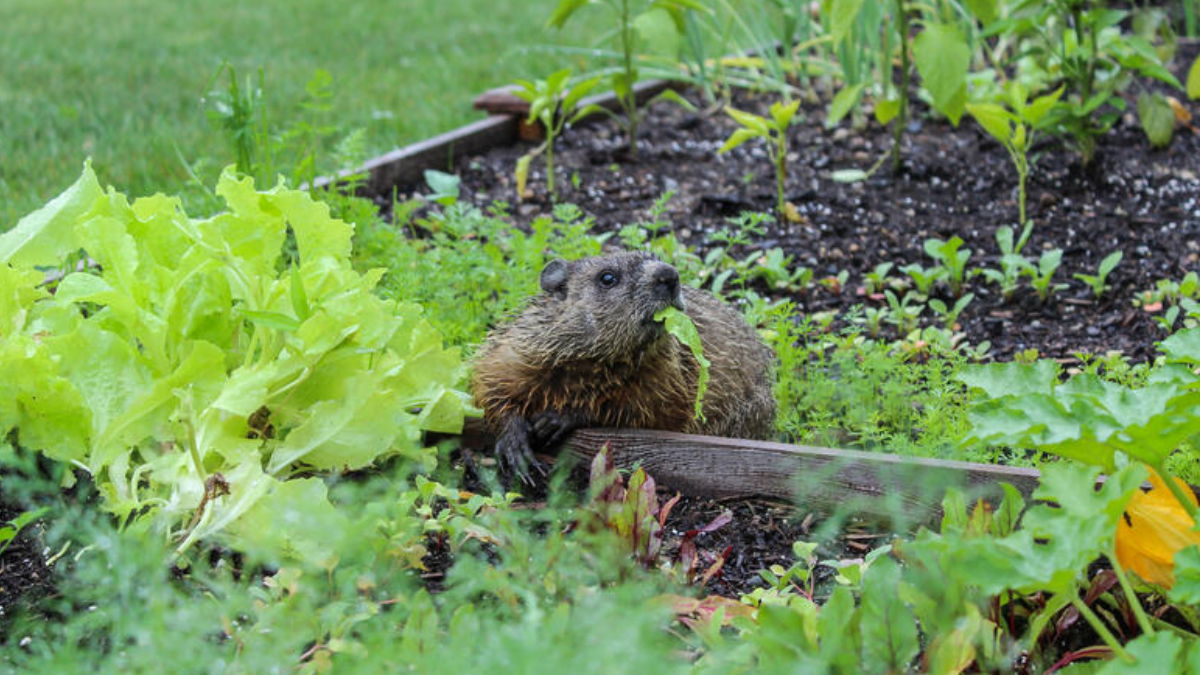
We all know the feeling. You spend winter drawing up your garden plan. You dream of tomatoes, cucumbers, zucchini, and more that you'll be able to harvest from your backyard. When the weather warms, you get outside and start to prepare your garden beds and, eventually, get seeds or seedlings into the ground. In summer, when it's finally time to reap the rewards of your hard work, your heart sinks as you find that something else got to your garden first.
You're not the first, or last, person to have your veggies vandalized by wildlife. Wild animals, like woodchucks, rabbits, squirrels, and deer, see our garden greens as a natural part of their diet and will snack on it if they have easy access. While there often isn't a single solution to keep wildlife out of our gardens for good, a combination of effective approaches and a little creativity can ensure you'll be able to enjoy the fruits (and vegetables) of your labor.
Exclusion
The best way to prevent garden damage from wildlife is to exclude them from the area with a physical barrier, like fencing. Three-foot-tall metal mesh fencing buried at least 1 ft down and 1 ft out in an L-shape can help keep critters like rabbits and groundhogs out. If you're trying to exclude rabbits specifically, make sure the mesh holes are ¼ inch or smaller to prevent young from getting through. Woodchucks are surprisingly agile, so consider using electric wire 4–5 inches off the ground and 4–5 inches from the fence, powered by an approved fence charger, to prevent them and other squirrel species from climbing over. If deer damage is your biggest concern, wire mesh fencing must be at least 8 ft high with an overhang to discourage them from jumping over. Eight-foot-tall electric fencing, regularly baited with peanut butter on tin foil, can also be used.
Eliminate shelter
Close off structures, like under sheds, porches, and walkways, that may provide shelter for wildlife on your property. Be proactive and block up all possible crevices and holes prior to any use. Be careful not to block such places when animals may be trapped inside. Clean up or cut back brushy areas or weed patches to remove potential shelter or nest sites.
Repellents
Scent-based repellents, like cayenne pepper, soap shavings, or predator urine, are commonly used to deter wildlife from gardens. While this can be an appealing option because it's quick, easy, and inexpensive at first, scent-based repellents do not appear to be hugely successful on their own. They also require regular refreshing, which can make them more expensive yet less effective in the long run compared to other more reliable solutions like fencing.
Scaring is caring
Most animals that damage gardens are prey species, meaning they can be scared off fairly easily. When you're home, step outside and shoo them away by walking toward them, shouting, clapping, or spraying water in their direction. Try placing shiny pinwheels, draping plastic streamers, hanging metal pie pans, and staging scarecrows to keep wildlife wary when you're not there. Motion activated moving statues, like owls, or predator eye balloons can also be effective. Deer tend to return at night, so a motion activated sprinkler seems to be a promising deer deterrent. Want to get really creative? Break out your motion activated Halloween decorations early to spook away wildlife.
Pro tip: Keep veggie vandals on their toes! It's essential to move frightening devices around the yard every few days so the animals don't get used to their presence and no longer view them as a threat.
Remove other food sources
Your garden may not be the only thing attracting wildlife to your property. Bird seed feeds more than songbirds – it attracts mice, squirrels, chipmunks, turkeys, and more. If an animal finds food at your bird feeder, they could visit your garden next. To avoid this, create a bird-friendly area without bird feeders. Outdoor pet food can also attract wildlife, like squirrels, chipmunks, opossums, and skunks, so feed pets inside or clean up immediately after feeding.
Protect backyard chickens
Wildlife killing unprotected chickens and damaging coops is becoming the?number one source of?human-wildlife conflict in Massachusetts.?A standard chicken coop is not enough to prevent damage from all wildlife. So, while you're working on your garden, take a moment to protect your chickens with properly maintained electric fencing.
Relocating wildlife
It may seem easier to relocate the veggie vandal somewhere else to prevent garden damage. However, relocating wildlife off your property is not only ineffective at solving wildlife problems, it's also illegal in Massachusetts. Learn why moving wildlife is harmful and what you can do if you're experiencing conflict with wildlife.
If you would like to contribute information on this article, contact us at info@iberkshires.com.
Your Comments
iBerkshires.com welcomes critical, respectful dialogue. Name-calling, personal attacks, libel, slander or foul language is not allowed. All comments are reviewed before posting and will be deleted or edited as necessary.
No Comments
BRTA Focuses on a New Run Schedule
By Breanna SteeleiBerkshires Staff
PITTSFIELD, Mass. — The Berkshire Regional Transit Authority is still working on maintaining its run schedules after dropping the route realignment proposal.
Last Thursday's meeting was Administrator Kathleen Lambert's first official meeting taking over the reins; retiring director Robert Malnati stayed during a transition period that ended last month.
Lambert is trying to create a schedule that will lessen cancellations. There was a two-hour meeting the week before with the drivers union to negotiate run bids and Lambert is working with the new operating company Keolis, which is taking over from Transdev.
The board spoke about anonymous emails from drivers, which Lambert said she has not seen. iBerkshires was not able to see those letters, but has received some.
"They were lengthy emails from someone describing themselves as concerning BRTA employee, and there was a signed letter from a whole group of employees basically stating their concerns. So, you know, to me, it was a set of whistleblowers, and that, what my understanding is that this really triggers a need for some type of process to review the merits of these whistleblowers, not going to call them accusations, but basically expressions of concern," said member Stephen Bannon.
A letter iBerkshires received spoke of unhappy drivers who were considering quitting because of decisions being made without "input from frontline staff," frustration and falling morale, and the removal of the former general manager shortly after Lambert came in.
Lambert said it's difficult to navigate a new change. She also noted many drivers don't want to do Saturday runs and it has been hard negotiating with drivers on the new runs.
"I would like you all to keep in mind that the process of change is super difficult. Transdev has been here for 20 years, and some of these drivers have never known any other operating company, the way some of the operations have been handled has been archaic," she said. "So getting folks up to speed on how a modern transit system works is going to be painful for them. So I don't want to say that I'm unsympathetic, because I am sympathetic, but I am trying to coax people along with a system that's going to seem very strange to them."
The board spoke about better communication between them and Lambert, citing cooperation will be best moving forward.
"There's just a lot of stuff in the air right now, and there are a lot of fires to put out to make this a coordinated effort. And if we don't keep our communications open and be straightforward, then you get blindsided about how you know the input that you could get from us about your position, and how you know what's going on in your direction, and we get blindsided. And I think that we have to make sure that this is a collaboration," said member Sherry Youngkin.
"Both sides have responsibilities, because in the long run, this advisory board is going to have to make decisions as to how we brought forward and if we've gone forward in a fair and helpful way. And I think that's hopefully what everybody is looking for also."
Transdev and Keolis held a three-day recruiting event interviewing almost 40 candidates and offering jobs to eight, but only three stayed on to start training. Lambert said it was disappointing but she will keep trying to retain more people.
In her first report to the board, she noted that ridership dipped a little over 10 percent, but still remains higher than last year, adding that was because of cancellations of services because of the lack of drivers.
Like the last meeting, some of the advisory board members were torn over the start of the Link413 service, worried that the start of the service took drivers away and the numbers of riders are low.
Lambert, however, said the ridership has doubled from last month.
"As I've spoken before, we have, generally, a six-month adoption for brand-new service before you can really go in and evaluate, are you being successful based on the grant that my predecessor wrote along with the team for PBTA and RTA, we are ahead of schedule, which is pretty good, so I'm hoping that will continue to improve," she said.
Member Renee Wood said the board never approved the service, adding the only thing she could find in the minutes was a vote to accept the equipment. She said it was supposed to be put on the agenda to discuss.
"The Link413 service has been three years in the making. It's been a grant that was accepted and has been working with our partners, PVTA and FRTA, to put into place. So I don't have the entire history of how that process worked, but it's been three years in the making, and did we not understand that once we accept that grant that we were going to put in new service?" Lambert said.
The board discussed if Title VI, the Civil Rights Act, was followed with an accurate review and accurate amount of time for public comment period on the service changes and if its attorney should review if the grant conditions were properly followed.
Lambert said changes had the 60-day comment period included in the proposed route realignment packet, giving the opportunity for the community to respond to that as well but will look into the legality of the situation with their attorney.
The Berkshire Regional Transit Authority is still working on maintaining its run schedules after dropping the route realignment proposal. click for more
The town election is less than a month away and, unlike recent ones, all open seats are uncontested, with even a vacancy remaining on the Planning Board.
click for more