Dalton Finance Committee Split on Police Budget
DALTON, Mass. — The Police Department budget continues to prove contentious, as the Finance Committee on Tuesday narrowly approved a budget of $1,644,378.
The decision passed 5-4, with committee members Thomas Irwin, William Drosehn III, Susan Carrol, and Shaun Beverly voting against.
The amount is $20,546 less than what the Select Board voted to support during its meeting in May, unchanged from the town meeting, where votes rejected the proposed $1,664,924.
The police budget will be voted at a special town meeting on Monday at 7 p.m. at Wahconah Regional High School. The budget had been rejected at the annual town meeting.
The board voted to support the initial budget following a detailed presentation by Police Chief Deanna Strout. Select Board member Marc Strout, the chief's husband, was not present for that vote.
The Finance Committee was not given the presentation because of the police chief's absence during Tuesday's meeting.
Carrol stated that she voted against the budget decrease because she wanted to hear from Strout first.
Irwin, Drosehn, and Beverly voted against it because they believed that additional cuts could be made.
Strout said she was not informed about the Finance Committee meeting, which included her budget as an agenda item, until she received an email at 2:13 p.m. on the day of the meeting.
Town Manager Thomas Hutcheson emailed Strout on Tuesday, June 3, at 2:13, recommending that Strout attend the Finance Committee meeting, during which the police budget and other special meeting articles would be discussed.
By the time of receiving the email, Strout's schedule was already full because she was assigned to work the Taconic High School prom.
"We should want to work together, and I feel like that is not happening," Strout said in an interview, emphasizing that Finance Committee members had not spoken to her.
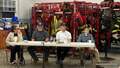
The committee meeting, posted on the town website on Friday, May 30, drew 21 attendees, with 12 joining via Zoom.
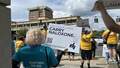
The meeting became lively at several points, with several attendees expressing disappointment with how committee Chair William Drosehn and Vice Chair Thomas Irwin had changed their vote from supporting the proposed police budget during a meeting in April to voting against it during the town meeting.
"I just don't understand, [the vote] was a huge slap in the face to everyone — men and women on that police force. The Crane family made us feel pride to be part of that, and that's what we're trying to do with this community to support these officers," Select Board Chair Robert Bishop said.
"And what you people did at that meeting was not nice. You slapped them in the face. For everyone, they put their life on the line for you guys every day. Every day they put their life on the line. Every time they put that uniform on, their lives are in danger."
One resident said the duo changing their minds seemed "wishy-washy."
Drosehn said he did not change his mind and claimed he initially wanted to see $20,000 more removed from that budget; however, the committee reached a compromise with Strout to present a budget that was reduced by $14,564, allowing the voters to make the final decision.
"We learned additional information from people who had deep knowledge of police procedures over a decade, that told us that there were excesses in the budget. And prior to the annual town meeting, we did not know," Irwin said.
Strout said that information stated at town meeting was not accurate because of bias, as the comments were made by former employees who may have ulterior motives.
Irwin said he entered the annual town meeting planning to vote for the budget, but after hearing the discussion, changed his mind and decided to vote against it so they could have an opportunity to review it again to see where cuts could be made from the excess.
During the meeting, members claimed that over the years, the Police department has had an excess ranging from $12,000 to over $100,000.
Irwin highlighted what he believed to be a "redundancy" in the overtime budget. The department has one part-time officer to work shifts when the full-time officers are out. However, the budget was still including overtime pay for those shifts.
He queried the need to budget for overtime for the shifts that the part-time officer would cover.
Strout explained to iBerkshires that she has to budget for those 40 shifts in overtime because the one reserve (part-time) officer they have works when he is available. She cannot force him to work.
Bishop argued that he felt like the cuts were targeting the Police Department.
"I dealt with this committee all year and it's a group of professional people. That's not a fair thing," said committee member Susan Vigeant.
"Just for everybody's information, I'm looking at a year end [June 30, 2024] where she was under her budget $113,000, $113,000 that was taxed to people so that she could have that money. In year 2023, she was over $62,000," she said.
"That means that people are being taxed to pay for those excesses, to pay for the additional money she has. That's what we're addressing … we can't go to people particularly in these this day and age and say accept this budget when she has continually gone under her budget."
Strout said the department had overages in 2023 and 2024, which will be explained in her detailed presentation at Monday's special town meeting to address any questions or concerns voters may have.
Prior to that, the department's budget had been grossly underbudgeted to the point every line item was depleted and interdepartmental transfers were needed, she said.
"Unfortunately, we have budgeted incorrectly for so many years that I'm still developing data to see what line items might be a little bit over. And as this year, I had already reduced our budget by [about] $29,000 because over the last couple of years, I can see that some line items are a little over, and we can reduce them and we did," Strout said.
"My budget's transparent. I don't need transfers at the end of the year, because we budget appropriately. And we find ways to save it and give it back and I'm being criticized for that. It makes no sense to me."
According to Town Accountant Sandra Albano's expenditure report, through May, the department had $203,134 remaining in salaries and $44,711 left in expenses.
Albano explained that by taking the total remaining in the budget, which is $247,835, and dividing it by the average amount spent over the last 11 months, which is $116,173, it is estimated that the department will have an excess of about $133,672. However, she emphasized that this is a very rough estimate.
Strout explained in the follow-up how these projections do not take into consideration external factors such as unused vacation time. The utilization of vacation time is the highest in June.
Additionally, the department is careful spending money, especially at the beginning of the year, to ensure it is available if something unforeseen happens, she said.
Tags: Dalton Police, Dalton_budget,