With Taxes Paid, Berkshire Mall Owners Plan for Senior Housing
(6).jpg)
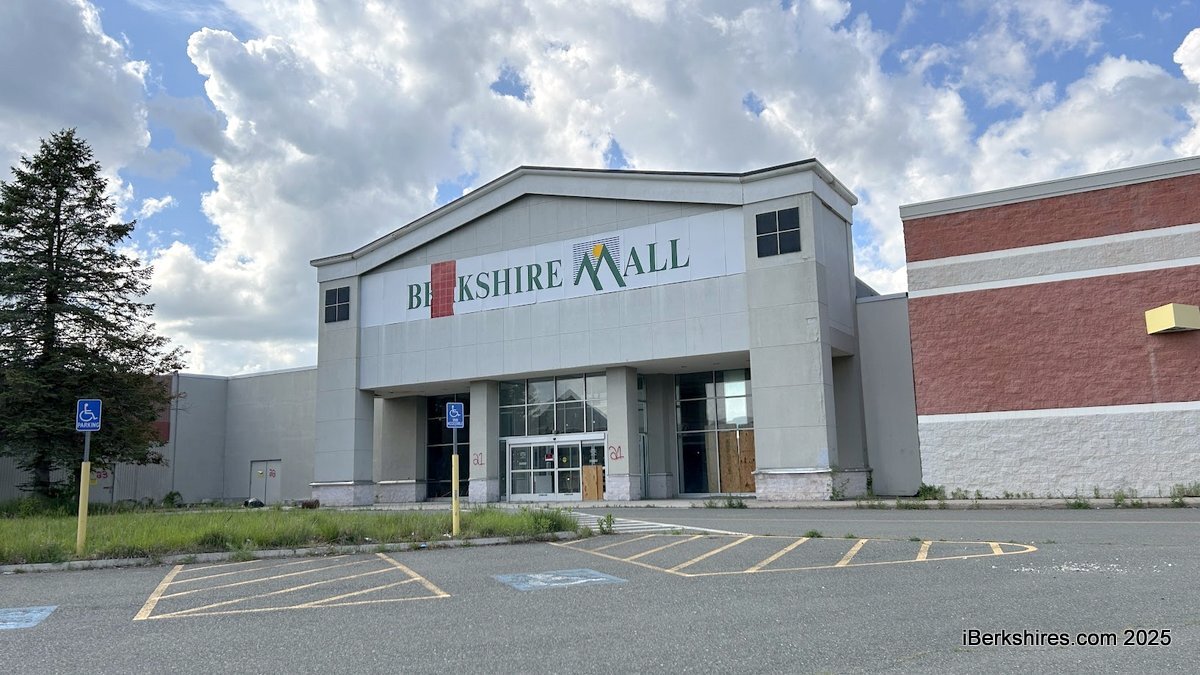
LANESBOROUGH, Mass. — The Berkshire Mall owners have paid their town taxes and plan to transform the property into more than 400 units of housing.
JMJ Holdings is entering into the design process for a nine-figure overhaul of the shuttered mall property into 420 to 450 units of senior housing. Town Administrator Gina Dario confirmed that the full fiscal year 2025 tax balance, totaling $293,380, has been paid.
"It's basically an apartment building that's catered towards older populations, people generally in their mid-60s, and the amenities on site really cater to that lifestyle. It's kind of all comprising," Timothy Grogan of the Housing Development Corp. explained, adding that there will also be assisted living, memory care, independent living, and senior affordable housing.
Grogan was hired as a consultant to guide a feasibility study for the property. He said there haven't been recent conversations with the town "because we're really hashing it out, we want to come to them with a fully thought-out proposal in terms of the amount of supportable units."
"I think it would be a huge boon to Berkshire County, generally, in a way that the mall used to be," he said. "We're really excited about it. We're moving forward with full steam ahead."
The feasibility study determined that there could be up to 600 units, but the project team imagines a more conservative amount between 420 and 450 units.
It is being scoped as a Low Income Housing Tax Credit project, which means that at least 20 percent of the units would need to be reserved for people at/or below 50 percent of the area median income or at least 40 percent of the units would need to made affordable for persons with incomes at/or below 60 percent of the area median income.
Grogan said conversations have been scheduled with the offices of Lt. Gov. Kim Driscoll and state Secretary of Housing Ed Augustus.
"Given the political importance of this property and Governor Healey's emphasis on gateway cities, we don't expect that to be such a long lead item. That being said, this is envisioned to be a phased project where we have the assisted living, active adult and independent living kind of in one bucket with affordable housing in another one," he said.
"And in terms of design, square footage and the like, those have to correspond with the design guidelines published by MassHousing and MassDevelopment, so the square footages for those units are actually bigger than what you see in the typical market apartment in the Berkshires for what we're envisioning for that active, adult and independent living. Assisted living is different because they're more like rooms and dormitories than independent apartments."
But, he said, "we're not there yet," adding the team is now entering into the design process. When asked about the price, he did not have a budget but disclosed, "This is a nine-figure project."
The planners would like to aesthetically harken back to the historical use of the property, maintaining "at least a portion" of the original mall, such as the food court or atrium.
Grogan said the movie theater is in "fantastic" shape compared to the rest of the property because it was renovated in 2013, but the rest has largely been unchanged since the original construction in 1988. He explained that there is "no transferable use" for the big box stores such as Best Buy and Sears, and given their condition, it is not a financially prudent move.
"Given that the mall has been relatively defunct since, I'd say 2018, besides the Target and the cinema, these systems, when they're not being used, it expedites their depreciation," he said.
"The systems and roofs for the large part can't be salvaged, so if I have preliminarily guess, we would like to maintain about 15 percent of the current mall."
(Target owns and operates its own building though it was connected to the mall's food court.)
While housing is the primary concern, the intention is to bring in ancillary retail at a later stage that would cater to the tenancy and benefit the wider community.
It is far too early to be negotiating with specific retailers about that, Grogan noted.
The project has the potential to bring hundreds of new residents to Lanesborough without putting pressure on the school system, and he said it's garnering "a lot of interest."
"You don't see projects like this out in this neck of the woods, but there are also not many properties such as the Berkshire Mall out there, so that's why we think this is uniquely poised to really become a benefit for the town," he said.
"Because when you're thinking about senior housing, the tenants are certainly good consumers, particularly for the Target, but they're not going to really provide that much weight onto the school district or the roads or many of the other services that the town already has. So it's really a net benefit to all parties being able to create a project of this magnitude in terms of bringing consumers to town, we're talking family and friends visiting frequently, but also being able to have bring a substantial amount of traditional tax income to the town through a normal tax rate system."
Grogan said the property is not subject to a normal tax rate system because of the Baker Hill Road District, which he said charges the property six times more taxes than other Lanesborough businesses are subject to. He said a lawsuit was filed against the district.
The road district filed suit against JMJ Holdings in December, for nonpayment of tax bills; JMJ has demanded a jury trial, saying it has no contract with road district and that Baker Hill is acting outside its legal authority.
The road district is an independent municipal district within the town with a governing body that oversees the maintenance of the Route 7 to Route 8 Connector road as a public way. It is charged with ensuring the timely payment of the Berkshire Mall's bond and that the mall meets obligations to the community regardless of ownership.
Tags: Berkshire Mall, senior housing,