Budget, Election Recall, High School Site on Dalton Meeting Warrant
DALTON, Mass. — Voters at the annual town meeting on Monday, May 5, will decide on 31 articles, a few of which have sparked debate within the town.
The meeting will take place at 7 p.m. at Wahconah Regional High School. Town meeting documents can be found here.
Voters will decide on several articles that make up the town's anticipated total budget of $23,731,317 for fiscal year 2026.
Of that, the town is requesting $11,048,759 for its operating budget, an increase of 9.18 percent or $934,436.
The increases stem from increases in costs for health insurance and vocational schools. Additionally, it includes pay rises for town employees based on recent classification and case study.
It provides a pay raise for all town employees based on a recent classification and compensation study.
"Salaries are scheduled to rise $246,536, or 6.54 percent, much of which is due to FY26 being the first year of new 3-year union contracts. Next year's salary rise should be about 3.8 percent," the article's explanation sheet states.
Also included in the total budget is the Central Berkshire Regional School District's operating budget of $9,216,038, transportation budget of $331,115, and the town's share of $1,585,218 for the FY2026 Capital Budget.
There are a couple of articles on the town meeting warrant that are controversial.
One item of contention is Article 29, which, if approved, would create a process for recalling elected officials before the end of their term.
The petition outlines the process, which starts with an affidavit of intent signed by at least 50 registered voters to initiate a recall election.
Once the affidavit is given to the town clerk, voters will be given a blank petition that needs to be returned within 20 working days with signatures from no less than 50 percent of the voters who participated in the last annual town election.
If there are enough certified signatures, the town clerk will submit the petition to the select board, who will notify and order the election within 60 to 90 days.
A majority vote is required to recall an officer, but the recall is only effective if the total votes for and against exceed 80 percent of the votes cast in the most recent annual town election.
The reason for recall must align with the following reasons: lack of fitness, conviction, neglect of duties, and misfeasance.
Several current board members expressed disagreement with the article. During a meeting last month, board member John Boyle stated that he resented the petition and those who signed it. He highlighted that the number of signatures does not accurately represent the total number of voters in the town.
Select Board Chair Robert Bishop argued that approving this article would create a mock justice system, leading to constant elections and recalls.
Board member Robert Collins said he was one of the residents who signed the petition and did not see a problem with it because it's not an easy process to do a recall vote, and it shows accountability.
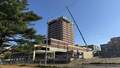
Another article causing discord is Article 13, which, if approved, would rescind the vote taken on May 1, 2017, designating the old Dalton High School lot for housing.
The approval of this item would allow the town to use the lot for something other than housing, including considering the property for a municipal facility. Since this changes a prior vote, it requires a two-thirds vote to pass.
During a joint Public Saftey Facility Committee and Select Board meeting in April, the towns consultant Brian Humes, owner of Jacunski Humes Architects LLC of Berlin, Conn., demonstrated that out of the four sites the town hired him to assess, the old Dalton High Lot was the most viable.
More than a dozen residents attended another joint meeting on Wednesday, some voicing their concerns with the prospect of having a police station on that parcel.
Residents voiced several concerns regarding a police facility in that location, including the financial risks due to economic uncertainties like inflation and potential supply chain disruptions, and the impact on the dense neighborhood, such as increased traffic and safety concerns for young children.
Craig Wilbur, public safety advisory committee co-chair, clarified the misconceptions that the First Street property is the definitive site for the new public safety facility.
Rather, the First Street property is a sample test fit site for a new public safety building. The committee is in the early stages of a comprehensive evaluation process.
No designs or final decisions have been made and the committee and board agree that public input is integral to the process.
One of the concerns regarding changing the lot designation is, if the police station fails the lot turns into something else, like a large parking lot.
Resident Michael Hopper recommended that the town change the article to say if the proposed police station does not pass then the parcel reverts back to its original intent for housing.
Also on the warrant is the recall of the Stretch Energy Code, which requires buildings in town meet more stringent energy efficiency requirements than the standard base code.
The petitioner argued that the incremental construction costs for materials and labor to comply with the code are not recovered through energy savings during the product's lifetime.
Chris Mason from the State Department of Energy mentioned that building codes are updated every three years.
The base code will not revert to the standards from 2014, when the town approved the stretch code, because it has been updated to be more energy-efficient in an effort to reduce greenhouse gas emissions.
Green committee members advocated for maintaining the stretch code to ensure continued access to approximately $600,000 in Green Community grants. It also aligns with the state's goals and has potential for future energy savings.
With the retirement of the current Town Manager, Thomas Hutcheson, voters will decide whether to amend the town's bylaw that requires the town manager to live in Dalton.
The Select Board added this to the warrant at the recommendation of a resident during one of their meetings in March in the hopes it would open the position up to more applicants.
Voters will also decide whether to establish a Capital Planning Committee, Article 28. The committee would prepare a Capital Improvement Plan financing plan with a five-year forecast of revenues and expenses.
It has been previously said that the bylaw to create a capital planning committee would help with long-term fiscal spending and awareness, by looking to the future to predict future capital projects in advance and make recommendations for prioritization and funding.
The committee would be made up of the Town Manager, two members at large, who shall be residents of the town, two members of the Finance Committee, one member of the Planning Board, the Town Planner, the Principal Accessor, the Town Accountant, or Finance Director, if the town were to create that position.
Voters will also determine whether to instruct the Dalton Cemetery Trustees to allow Green Burials at Ashuelot Cemetery and to create rules and regulations governing such burials, and whether to approve updating the accessory dwelling unit bylaw so it is in compliance with state requirements.
Tags: Dalton_budget, town meeting 2025,