MassWildlife: Fawn Phases

Print Story | Email Story

Adult female deer, called does, typically give birth to 1–3 baby fawns each year. Most are born in May and June; however, fawns can be born in Massachusetts any time between April and September. Healthy fawns weigh about 4-9 pounds at birth and can walk within an hour. During their first couple of months, fawns spend most of their time away from their mothers. This separation protects the fawns, who are not yet strong enough to flee from predators that may be attracted to the mother. Let's take a closer look at the normal phases of fawn and doe behavior:

Bed Phase (May – June)

The bed phase lasts for the first 5–8 days of a fawn's life (see photo above). Newborn fawns spend most of this time bedded on the ground alone laying very still even when a person or animal comes near. The mother visits very briefly only a couple times a day to feed the fawn and move it to a new location. If humans or pets are around, most does stay away from their fawn to avoid drawing attention to its location and return when the threat has passed. Does keep twins and triplets apart so if a predator finds one, they will not find the others. If a fawn is threatened, it may drop its head, flatten its ears, and even suspend its breathing. This behavior helps the fawn avoid being detected by predators. While fawns may seem like they are most vulnerable during this stage, it is actually the lowest risk phase for predation.

Flush Phase (May – June)

The flush phase is the first approximately 8–30 days of a fawn's life. Fawns still spend most of their time bedded on the ground alone receiving brief, infrequent visits from their mother. During this phase, fawns lay still until a threat is close and then quickly run—or “flush”—to a new spot and bed down to hide. They may make crying or bleating sounds when they are disturbed by people or when trying to locate their mother.

BE WILDLIFE SMART: During the bed and flush phases, people sometimes find what they think is an abandoned fawn and attempt to remove it from the wild. While this is well intentioned, it is harmful to the fawn. It is also illegal to possess or capture a fawn. If you find a fawn, the best thing you can do is leave it alone. The mother is likely nearby and continuing to check on the fawn. During these phases, there can be increased risk of conflict between does and  dogs when does try to protect their fawns that are hidden nearby. Pet owners can reduce risk of conflict by leashing their dogs and keeping them close by when deer are in the area.

Active Phase (July – August)

Active phase begins after a fawn is about 30 days old. During this time, fawns are strong enough to flee from predators and are seen more frequently as they start exploring their environment. Fawns begin to spend more time with their mothers and siblings during this period.

BE WILDLIFE SMART: During the active phase, people often see fawns and their mothers near their homes and neighborhoods. Do your part to keep fawns and adult deer wild! Never intentionally feed wildlife and observe at a respectful distance.
 

What to do if you find a fawn:

  • Leave the fawn alone, even if the mother is not in sight. The mother is likely nearby and visiting her fawn when she  doesn't feel threatened. This behavior helps the fawn avoid being detected by predators.
  • If you have taken a fawn into your care, you should immediately return it where you found it, or in safe cover nearby. Then, quickly leave the area so the fawn does not follow you and the mother can return. The mother will return to nurse the fawn even if it has been handled by people. Do not try to feed fawns as they have sensitive stomachs. 
  • It is illegal for any member of the public to possess a deer fawn for any reason. 
  • If a fawn is visibly injured or found with its dead mother, call MassWildlife at 508-389-6300 or the MA Environmental Police at (800) 632-8075. In the rare situation where rehabilitation is needed, care for fawns will be coordinated by MassWildlife.

Tags: MassWildlife,   

If you would like to contribute information on this article, contact us at info@iberkshires.com.

BRTA Focuses on a New Run Schedule

By Breanna SteeleiBerkshires Staff

PITTSFIELD, Mass. — The Berkshire Regional Transit Authority is still working on maintaining its run schedules after dropping the route realignment proposal.

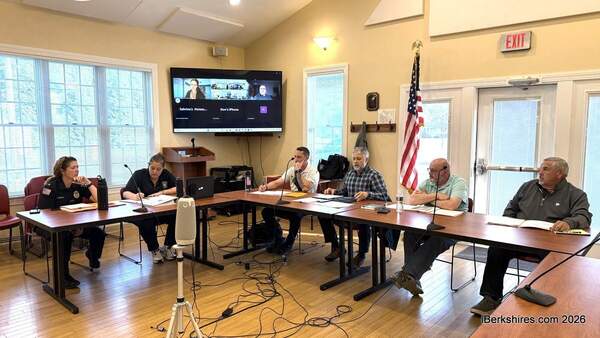
Last Thursday's meeting was Administrator Kathleen Lambert's first official meeting taking over the reins; retiring director Robert Malnati stayed during a transition period that ended last month.

Lambert is trying to create a schedule that will lessen cancellations. There was a two-hour meeting the week before with the drivers union to negotiate run bids and Lambert is working with the new operating company Keolis, which is taking over from Transdev.

The board spoke about anonymous emails from drivers, which Lambert said she has not seen. iBerkshires was not able to see those letters, but has received some. 

"They were lengthy emails from someone describing themselves as concerning BRTA employee, and there was a signed letter from a whole group of employees basically stating their concerns. So, you know, to me, it was a set of whistleblowers, and that, what my understanding is that this really triggers a need for some type of process to review the merits of these whistleblowers, not going to call them accusations, but basically expressions of concern," said member Stephen Bannon.

A letter iBerkshires received spoke of unhappy drivers who were considering quitting because of decisions being made without "input from frontline staff," frustration and falling morale, and the removal of the former general manager shortly after Lambert came in.

Lambert said it's difficult to navigate a new change. She also noted many drivers don't want to do Saturday runs and it has been hard negotiating with drivers on the new runs.

"I would like you all to keep in mind that the process of change is super difficult. Transdev has been here for 20 years, and some of these drivers have never known any other operating company, the way some of the operations have been handled has been archaic," she said. "So getting folks up to speed on how a modern transit system works is going to be painful for them. So I don't want to say that I'm unsympathetic, because I am sympathetic, but I am trying to coax people along with a system that's going to seem very strange to them."

The board spoke about better communication between them and Lambert, citing cooperation will be best moving forward.

"There's just a lot of stuff in the air right now, and there are a lot of fires to put out to make this a coordinated effort. And if we don't keep our communications open and be straightforward, then you get blindsided about how you know the input that you could get from us about your position, and how you know what's going on in your direction, and we get blindsided. And I think that we have to make sure that this is a collaboration," said member Sherry Youngkin.

"Both sides have responsibilities, because in the long run, this advisory board is going to have to make decisions as to how we brought forward and if we've gone forward in a fair and helpful way. And I think that's hopefully what everybody is looking for also." 

Transdev and Keolis held a three-day recruiting event interviewing almost 40 candidates and offering jobs to eight, but only three stayed on to start training. Lambert said it was disappointing but she will keep trying to retain more people.

In her first report to the board, she noted that ridership dipped a little over 10 percent, but still remains higher than last year, adding that was because of cancellations of services because of the lack of drivers.

Like the last meeting, some of the advisory board members were torn over the start of the Link413 service, worried that the start of the service took drivers away and the numbers of riders are low.

Lambert, however, said the ridership has doubled from last month.

"As I've spoken before, we have, generally, a six-month adoption for brand-new service before you can really go in and evaluate, are you being successful based on the grant that my predecessor wrote along with the team for PBTA and RTA, we are ahead of schedule, which is pretty good, so I'm hoping that will continue to improve," she said.

Member Renee Wood said the board never approved the service, adding the only thing she could find in the minutes was a vote to accept the equipment. She said it was supposed to be put on the agenda to discuss.

"The Link413 service has been three years in the making. It's been a grant that was accepted and has been working with our partners, PVTA and FRTA, to put into place. So I don't have the entire history of how that process worked, but it's been three years in the making, and did we not understand that once we accept that grant that we were going to put in new service?" Lambert said.

The board discussed if Title VI, the Civil Rights Act, was followed with an accurate review and accurate amount of time for public comment period on the service changes and if its attorney should review if the  grant conditions were properly followed.

Lambert said changes had the 60-day comment period included in the proposed route realignment packet, giving the opportunity for the community to respond to that as well but will look into the legality of the situation with their attorney.

View Full Story

More Pittsfield Stories