Dalton Select Board Candidates Advocate for Change
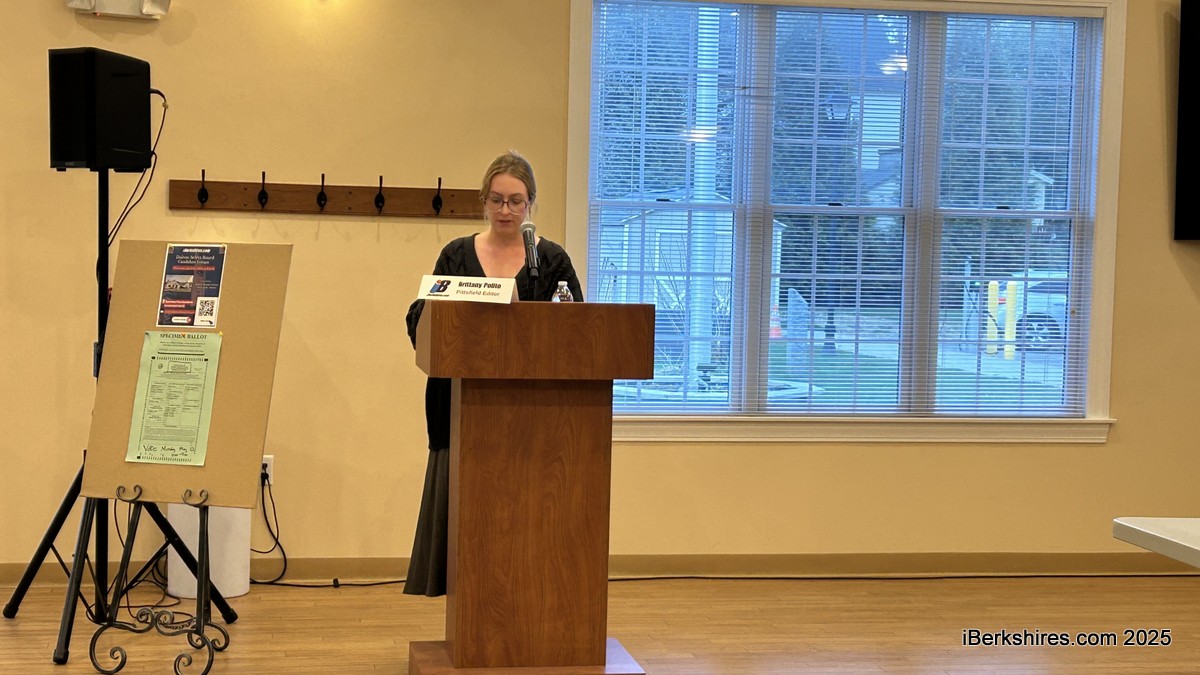
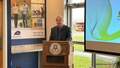
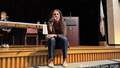
iBerkshires bureau chief Brittany Polito moderates Thursday's forum.
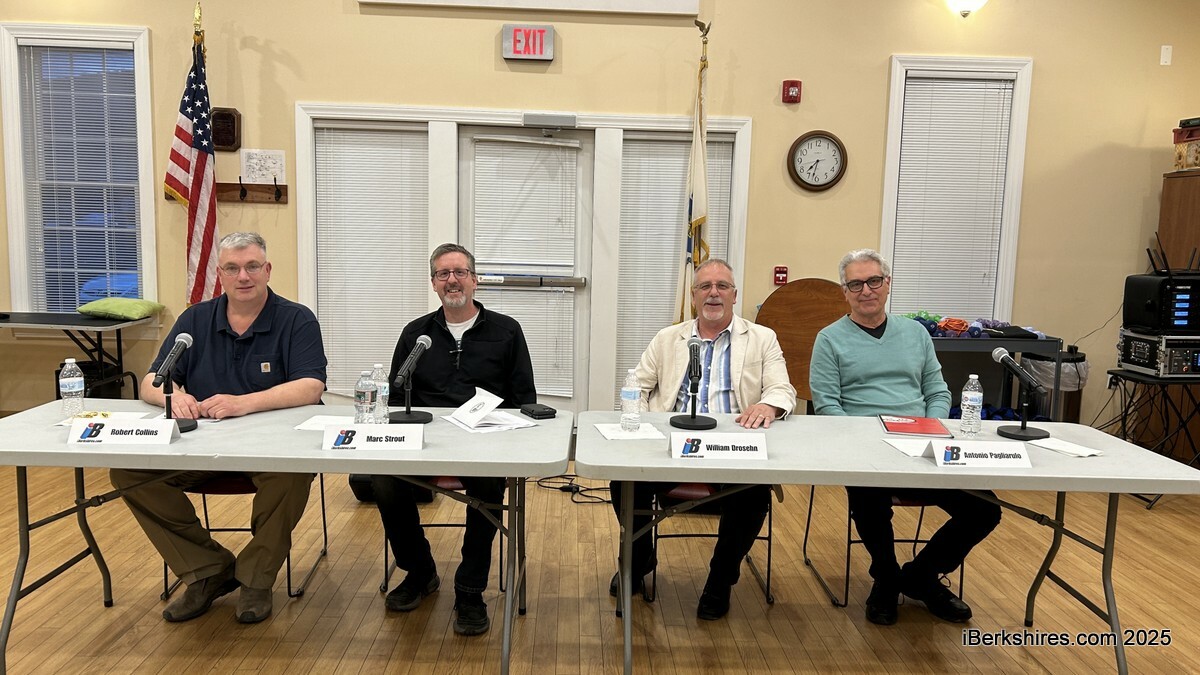
All of the candidates have served on town committees or are incumbents. Both Marc Strout and Robert Collins are seeking re-election to the Select Board. William Drosehn is the chair of the Finance Committee and the Traffic Commission, and Antonio Pagliarulo serves on the Green Committee and the Public Safety Facility Advisory Committee.
The 90-minute event highlighted topics such as the search for a new town manager, fiscal responsibility, ethical governance, transparency, and community engagement.
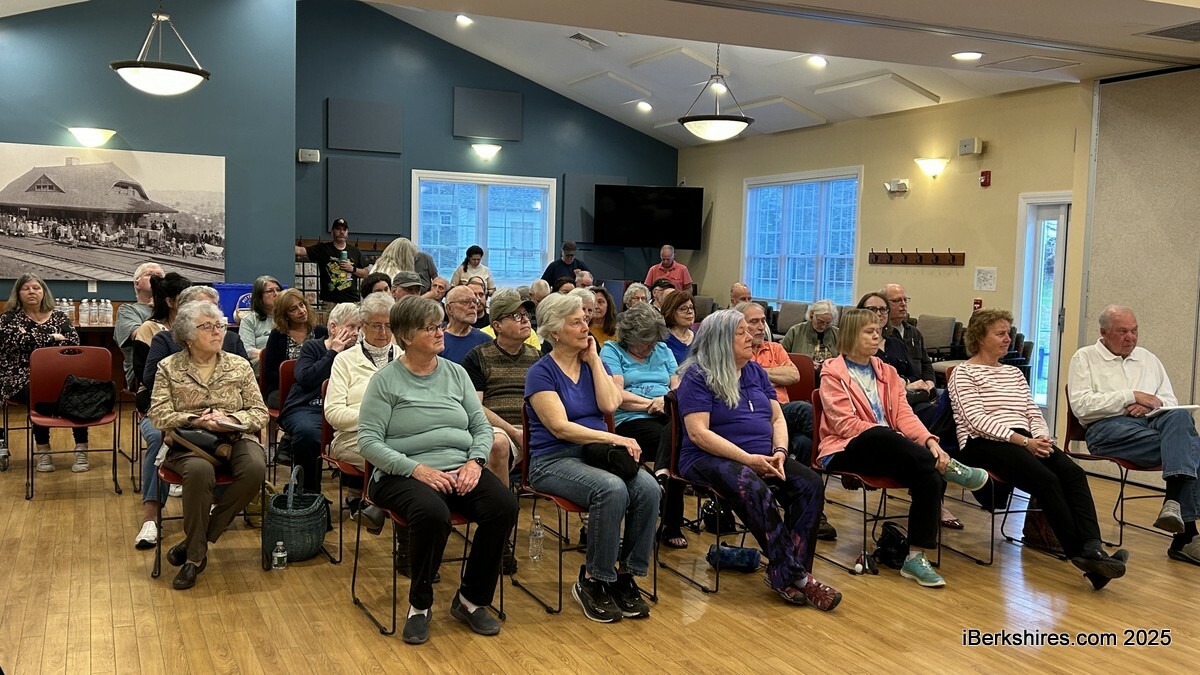
The forum at the Senior Center was hosted by iBerkshires.com, with Pittsfield Bureau Chief Brittany Polito moderating, and in partnership with Dalton Community Television.
In their opening statements, several candidates highlighted points mentioned in their biographies from our previous article.
However, Strout also took a moment to condemn "dirty politics" he said has been spreading around town and on social media, causing upset in his family, and meant to intimidate him.
"It's been a long four days for me and my family. I almost didn't come tonight, but I refuse to bend the knee to dirty politics," he said.
He highlighted his experience of being on the losing side of debates within the Select Board over the past nine years and emphasized the importance of respectful disagreement. He noted that, despite contentious votes, there was never an effort to harm anyone's reputation, career, or family.
"We live in a great community that is the actual envy of Berkshire County," he said.
During the debate, he expressed how he views himself as the voice for the people and the importance of being accessible to residents to handle calls about various concerns, such as streetlights, potholes, and other issues.
If re-elected, he will work with the board and has already started preliminary discussions on attracting more businesses to town and increasing the tax base to reduce the burden on residents. He also advocated for rezoning and restarting the Grow Dalton Committee to aid in this effort.
One of the factors contributing to this year's budget increases is that the town was negotiating three union contracts simultaneously, he said.
He demonstrated how some town positions were not being paid as much as neighboring towns and did not reflect the workers' responsibilities.
For example, highway workers were earning around $20-something per hour, which is far lower than neighboring towns, and dispatchers were making less than $20 an hour.
The first year of new contracts is seen as a major jump; to help relieve this, Strout suggested spreading out contract negotiations rather than doing them all at once.
Collins said additional work is needed to further improve the town's progress on recent projects, including updating old infrastructure, creating a better system to control town spending, and developing a fair approach to gravel process operations.
"To improve financial planning development, I have proposed a bylaw to create a capital planning committee modeled after Lee's very successful committee. The committee will have annual updates to the town's five-year fiscal spending plan," he said.
"I encourage the reactivation of the stormwater commission to begin addressing our infrastructure. We now have a full committee that will map the existing stormwater system and create a repair schedule that will fit into the town's budget."
The bylaw to create a capital planning committee would help long-term fiscal spending and awareness, Collins said, showcasing how it "would have been nice" if the town had known about the need for a new high school and police station in advance.
Since his election in February, he said he has helped improve aspects of the town, especially surrounding the situation with the dust allegedly coming from Berkshire Concrete.
Collins also advocated for software that communicates between department heads, which would streamline administrative processes and improve productivity.
"Right now, we have a lot of things in Town Hall that I call it dinosaurs in my eyes, that paperwork is moved from one department to another, and then that information is re-entered into the computer, and there's software out there that can help with that," he said.
One of the things that needs updating in Town Hall is the outsourcing of payments to an external service.
"If someone wants to pay with their debit card or credit card or their taxes at Town Hall, they should be able to do that," he said.
Drosehn emphasized the need for long-range infrastructure planning, creating a capital planning committee, and controlling town spending to avoid potential service cuts.
He urged in-depth planning by having capital projects in design so the town can take advantage of state and federal grants.
"We need to identify a weakness in our infrastructure. I support the formation of a capital planning committee, as proposed during our upcoming annual town meeting. To help with this plan, we may need consultants to evaluate these needs," Drosehn said.
Drosehn said he has noticed over the years that the town doesn't have policies and suggested the board work on developing policies to guide actions for committees and boards.
Clear procedures create a roadmap and consistency, he said.
"We do have such a turnover in all of our various committees and commissions within the town. Having a decent set of policies for each and every committee and commission that will give you guidelines and allow you to do a better job and understand the rules of how that group will function," he said.
"I hope to be able to move forward on helping with policies. One other thing, too, is I'd like to see us start to get a bit of a hierarchy within the town and be able to move people forward. In other words, start out with a low level. They have a career ladder to climb."
Pagliarulo advocated for the establishment of a town charter. Dalton does not have a charter; it has a "myriad of mosaic of bylaws," and establishing a policy and procedure manual for the Select Board.
"What we need is a framework of government, in terms of government and governing, a very clear framework so that as a placeholder," he said.
Current board members will not fill the seat forever, so there is a need to create a charter so that the next person to fill the seat has an idea of what their responsibilities are and what guidelines or guardrails there are in terms of moving the town forward, he said.
By state statute, a town charter requires 15 percent of the registered voters to sign, must pass at a town meeting, and would require nine charter commissioners elected at large, he explained.
"This is a way of engaging in our community in terms of town government directly. It has to be voted on by the people … There should be some goal setting for the year again, very public," he said.
He also argued against the town meeting warrant article to eliminate the stretch code, which he said could harm the town by forfeiting potential grants for renovations at Town Hall and public safety facility.
Pagliarulo also advocated for rezoning or upzoning, seeing it as an opportunity to relieve the taxpayer burden, and suggested exploring opportunities for multifamily housing. He also noted how he is a supporter of Accessory Dwelling Units.
All candidates agreed that addressing residents' concerns about the dust and particulates coating bordering neighborhoods from Berkshire Concrete's unauthorized dig site is a major priority.
More information on that, the discussion surrounding the search for a new town manager, and ways to address the town's finances, will be covered in a following article.
The annual town election is May 12.
Tags: candidate forum, election 2025, town elections,