Town Meetings That Rejected CBRSD Agreement to Vote Again
DALTON, Mass. — The three towns that failed Central Berkshire Regional School District's proposed regional agreement last year will likely see it again on this year's annual town meeting warrant.
The item failed during last year's town meetings in Hinsdale and Peru, as well as Cummington's special town meeting — the regional agreement needed six out of the seven towns to vote in favor of passing.
Until an updated agreement is approved, the school district will continue to operate under its current agreement and follow state law.
The original agreement, created in 1958, has been amended several times and approved locally but never by the state Department of Education, which is required.
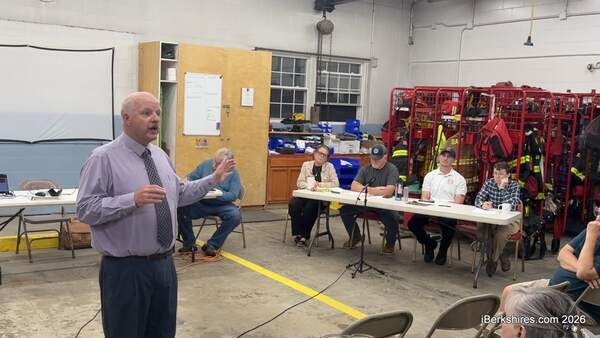
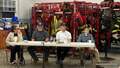
Over the past year, David Stuart, the vice chair of the School Committee and chair of the ad hoc regional agreement committee, and other School Committee members have visited the towns to find a solution and inform residents about what the state allows to be included in the regional agreement.
Despite this, they were unsuccessful in getting the Hinsdale, Cummington, and Peru's select boards to support it.
"It's been hard. There's a lot of good things in here," Stuart said.
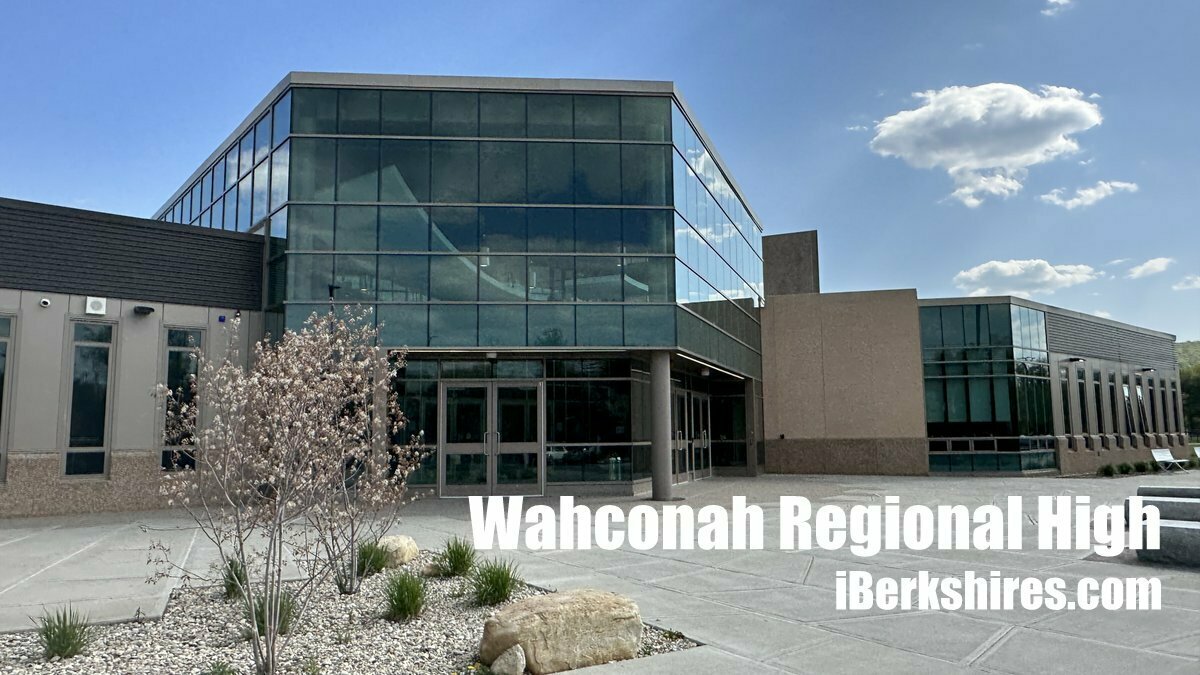
The apprehension stems from the School Committee's 2019 decision to use popular vote for the approximately $72 million Wahconah Regional High School building project, and two years earlier using the popular vote for the feasibility study.
"This has been, and still is, the main point of contention for several of the towns," Stuart informed iBerkshires in a follow-up to clarify what was said at the meeting. "An agreement was made in July 2019 between Hinsdale and the School Committee in this regard, but it was not understood at the time that excluding the popular vote is not allowed under MGL CH 71 S.14D."
The towns wanted to require a unanimous vote, not a two-thirds vote, for all decisions regarding debt incurrence; however, state law requires a two-thirds vote.
Over the last year, the ad hoc committee has discussed a few potential solutions, such as creating a policy rather than including it in the regional agreement, and exploring legislative changes.
The regional agreement will likely go back to the towns unchanged, this time with more education on the topic to inform residents on what the document is, its benefits, and what the district can include in it.
The revised document incorporates updated language to represent the district's procedures and fiscal responsibility accurately, and includes information to meet the requirements of the state Department of Elementary and Secondary Education.
"One of the things I think people don't understand is that all the stuff that happened before can still happen again, because the old regional agreement is in effect without any good things that you guys put into it," said Steven Marantz said.
The committee is committed to having ongoing and comprehensive communications regarding any future capital projects, Blake-Davis said.
The regional agreement might pass without the select boards' endorsement because of all the work Stuart and other committee members have done to provide residents with more information on the document, said School Committee member Elizabeth Lounsbury.
"Before I joined the School Committee, I'd never heard of the regional agreement. I had to study and figure out what it is. The average person, like my peers, do not know," added Sara Tucker.
"So, [having] something to break it down so the voters understand what you're saying, and not just relying on the select board to give out the information. Like, people have to understand."
The district is also working hard to encourage its families to go to town meetings so they have a voice in this, Superintendent Leslie Blake-Davis said in a follow-up.
Throughout the meeting, Stuart emphasized the need to improve the relationships between the town and the district by rebuilding trust through transparency and ongoing communication.
School Committee member Charlotte Crane suggested that the committee issue a formal apology to the towns, even though the current members were not the same ones who made the decision in 2019.
"I don't think anyone's intentions were bad, but I still think it is the responsible thing to do, to apologize and say ‘we hear you and we see you — that we have hurt you, and we do apologize for that, and we're trying to move forward in a responsible fashion that protects you from future hurt,'" Crane said.
Stuart said this does model the restorative practice that has been discussed in the district.
History
In 2017, the district voted by popular vote to move forward with a feasibility study. In 2019, the Wahconah Regional High School building project was approved with just more than 51 percent of the vote — 1,785 of the 3,483 voters districtwide (51.2 percent.) Of that, 1,748 voters turned out in Dalton alone.
Voters in Becket and Washington voted in favor of the project by sizable margins. In Becket, 176 of 253 voters (69.6 percent) voted yes. In Washington, the margin was 112-54 (67.5 percent yes).
The project failed in Cummington, Hinsdale, Peru, and Windsor. Only 8.8 percent voted in favor in Cummington (194-450). In Hinsdale, the district's second-largest town, only 42.3 percent voted in favor (334-246). In Peru, only 38.6 percent voted in favor (162-102), and in Windsor, only 40.1 percent voted in favor (139-93). More on the votes here.
Current School Committee members Todd Emerson, Ellen Lattizzori, Richard Peters, and Barbara Craft-Reiss were present for the WRHS vote. Only Peters and Craft-Reiss were on the committee for the vote on the feasibility study. Both votes passed unanimously. (iBerkshires had incorrectly stated that no current members were on the committee at the time.)
Tags: CBRSD, regional agreement, town meeting 2025,