image description
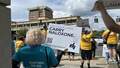
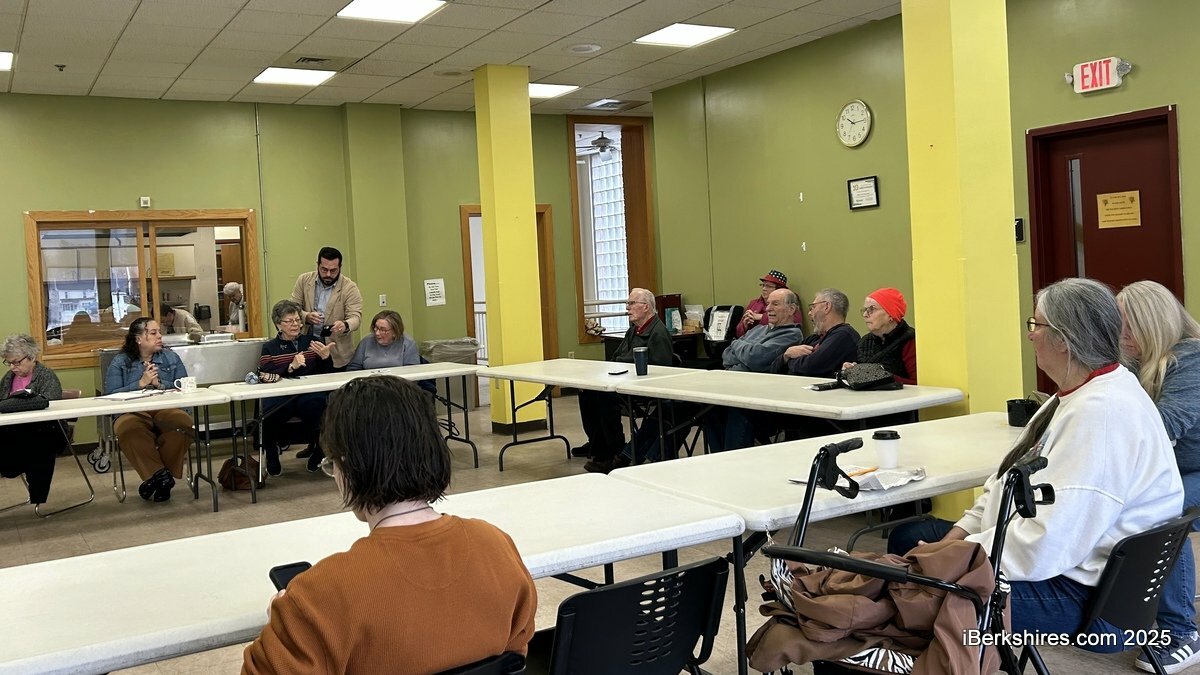
The public session at the Senior Center was attended by Fire Chief Thomas Sammons and Commissioner of Public Works Ricardo Morales, seen above helping attendees with phone questionaire.

Pittsfield Talks Hazard Mitigation

By Brittany PolitoiBerkshires Staff
Print Story | Email Story

PITTSFIELD, Mass. — The city's updated Hazard Mitigation Plan is headed towards final review.

On Monday, community members and public officials mulled disaster preparedness at the Ralph J. Froio Senior Center.  Pittsfield's 2019 plan is due for an update so the city stays eligible for grant funding and, of course, prepared.

"Mitigation planning is the foundation for establishing where the city would like to direct its risk reduction efforts, how it would like to build community resilience through the whole breadth of natural hazard events that it is at risk to. It brings people together and organizations to develop strategies, to build ideas for projects, to do things through, say, plans or regulations, outreach activities, and so on," said Darrin Punchard of Jamie Caplan Consulting.

"These hazard mitigation plans, 25 years ago, became a requirement for cities and towns across the United States in order to be eligible for certain grant programs."

Pittsfield recently partnered with Berkshire Medical Center for a nearly $2 million Hazard Mitigation Grant toward backup generators at the hospital.  

"These are key grant funding programs that have come through the federal government, but in order to access and be eligible for that type of funding, you have to prepare these plans and update them every five years," Punchard explained.

"So that's the purpose of this plan document is really to build community resilience, but also, very importantly, maintain grant funding eligibility for the city."

The Hazard Mitigation Plan, last updated in 2019, focuses the city's limited resources on areas of greatest risk, helps build partnerships with organizations outside of the city, and increases public awareness. Punchard added that the plan can also align with other city objectives, but "saving lives and money, that's the main focus, of course, of hazard mitigation."

Also in 2019, the city went through a Municipal Vulnerability Preparedness, or MVP, process that heavily focused on risks posed by climate change.


Pittsfield began working with the firm (which facilitated the existing plan) last fall, and Monday's public hearing was the second. In a few weeks, a draft plan will be posted for public input before a final plan goes to the state and Federal Emergency Management Agency for approval.

The plan's six goals relate to saving lives and property, high hazard potential dams, local plans and regulations, building and infrastructure projects, natural and cultural resources, and education.  The risk assessment process and the hazard mitigation strategy are the meat and bones of the document.

Flooding from precipitation, severe winter storms, wildfires, and temperatures were identified as the city's highest risk hazards, while earthquakes and landslides are the lowest risk. This was mirrored in responses from attendees, who expressed concern about winter storms, flooding, and power outages.

"There's nothing we can really do to stop them from occurring or limit their intensity as a natural event but what we can do is limit the risk, its impacts on our community assets, on people, on our built in environment, our infrastructure and critical facilities, our natural environment, and the economy," Punchard said.

Risk is the potential for damage, losses, or other impacts created by the interaction of natural hazards such as hurricanes, earthquakes, and wildfires with community assets. The plan looks at 11 natural hazard categories and identifies critical facilities such as fire and police stations, utility lifelines, and schools that serve as emergency shelters.

"There's a whole chapter dedicated to risk assessment, so you'll find a profile for each of those 11 natural hazards identified in the plan, what potential impacts are, and again, how they were all prioritized against one another," Punchard explained.

"There's a capability assessment. This is an aspect of the plan I was heavily involved in, which was really looking at the city's existing plans and regulations, and looking across departments of all those great things that the city is already doing to help mitigate risk, and where there are opportunities to do perhaps more and build those capabilities and resources at the city level."

The presentation included information about individual preparedness and emergency planning "because it's not all up to the chief and emergency management and first responders, of course, to help us must be more reliant," he added.

"There's a lot we can do at the individual, home level, neighborhood level, as well as citywide."


Tags: hazard mitigation,   mvp,   

If you would like to contribute information on this article, contact us at info@iberkshires.com.

BRTA Focuses on a New Run Schedule

By Breanna SteeleiBerkshires Staff

PITTSFIELD, Mass. — The Berkshire Regional Transit Authority is still working on maintaining its run schedules after dropping the route realignment proposal.

Last Thursday's meeting was Administrator Kathleen Lambert's first official meeting taking over the reins; retiring director Robert Malnati stayed during a transition period that ended last month.

Lambert is trying to create a schedule that will lessen cancellations. There was a two-hour meeting the week before with the drivers union to negotiate run bids and Lambert is working with the new operating company Keolis, which is taking over from Transdev.

The board spoke about anonymous emails from drivers, which Lambert said she has not seen. iBerkshires was not able to see those letters, but has received some. 

"They were lengthy emails from someone describing themselves as concerning BRTA employee, and there was a signed letter from a whole group of employees basically stating their concerns. So, you know, to me, it was a set of whistleblowers, and that, what my understanding is that this really triggers a need for some type of process to review the merits of these whistleblowers, not going to call them accusations, but basically expressions of concern," said member Stephen Bannon.

A letter iBerkshires received spoke of unhappy drivers who were considering quitting because of decisions being made without "input from frontline staff," frustration and falling morale, and the removal of the former general manager shortly after Lambert came in.

Lambert said it's difficult to navigate a new change. She also noted many drivers don't want to do Saturday runs and it has been hard negotiating with drivers on the new runs.

"I would like you all to keep in mind that the process of change is super difficult. Transdev has been here for 20 years, and some of these drivers have never known any other operating company, the way some of the operations have been handled has been archaic," she said. "So getting folks up to speed on how a modern transit system works is going to be painful for them. So I don't want to say that I'm unsympathetic, because I am sympathetic, but I am trying to coax people along with a system that's going to seem very strange to them."

The board spoke about better communication between them and Lambert, citing cooperation will be best moving forward.

"There's just a lot of stuff in the air right now, and there are a lot of fires to put out to make this a coordinated effort. And if we don't keep our communications open and be straightforward, then you get blindsided about how you know the input that you could get from us about your position, and how you know what's going on in your direction, and we get blindsided. And I think that we have to make sure that this is a collaboration," said member Sherry Youngkin.

"Both sides have responsibilities, because in the long run, this advisory board is going to have to make decisions as to how we brought forward and if we've gone forward in a fair and helpful way. And I think that's hopefully what everybody is looking for also." 

Transdev and Keolis held a three-day recruiting event interviewing almost 40 candidates and offering jobs to eight, but only three stayed on to start training. Lambert said it was disappointing but she will keep trying to retain more people.

In her first report to the board, she noted that ridership dipped a little over 10 percent, but still remains higher than last year, adding that was because of cancellations of services because of the lack of drivers.

Like the last meeting, some of the advisory board members were torn over the start of the Link413 service, worried that the start of the service took drivers away and the numbers of riders are low.

Lambert, however, said the ridership has doubled from last month.

"As I've spoken before, we have, generally, a six-month adoption for brand-new service before you can really go in and evaluate, are you being successful based on the grant that my predecessor wrote along with the team for PBTA and RTA, we are ahead of schedule, which is pretty good, so I'm hoping that will continue to improve," she said.

Member Renee Wood said the board never approved the service, adding the only thing she could find in the minutes was a vote to accept the equipment. She said it was supposed to be put on the agenda to discuss.

"The Link413 service has been three years in the making. It's been a grant that was accepted and has been working with our partners, PVTA and FRTA, to put into place. So I don't have the entire history of how that process worked, but it's been three years in the making, and did we not understand that once we accept that grant that we were going to put in new service?" Lambert said.

The board discussed if Title VI, the Civil Rights Act, was followed with an accurate review and accurate amount of time for public comment period on the service changes and if its attorney should review if the  grant conditions were properly followed.

Lambert said changes had the 60-day comment period included in the proposed route realignment packet, giving the opportunity for the community to respond to that as well but will look into the legality of the situation with their attorney.

View Full Story

More Pittsfield Stories