Clark Art Institute to Air "Figaro" Broadcast
Print Story | Email Story

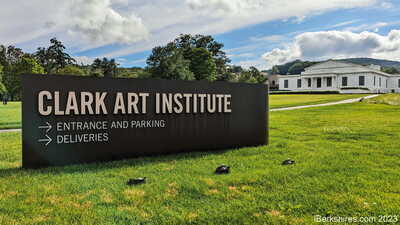
WILLIAMSTOWN, Mass. — The Clark Art Institute will present a broadcast of the Metropolitan Opera’s production of "Figaro" on Saturday, April 26, at 1 p.m. in the Manton Research Center auditorium.

The broadcast is part of "The Met: Live in HD" series and will feature the full opera performance, including backstage interviews and commentary. Joana Mallwitz will conduct the ensemble cast, which includes Michael Sumuel, Olga Kulchynska, Joshua Hopkins, Federica Lombardi, and Sun-Ly Pierce.

Prior to the broadcast, from 11 a.m. to 1 p.m., the Manton Study Center for Works on Paper will host a display of prints, drawings, and photographs related to the theme of marriage.

Tickets are $25, with discounts available for Clark members, students, and children. Advance registration is recommended. Tickets can be purchased at clarkart.edu/events or by calling 413 458 0524.

The next "Met: Live in HD" performance at the Clark will be "Salome," screening on May 17 at 1 p.m.

If you would like to contribute information on this article, contact us at info@iberkshires.com.

Letter: Incomplete Picture from Greylock School Committee

Letter to the Editor

To the Editor:

At the October Mount Greylock School Committee meeting, there was much celebration over the student growth percentiles (SGP) from last year's MCAS test data (Spring 2026). Growth is worth celebrating. But I worry the meeting, and the coverage of it, left families and our community with an incomplete picture of how our students are doing in math.

"Growth" sounds like it means scores went up, but that isn’t quite what SGP measures. SGP compares each student to students in the state who scored about the same the year before, then ranks how they did this year against that group. If a whole group of similar students decreases, the student who decreases the least can still earn a high growth percentile. A strong SGP tells us our students did better than their peers who scored similarly the year before. It doesn't tell us whether they are at grade level.

For example, the current 6th grade class at Williamstown Elementary School (WES) has decreased in their grade-level math proficiency every year since their 3rd grade MCAS. In 2024, 64 percent of the class was meeting expectations; in 2025 48 percent were at grade level, and in 2026 only 33 percent of their class met grade-level expectations. Our current WES 5th grade class follows a similar trend, with 48 percent meeting grade-level math expectations last year vs 56 percent meeting expectations in 2025 when they were in 3rd grade.

Not every class follows this pattern; our current 7th graders gained to 62 percent last year. But seeing entire classes decrease is something that deserves our attention.

Growth comparisons across the state provide useful information, but they do not tell the complete story. We also need to look at where our students are in terms of grade-level proficiency and how those numbers are changing from year to year within the Mt. Greylock school district. This will be our first year with the math interventionist role filled at WES and our second year with the new i-Ready curriculum.

As we watch whether these changes are working, I hope the School Committee will discuss proficiency alongside growth in its public meetings, so our community can see the full picture. Growth matters, but it isn’t enough if fewer of our kids are reaching grade level each year.

Sincerely,

Jenna Hasenkampf
Williamstown, Mass.

Hasenkampf is a parent of WES students in Grades 2 and 4.


View Full Story

More Williamstown Stories