Clark Art Lecture on Colonialism, Image-Making, and Image-Reading
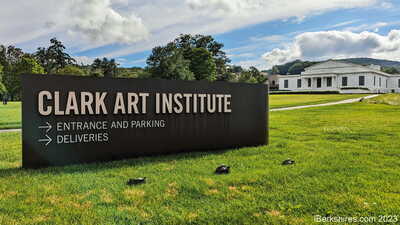 |
WILLIAMSTOWN, Mass. — On Tuesday, April 15, the Clark Art Institute's Research and Academic Program presents a talk by Inês Beleza-Barreiros (Nova University of Lisbon, Portugal / Michael Ann Holly Fellow) on "Thinking Visually: Reparation, Gesture, Reparation."
This free event takes place at 5:30 pm in the Manton Research Center auditorium.
According to a press release:
Beleza-Barreiros explores how colonialism inaugurated an epistemological tradition molded by image-making and image reading that remains operational to this day. Images neither illustrate arguments; they are themselves the (colonial) argument. Nor are they documents of colonialism; they are colonialism in action. As art historians dealing with the visual colonial archive, and in the name of "historical truth" and "documental authority," we often end up reifying the past in the present. Through the process of reproduction and circulation, we eternalize colonial epistemicide. How can we use the visual archives of power to elaborate on a critique of domination? How can we examine colonial visuality without eternalizing its spell in the present? How can we reclaim the ontology of critique as reparative? Inspired by the work of Aby Warbug and its projection onto new forms of visual exploration of the archive pursued by artists and filmmakers, Beleza-Barreiros elaborates on a methodological critique, visual archaeology, which provides a way of thinking visually. The image can cease to be a "thing" and instead become the process of its own deconstruction.
Beleza Barreiros is an art historian, cultural critic, and curator. Her work focuses on how art and images become knowledge-producing objects. She is particularly invested in the visual culture, public memory, and afterlives of colonialism in the Portuguese-speaking world. Trained in the United States, Portugal, and France, Beleza Barreiros is currently a researcher at ICNOVA, School of Social Sciences and Humanities at Nova University of Lisbon. She has been working on award-winning documentary films that explore the relation between cinema and other arts, such as painting and landscape. Publications include Sob o Olhar de Deuses sem Vergonha: Cultura Visual e Paisagens Contemporâneas (2009). At the Clark, she will work towards the completion of Thinking Visually: The Afterlives of the Plantation. Combining decolonial visual studies and ecocritical art history, this practiced-based project aims to re-historicize the plantation as an aesthetic regime of extraction that endures, and visualize what has resisted this regime, while expanding the analysis of images of the plantation and their role within art history.
Free. Accessible seats available; for information, call 413 458 0524. A 5 pm reception in the Manton Research Center reading room precedes the event. For more information, visit clarkart.edu/events.
Tags: Clark Art,