Gov. Healey Touts Transportation Bill in Lenox
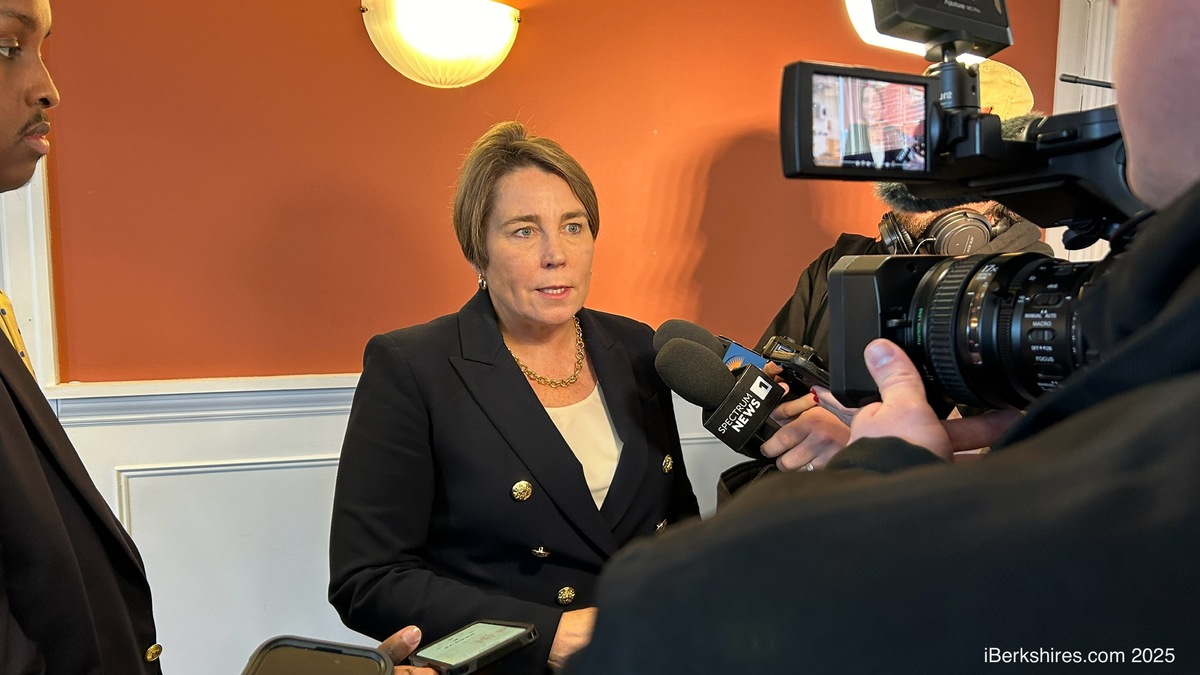
LENOX, Mass. — Gov. Maura Healey believes Berkshire County deserves a "better deal" from the state than it has gotten for decades.
"I accepted on the outset that we need to do a better job as a state of making sure that we take care of Berkshire County and Western Massachusetts," she said, adding that she feels the state has not done this over time.
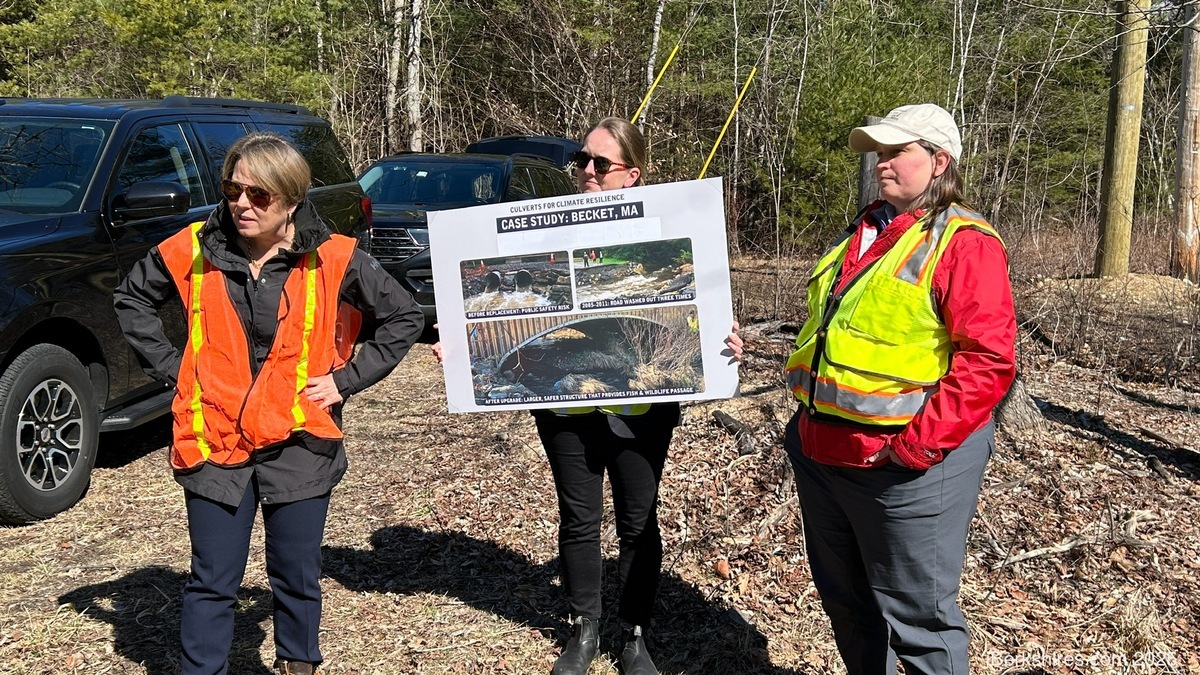
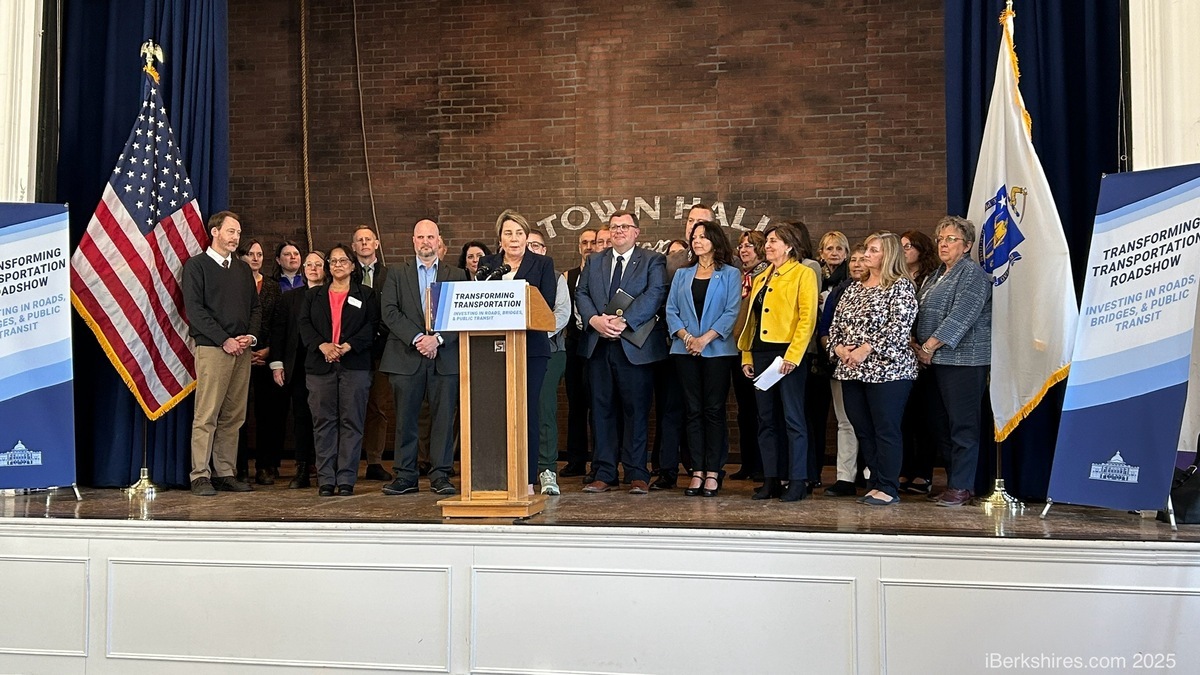
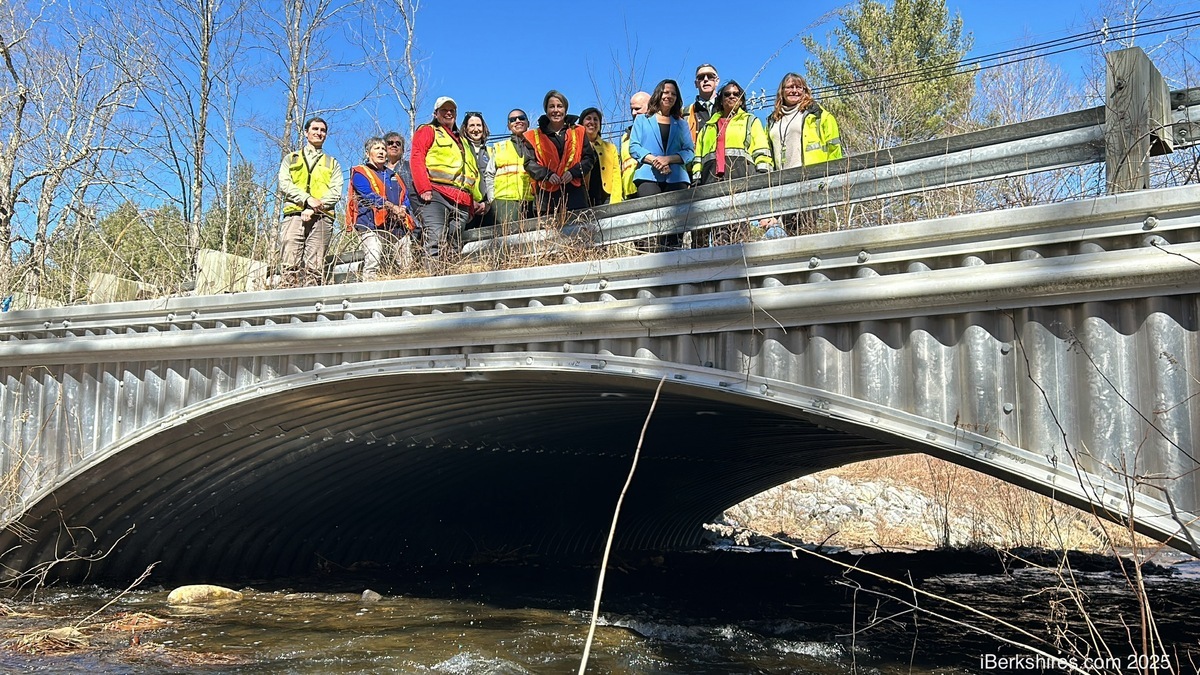
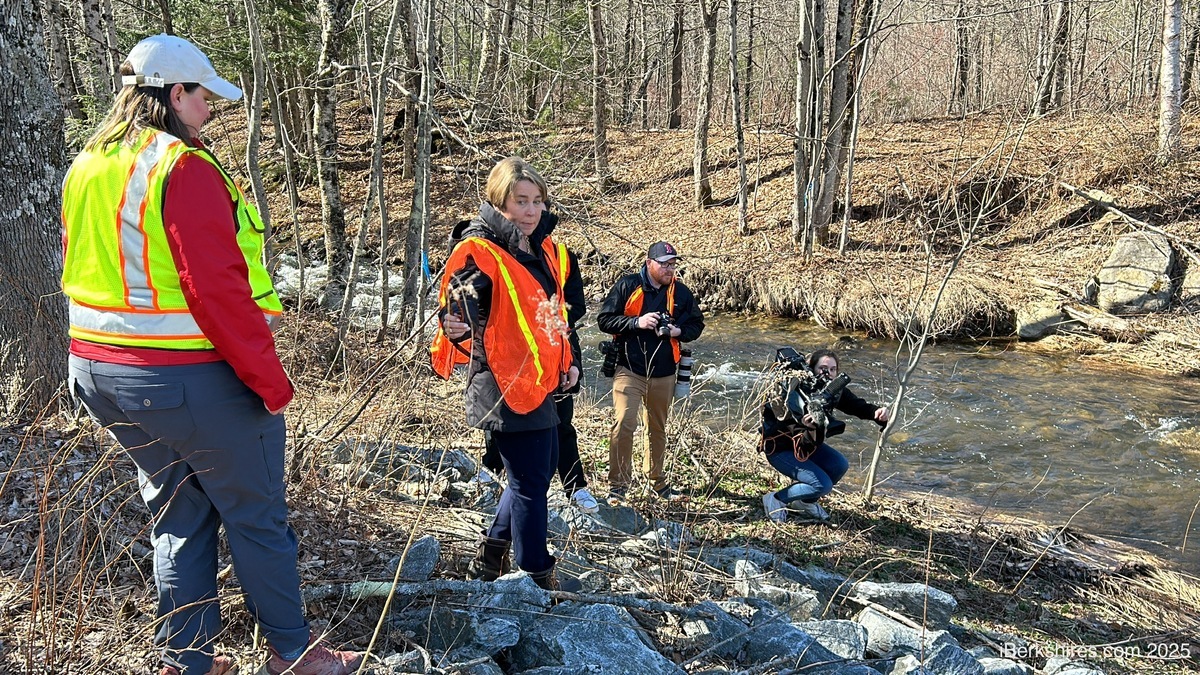
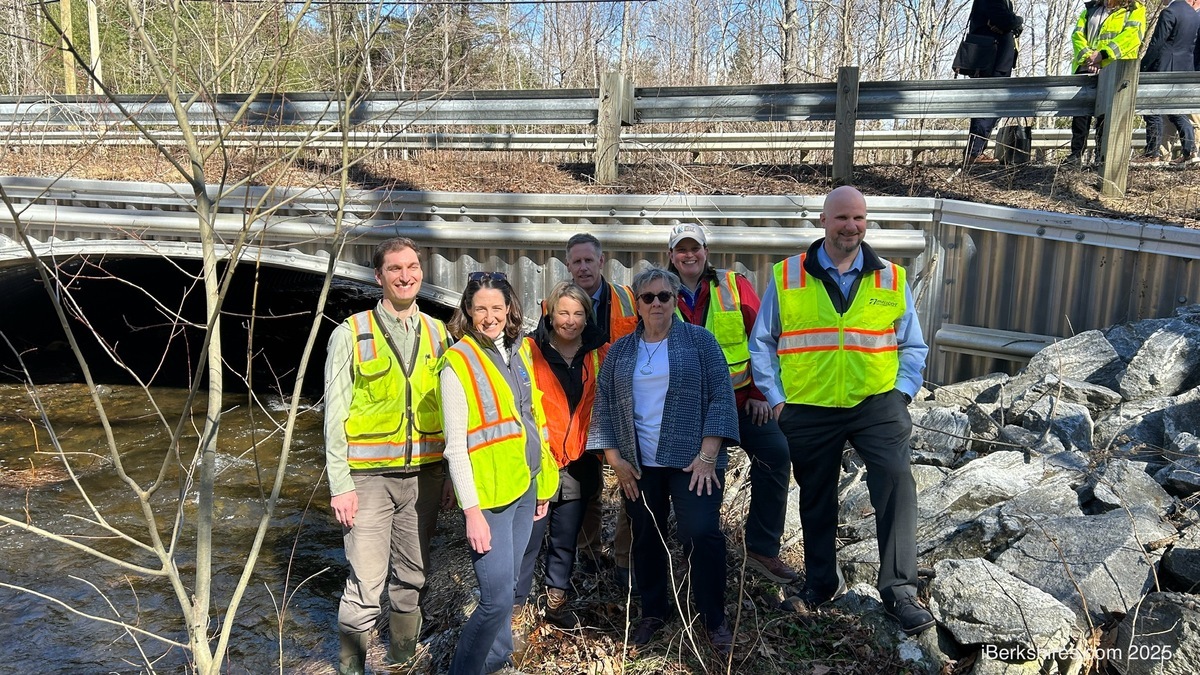
On Tuesday, she and other state officials touted the state's proposed $8 billion transportation plan that includes support for rural roads, culverts, and small bridges. The visit began at Lenox Town Hall with a roundtable closed to press and concluded at an overhauled culvert in Becket.
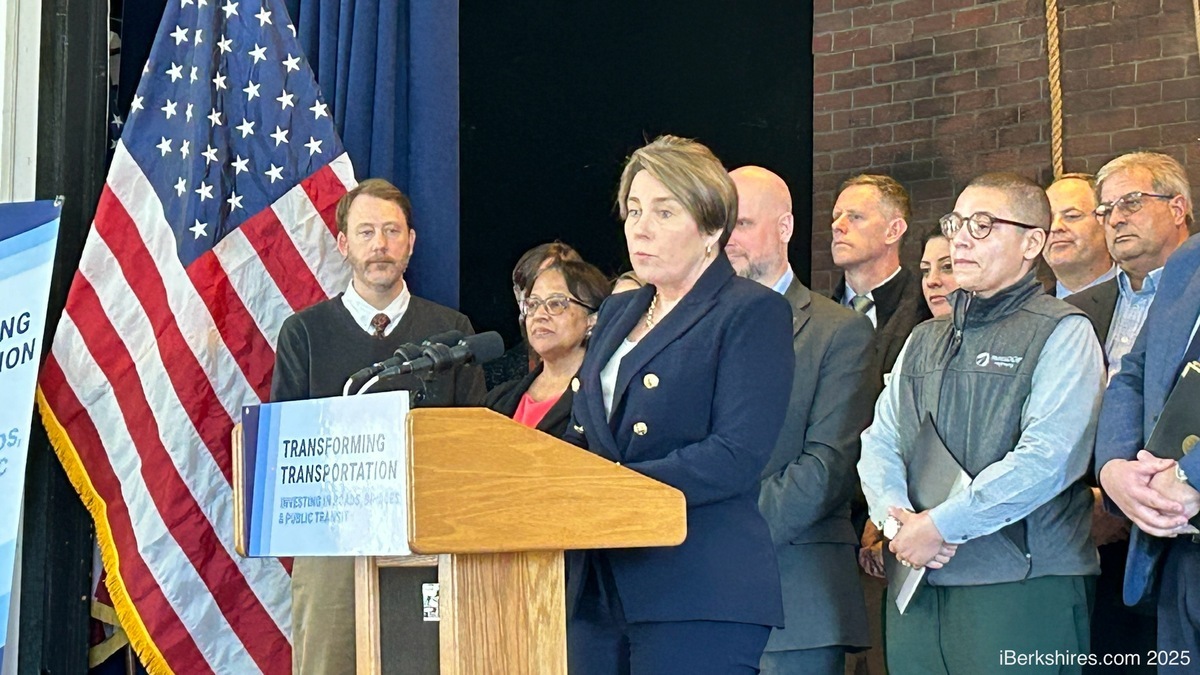
"We came here today to listen to our local officials, to listen to local communities," Healey said.
"…We know that roads and bridges are in need of repair and modernization, residents need better transportation, communities need better protection from severe wind and flooding, and ultimately, this region needs and deserves more attention and more investment from the state to these needs than ever before."
She claimed this is what the new transportation funding plan is all about.
The Healey-Driscoll administration has proposed an investment of $8.4 billion over the next ten years to put the state's transportation system on strong new foundations.
"This includes a 50 percent annual increase in Chapter 90 funding for local roads that would deliver greater equity for Western Mass communities, including the Berkshires, for example, a 62 percent increase for Lenox and I want to thank [Town Manager Jay Green] for serving on our Chapter 90 working group," Healey said.
"Our plan also includes a critical and long overdue investment in climate resilience: $200 million [in Fair Share revenue] to replace culverts and upgrade culverts, as well as small bridges that are so critical to preventing floods."
She emphasized that this bill will not raise taxes because it leverages existing revenue to access more capital. The administration is working "closely" with the state Legislature to get it passed.
"I want you to know that I recognize that Berkshire County contributes more than their share to our state's tourism economy, cultural output, natural resources, and food production," Healey said.
"You deserve a better deal from the state than you had been getting over decades and you also deserve to have communities that are safe from flooding."
When asked if federal funding uncertainties would affect this plan, the governor asserted that it is all state funding and "when I proposed a budget, it's a budget that we know will be funded by state revenues."
"Of course, we rely a lot on federal funding and that's why I've been talking about my concerns with what's going on with the cuts to federal funding and I've applauded the actions by the Attorney Generals around the country to stand up for states, to say, 'Hey, you can't just take away our funding,'" Healey said, adding that she would continue to advocate for the people of Massachusetts.
The administration wants to get these projects done as quickly as possible.
"One, because we want the quality of life to improve for residents of Berkshire County and around the state and two because it doesn't get any cheaper to do this stuff later," Healey said.
She proposed a revised Chapter 90 distribution formula that allocates an additional $100 million based solely on road mileage to better support smaller and rural communities. As a result, most Western Mass communities will see a 60-80 percent increase in annual funding. Becket's funding would increase by 80 percent and Lenox's would increase by 62 percent.
The bill proposes $1.5 billion over five years to increase Chapter 90 funding to $300 million annually, a 50 percent increase over the traditional $200 million.
Transportation Secretary Monica Tibbits-Nutt's favorite things are culverts and Chapter 90 funding.
"Chapter 90 funding will improve connectivity, transportation, and more importantly, access. This isn't just for the people here but it's also for the ecosystems around us," she said.
"Resilience means attention to detail, specifically placing our culverts, constructing much-needed food barriers, and deploying mitigation assets to protect against extreme weather."
Tibbits-Nutt added that planning for the future means protecting public safety, safeguarding infrastructure, and enhancing climate resistance.
Green said Chapter 90 is an integral program that is diverse and flexible.
"Some communities have the ability to augment their road miles, their funding, through local funds but most do not," he said.
"My previous community [Adams] relied on Chapter 90 for many different items to the point where we almost depleted it every year because we bought equipment, we paved roads, we paid for engineering."
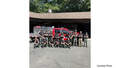
A new single-axle truck for the Lenox Department of Public Works was displayed to show what the funds can be used for.
"This is important as we talk about culverts, as we talk about bridges. When we talk about roads we often forget that Chapter 90 allows us to buy equipment that we otherwise may not be able to afford," Green said.
Energy & Environmental Affairs Secretary Rebecca Tepper said the state's roads, bridges, and culverts were built decades ago and many are not ready for the weather we are experiencing.
"We know the extreme rainfall we saw in 2023 could become eight times more likely at the end of the century due to climate change," she said.
"Making these investments today is a down payment on our future. Every dollar that we invest today in climate resilience infrastructure will save us $13 in avoiding damages and costs down the line. Resilient infrastructure reduces the costs and repairs for our local leaders and helps our local economies grow."
Culverts are a "major" area of concern. These are man-made structures, typically a pipe or tunnel, that carry water under road and railways.
"They are everywhere. Whenever a road crosses a stream, there's a culvert," Tepper said
"Many of them are over 50 years old and undersized. They're designed for weather of the past, not the future. When they fail, it can lead to flooding that disrupts lives, closing roads, impacting schools, and threatening public safety."
Last year, the state awarded $52 million to help cities and towns recover from flooding and build resilience to climate risk — $5 million for culverts. Since the start of the culvert replacement municipal grant initiative in 2017, the Division of Ecological Resources has replaced more than 120 culverts in 90 municipalities statewide and 13 in Berkshire County.
"This work is a win-win for people and nature and acting now will save us a lot of money in the long run," Tepper said. "Strong, resilient infrastructure keeps our communities safe and keeps our local economies thriving."
As climate change intensifies, annual precipitation is expected to increase in intensity across Massachusetts. There has already been a 60 percent increase in the amount of precipitation that fell on the heaviest precipitation days from 1958 to 2022 and many culverts were designed using outdated precipitation estimates. In addition, undersized culverts are one of the biggest sources of river and stream habitat damage.
The Becket culvert on Bonny Rigg Hill Road was too small to handle rainstorms and failed three times in six years, taking the roadway with it. In 2017, it was replaced with a larger, safer structure designed to withstand current and future storms and the road has not overtopped since.
Tags: Chapter 90, culvert, healey, transportation bond,