Residents Oppose Battery Energy Storage in Southeast Pittsfield
PITTSFIELD, Mass. — Fifteen community members attended last week's Conservation Commission meeting to speak against a proposed battery energy storage system on Williams Street.
A Stonehenge Road resident called it an "accident waiting to happen" and said, "None of us want 60 Teslas parked in that goddamn spot."
Fires, flooding, and noise interruptions are collective concerns. More than 170 people in the southeast Pittsfield neighborhood signed a petition against it.
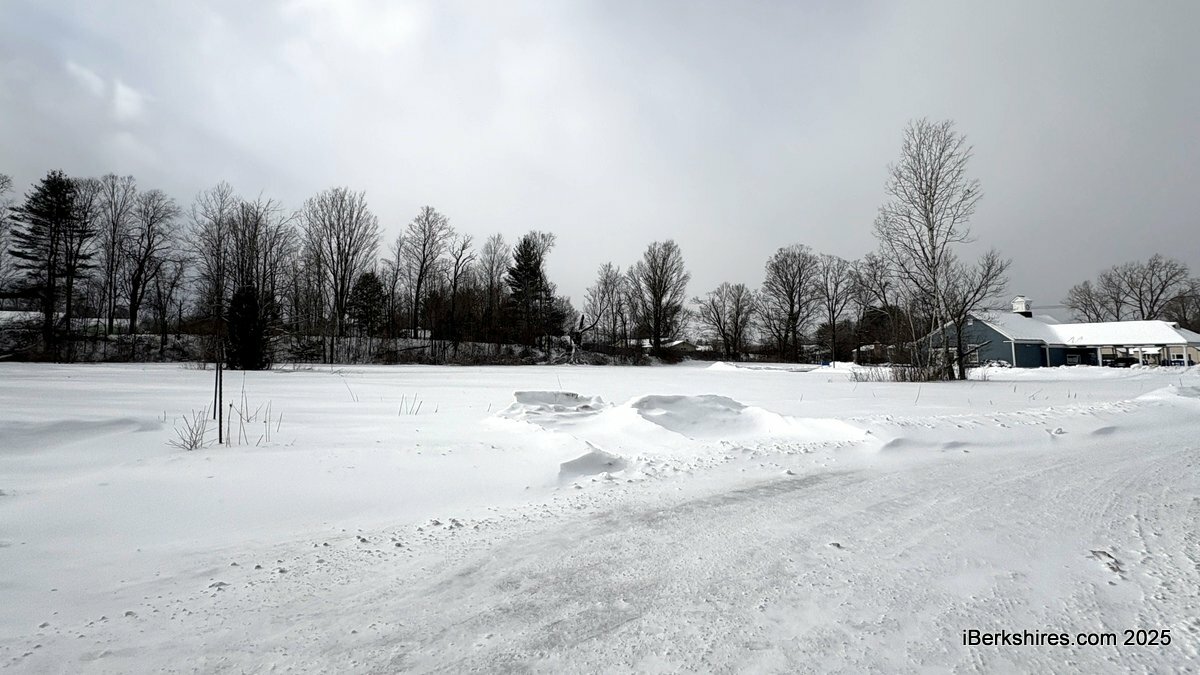
On Thursday, the commission continued a notice of intent application from Brattle Brook LLC to construct a storage system, or BESS, at 734 Williams St., behind the Pittsfield Cooperative Bank.
Chair James Conant clarified, "we will have multiple meetings on this because it's contentious and it's difficult."
BlueWave Solars' Michael Carey, storage development and senior director, and Jesse O'Donnell, an engineer with Weston & Sampson, presented to the commission.
"We are in a time when we are putting in a lot more solar, a lot more wind power, a lot more renewable energy, into our grids nationwide and in Massachusetts, in particular," Carey said.
"In order to continue that and to continue to build a resilient grid in a world with more electric vehicles, big screen TVs, heat pumps, we need to add storage infrastructure to help balance the grid to make sure we have enough power on-site as needed."
He said the site was selected as a "good place" for a battery energy storage project.
"The interconnection points here in these power lines on William Street, it's a place that needs a battery like this," Carey said.
"Those wires get physically hotter at certain times a day, certain times a year. Our battery will actually draw power during those times to help stabilize things. It's in a place that is on a commercially zoned lot that is next to some other commercially zoned lots."
Work is proposed within the bordering vegetated wetland buffer zone. Carey explained that the BESS was moved east so that it is farther from homes and closer to the buffer zone after discussions with abutters.
O'Donnell said about half of the battery pads are proposed within the buffer but are setback about 45 feet from the actual wetland.
"We were trying to work with the abutters, the residential abutters to the site, to move this infrastructure as far away from the residential communities, while still trying to have the best interests of the wetlands and the wetland resource areas on the site as well," he said.
The project includes 12-foot steel, noise-abatement walls and O'Donnell expects the watershed to flow to the east or the north into a basin.
A representative from the state Department of Environmental Protection's Wetlands Circuit Rider Program recommended elevating the application to Category 3, verifying soil conditions, adding pretreatment features, and shifting a portion of the stormwater basin out of the 50-foot buffer zone.
Commissioner Thomas Sakshaug, who recused himself from the agenda item, is an abutter and fears that the delineation was done during drought conditions and doesn't reflect the true size of the wetland.
"I think it's bigger. I've walked through it. It's a nice shortcut to get to the eye doctor. I usually get my feet pretty wet," he said.
"That is inundated. It has surface water throughout the winter, spring, and part of the summer. This past summer was very dry extreme drought conditions and I think that this does not reflect the true size of the wetland."
Brookside Drive resident Patricia Turner said that in moving the BESS away from one neighborhood, they have moved it closer to hers "and now we have a direct line of view to this structure."
"In my reading, something simple, has stuck with me: When wetlands are dug, dredged, or filled, the water that made them wet has to go somewhere," she said.
"This seems pretty simple to me. If it isn't seeping back into the structure built on the wetland, it's going to be leaking onto a formerly dry area that could be a home, a business, or a street. We are one of the closest homes, especially now since it's been moved."
Maria Salatino of Alfred Drive said the safety issues alone are a concern and being on top of a wetland compounds them.
"And I think we all know that batteries and water don't go hand in hand," she said and presented the petition signed by more than 170 residents. "Because this is not only a concern for the area but it's a safety concern, and the wetlands, for other city residents."
Neighbors with young children also voiced safety concerns and a couple said there is a place for battery energy storage in the city — just not in this spot.
"We're roughly about 1500 feet the side of our home from this proposed site and I think it's an outrage that such a project would be proposed in our residential area for many reasons that the people have cited," Brookside Drive resident Barbara Parhizgar said.
Conservation Agent Robert Van Der Kar will reassess the wetland boundaries once the snow has melted.
"There's been a lot of issues in our community over a number of years with mapping that has been done 30, 40 years ago by the federal government being out of date, out of sync, and, frankly, out of step with what the natural conditions that we get now are," Commissioner Jonathan Lothrop said.
Last year, the City Council voted to add a battery energy storage system overlay district to Pittsfield.
It provides regulatory procedures for BESS and BESS facilities, outlines the application process for site plan approval and special permit applications, specifies which districts are comparable with the use, discusses site requirements for each district where it is permitted, and requires that interested departments respond with comments and concerns within 14 days of the application.
Tags: battery, conservation commission,