Dalton Finance Chipping Away at Department Budgets
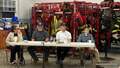
DALTON, Mass. — The Finance Committee voted to decrease several budget lines during its meeting last week.
The committee voted to decrease the Memorial Day Committee budget by $350. The initial request was for $3,550, which was a $1,300 increase from FY25.
The main reason for the increase is the need for 40 grave markers, which, after some research, are "pretty expensive," Town Assistant Alyssa Maschino said at the board meeting.
Additionally, 50 3-foot-5 street flags are needed.
The flags are replaced yearly, and although the markers are not replaced as often, they are more prone to damage now because they are made of plastic rather than metal, Town Accountant Sandra Albano said during the Finance Committee meeting.
The committee approved a budget of $3,200 but emphasized that more funds can be requested if need be by asking for a reserve fund transfer.
"I just want to make it clear to all people out in the town and such is that if the Memorial Day Committee needs any further funds to accomplish what they need to do, they can come to the Finance Committee [and] all they have to do is file a paper on a reserve fund transfer," Chair William Drosehn said.
"And we meet definitely once a month, more often this time of year than we are the rest of the year, so if they end up needing more money, we can fund them."
The committee also approved an amended version of the Forest Warden budget for $5,900, a $450 decrease. The initial request was for $6,400, a $50 increase from FY25.
Committee member Thomas Irwin motioned to decrease the budget because it has been underspent.
Drosehn explained that the department is getting forest fire equipment and will need all of the requested funding and may even come back for more.
"Just to let everyone know it is the responsibility of the town to take care of everything related to the forest fire fighting in the town of Dalton. That's a state mandate. So we don't get choices," he said.
The department no longer owns a forest fire truck; rather, they have an insert to put in the back of a pickup truck that the town does not own at the moment, Drosehn said.
He believes that a lot of the requested funds is going to be used this year, and the reason it has been underspent is that it has been undermanaged in previous years.
"I think if they're going to spend, given their history on spending, that it would be advantageous for them to come and explain their expenses," Irwin said.
Albano highlighted how the department "has utilized capital project requests in the last couple of years and bought some good stuff with it."
"They've been doing a lot of really great work, and believe it or not, it's all volunteer the work that they're doing for us. So, even though this thing is mandated, it is something we need to be careful with," Drosehn said.
The amendment passed, with Drosehn voting against it. Committee members then voted in favor of the new amount of $5,900.
An amended version of the Central Supplies budget, accidentally labeled Building and Grounds, was approved for $20,300, an increase of $80.
The initial request was for $21,300, which would have been a $1,080 increase. The cause for the rise was to cover printing and toner use, which had been underfunded, Town Manager Thomas Hutcheson said.
The computer and printing supplies line item was budgeted for $7,920 in FY25. There was an increase request for $9,000 for FY26.
Committee members highlighted how the office supplies line item that had $10,00 budgeted for had been underspent.
Irwin motioned to decrease the line item by $1,000, bringing it to $9,000, bringing the total budget to $20,300, an $80 increase.
The Finance Committee voted to decrease the Historical Commission budget by $1,000, bringing it to $3,500.
The initial request was for $4,500, which would have been level-funded. However, committee members highlighted how the budget had been underspent.
Committee member Jeffrey Noble said it does not seem they have approached their $4,500 budget in a while, and if they need more funding, they can ask for a reserve fund transfer.
The Historical Commission budget includes funding for purchase of services and other supplies.
Additionally, there are funds for electricity, alarms, and building repair and maintenance for the Fitch Hoose House.
An amended version of the Traffic Commission budget was approved for $1,000, a decrease of $500. The original budget was for $1,500, which would have been level-funded.
The initial budget comprised $500 for supplies and $1,000 for travel. However, Drosehn, also the chair of the Traffic Commission, recommended that the budget be decreased by $500 because members do not go to many things that require travel expenses.
Droshen said the line has never been used in the many years he had been chair. The only time the commission used its entire budget was when it was used to help purchase a line-striping piece of equipment.
"We actually bought a really nice piece of equipment for putting my stripes on the road. Actually worked out nice," he said.
The committee approved an amended version of the Tree Warden budget for $43,475, an increase of $505.
The original request was for $43,976, comprised of $2,761 for the warden’s stipend, $36,005 for purchase of services, $70 for professional and technical training, $2,500 for tree purchase and planting, $2,500 for stump removal reimbursement, and $140 for other supplies.
A request was made for an increase of $1005 in the purchase of services line item, which is for the town’s tree removal service.
The addition is about a third of a day's work for a tree company to come in and do work for the town, Hutcheson said.
He also explained that the Stump Removal Reimbursement is a policy voted by the Select Board for when a resident's tree is encroaching on a sidewalk or road, the town pays up to $500 or no more than half the cost per stump left after the town removes a tree.
Irwin highlighted how the Stump Removal Reimbursement line item can be "comfortably" reduced by $500.
The motion to decrease the Tree Warden budget by $500 was approved, bringing the total budget to $43,476, a $505 increase from FY25.
The committee also cut the proposed cultural activities budget, decreasing it from the initially requested $7,500 to $ 7,200.
Tags: Dalton_budget, fiscal 2026,