image description

Centuries Old Pittsfield Dam Eyed for Removal

By Brittany PolitoiBerkshires Staff
Print Story | Email Story

PITTSFIELD, Mass. — The state is looking into removing a West Pittsfield dam that dates back to the  early 1800s.

The Healey-Driscoll administration last week announced $400,000 from the Department of Fish and Game's Division of Ecological Restoration for preliminary design studies on dam removals.

Pittsfield was one of eight municipalities to receive funding, which will allocated near-evenly resulting in about $50,000 for the project. The privately owned Shaker Grist Mill Dam, located nearest to 321 Lebanon Ave., is the first dam on the Southwest Branch of the Housatonic River.

Its removal would reportedly benefit cold water species in a core aquatic habitat and improve flood resilience for the community.  

It is not included in the federal or state inventory, making the exact condition and hazard level currently unknown.

A website titled "The Mills of Pittsfield" states that the Shakers purchased the former mill site on the river in 1823 and built a grist mill for processing grain. The nearly 15-foot-tall remnants of the mill dam and foundation remain in the river.

"Although originally built for their own purposes, it was improved and enlarged in 1850 and 1867 and became open to the community and was one of the largest grist mills in all of Berkshire County," according to the website.

The mill was destroyed in 1915 by fire that was believed to have been set. It was rebuilt smaller and the business sold to the Coty brothers, who had been managing it. It was later operated for few years by Murphy & Mullen, mainly as a storehouse until torn down in 1925. By that time, the dam wasn't needed for power and the mill's location was too far from the railroad.
 
The stone dam remained but without maintenance began to crumble, and partially fell in after a flood in 1977.
 
The late Merton Todd, a retired GE engineer, tried to rebuild the dam in the 1980s to power his Lebanon Avenue home but was apparently unsuccessful.

There are more than 3,000 dams in the state and most don't serve their original purpose or are in disrepair. Many degrade water quality, block passage for fish and wildlife, increase flood risks, and pose public safety hazards.

Construction to remove the Bel Air Dam on Wahconah Street is slated to begin in the spring and conclude at the end of 2026. The 26.5-by-200-foot structure was built in 1832 and used to generate power for a woolen mill into the 1920s.

The city took it by eminent domain because the owner is deceased.

In 2023, $20 million in American Rescue Plan Act dollars was allocated to remove the deteriorating, potentially deadly dam on Wahconah Street. It has been an area of concern for more than a decade, with the city and DCR conducting inspections, maintenance, and repairs.  In 2020, it was identified as a high-priority project.


The dam is one of six included in the pilot abandoned dams program.

DER also awarded $35,000 to the Housatonic Valley Association's Berkshires Clean Cold Connected Partnership to help build local and regional capacity for restoration education and to plan and implement locally-driven priority restoration projects. 

The partnership supports a network of organizations, agencies, and communities working for healthy aquatic systems and building climate resilience in the Hoosic, Housatonic, and Farmington River watersheds.


Tags: dams,   

If you would like to contribute information on this article, contact us at info@iberkshires.com.

BRTA Focuses on a New Run Schedule

By Breanna SteeleiBerkshires Staff

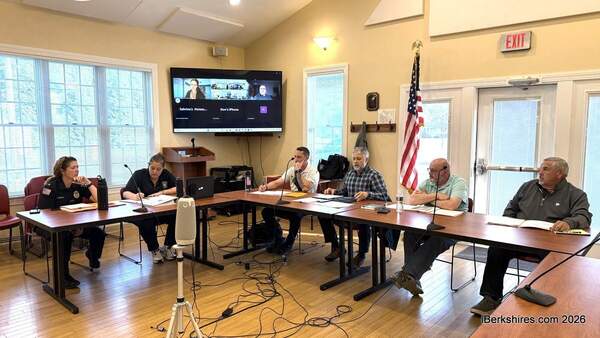
PITTSFIELD, Mass. — The Berkshire Regional Transit Authority is still working on maintaining its run schedules after dropping the route realignment proposal.

Last Thursday's meeting was Administrator Kathleen Lambert's first official meeting taking over the reins; retiring director Robert Malnati stayed during a transition period that ended last month.

Lambert is trying to create a schedule that will lessen cancellations. There was a two-hour meeting the week before with the drivers union to negotiate run bids and Lambert is working with the new operating company Keolis, which is taking over from Transdev.

The board spoke about anonymous emails from drivers, which Lambert said she has not seen. iBerkshires was not able to see those letters, but has received some. 

"They were lengthy emails from someone describing themselves as concerning BRTA employee, and there was a signed letter from a whole group of employees basically stating their concerns. So, you know, to me, it was a set of whistleblowers, and that, what my understanding is that this really triggers a need for some type of process to review the merits of these whistleblowers, not going to call them accusations, but basically expressions of concern," said member Stephen Bannon.

A letter iBerkshires received spoke of unhappy drivers who were considering quitting because of decisions being made without "input from frontline staff," frustration and falling morale, and the removal of the former general manager shortly after Lambert came in.

Lambert said it's difficult to navigate a new change. She also noted many drivers don't want to do Saturday runs and it has been hard negotiating with drivers on the new runs.

"I would like you all to keep in mind that the process of change is super difficult. Transdev has been here for 20 years, and some of these drivers have never known any other operating company, the way some of the operations have been handled has been archaic," she said. "So getting folks up to speed on how a modern transit system works is going to be painful for them. So I don't want to say that I'm unsympathetic, because I am sympathetic, but I am trying to coax people along with a system that's going to seem very strange to them."

The board spoke about better communication between them and Lambert, citing cooperation will be best moving forward.

"There's just a lot of stuff in the air right now, and there are a lot of fires to put out to make this a coordinated effort. And if we don't keep our communications open and be straightforward, then you get blindsided about how you know the input that you could get from us about your position, and how you know what's going on in your direction, and we get blindsided. And I think that we have to make sure that this is a collaboration," said member Sherry Youngkin.

"Both sides have responsibilities, because in the long run, this advisory board is going to have to make decisions as to how we brought forward and if we've gone forward in a fair and helpful way. And I think that's hopefully what everybody is looking for also." 

Transdev and Keolis held a three-day recruiting event interviewing almost 40 candidates and offering jobs to eight, but only three stayed on to start training. Lambert said it was disappointing but she will keep trying to retain more people.

In her first report to the board, she noted that ridership dipped a little over 10 percent, but still remains higher than last year, adding that was because of cancellations of services because of the lack of drivers.

Like the last meeting, some of the advisory board members were torn over the start of the Link413 service, worried that the start of the service took drivers away and the numbers of riders are low.

Lambert, however, said the ridership has doubled from last month.

"As I've spoken before, we have, generally, a six-month adoption for brand-new service before you can really go in and evaluate, are you being successful based on the grant that my predecessor wrote along with the team for PBTA and RTA, we are ahead of schedule, which is pretty good, so I'm hoping that will continue to improve," she said.

Member Renee Wood said the board never approved the service, adding the only thing she could find in the minutes was a vote to accept the equipment. She said it was supposed to be put on the agenda to discuss.

"The Link413 service has been three years in the making. It's been a grant that was accepted and has been working with our partners, PVTA and FRTA, to put into place. So I don't have the entire history of how that process worked, but it's been three years in the making, and did we not understand that once we accept that grant that we were going to put in new service?" Lambert said.

The board discussed if Title VI, the Civil Rights Act, was followed with an accurate review and accurate amount of time for public comment period on the service changes and if its attorney should review if the  grant conditions were properly followed.

Lambert said changes had the 60-day comment period included in the proposed route realignment packet, giving the opportunity for the community to respond to that as well but will look into the legality of the situation with their attorney.

View Full Story

More Pittsfield Stories