image description
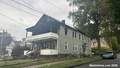
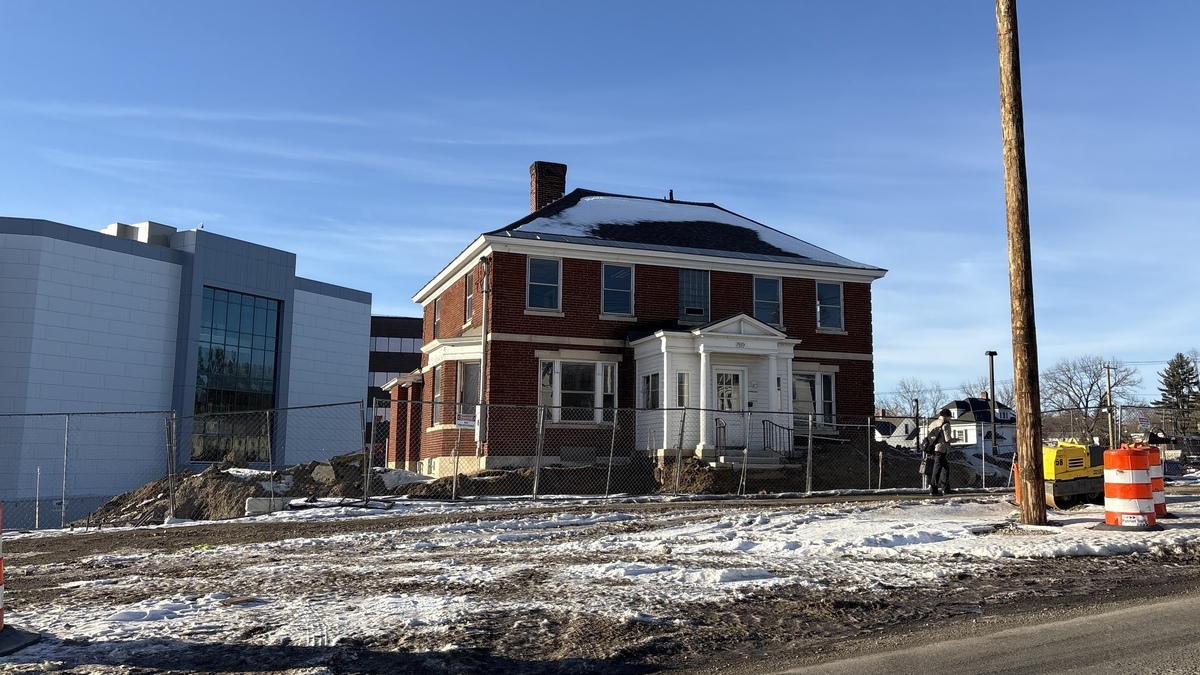
The last remnant of a neighborhood on North Street will come down to make way for a traffic circle and BMC renovations.

BMC Plans Demolition of Century-Old Building

By Brittany PolitoiBerkshires Staff
Print Story | Email Story

PITTSFIELD, Mass. — Roadwork put the nail in the coffin for a Berkshire Medical Center property that was approved for demolition 10 years ago.

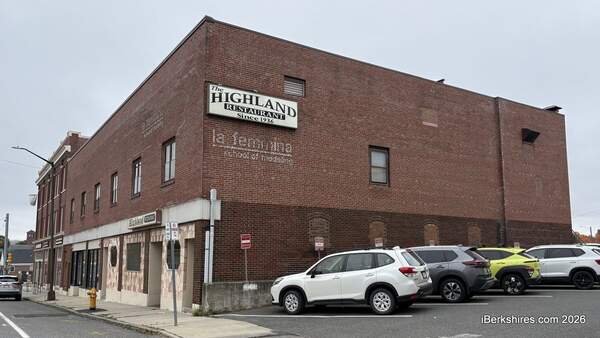
On Monday, the Historical Commission approved leveling 769 North St., a 1920 building on the BMC campus. Work is being done on both sides, as the hospital is undergoing renovations and the state Department of Transportation is overhauling the intersection of North Street and First Street.

The commission approved the demolition in 2015. The first floor has been in limited use since, but it is now unoccupied because it is "inhabitable." Coupled with surrounding changes, BMC decided it had no use for the structure.

Attorney Vicki Donahue explained that the state project will widen the road, encroaching farther to the front of the building and requiring "some significant regrading" and a change of the entrance.

"We occupied the first floor of the building with some of our office people while we waited to see if the state was actually going to put this project out to bid, the road improvement, and finalize our planning around what the new addition to the Medical Arts Complex might look like," said Joseph LaRoche, BMC's vice president of facilities planning and construction.

"So as you can imagine, it takes several years for these things to wash out and give us an idea of exactly what we needed."

The second floor has not been used for "quite some time" and the first floor was used for office space before being vacated.

"We had some issues with respect to some deterioration of the building so we have moved all of our people out of that building and it's no longer occupied," Donahue said.

LaRoche said BMC back in 2015 was working on a master facility plan for the campus which included substantial work to the Medical Arts Complex. At the same time, he heard from MassDOT that it was possible a traffic circle may come to fruition.

He contacted Fuss & O'Neill, who conducted the 2006 Pittsfield Downtown Circulation Study, to see how BMC's property would be affected but it was hard to tell at the time.

LaRoche pointed out that the accessible entrance is on the roadside where a significant amount of real estate will be lost. BMC has done some minor work on the building since 2015 but hasn't invested much.


"And we've completed our work around the addition to the building, I think it looks great, we're doing some more work for that new entrance and actually we've created another exit out of that parking lot, which will get us to our hospital main entrance," he added.

"So in working with the state and working with the city on the road improvements around the campus, we don't really see a need for the building any longer."

The state was worried the building would fall down from construction when the first floor was still occupied, he said. "And we said we're working on taking this building down and so we've relocated anyone that was in the building, and it's been vacant now for several months."

There was some discussion from the commission about the hospital's impact on the neighborhood. Several homes have been taken down to make way for parking and expansions.

Commissioner Jeffry Bradway pointed out that this is the last building of a "neighborhood that essentially no longer exists." Similarly, Commissioner Carol Nichols said she had been thinking about how the city is becoming increasingly aware of how many historical properties have been torn down.

"I think that sensitivity is starting to seep in more and more," Nichols said.

"So I think that's probably what you're hearing when we're looking at it, we're saying, 'It doesn't look that bad, can we move it?' and so I think that new kind of experience it is becoming more and more — the awareness is building of saving what we have."

The building hasn't been a home in 70 years and BMC has owned it since 1974.

Dr. Martin Dobelle, father of former Mayor Evan Dobelle, purchased the home in 1947 when he returned to Pittsfield after World War II. He lived and kept his practice there until renovating it in 1955 as a suite of doctor's offices. It was variously known as the Doctors or Physicians Building after that and became BMC's West Side Neighborhood Health Center in 1976. 

LaRoche said BMC has no intent of taking out other buildings. It owns some properties for employee or student housing and is consistently on the lookout for others.

The commission also approved the demolition of 717 Crane Ave., a 1928 structure that ServiceNet plans to replace with an accessory structure for its farm-based community program.

The nonprofit human service agency closed on the former Jodi's Seasonal on Crane Avenue last year. It is an expansion of ServiceNet's first farm in Hatfield that has provided meaningful agricultural work, fair wages, and personal and professional growth to hundreds of individuals with intellectual and developmental disabilities since opening in 2011.


Tags: demolition,   
If you would like to contribute information on this article, contact us at info@iberkshires.com.

BRTA Focuses on a New Run Schedule

By Breanna SteeleiBerkshires Staff

PITTSFIELD, Mass. — The Berkshire Regional Transit Authority is still working on maintaining its run schedules after dropping the route realignment proposal.

Last Thursday's meeting was Administrator Kathleen Lambert's first official meeting taking over the reins; retiring director Robert Malnati stayed during a transition period that ended last month.

Lambert is trying to create a schedule that will lessen cancellations. There was a two-hour meeting the week before with the drivers union to negotiate run bids and Lambert is working with the new operating company Keolis, which is taking over from Transdev.

The board spoke about anonymous emails from drivers, which Lambert said she has not seen. iBerkshires was not able to see those letters, but has received some. 

"They were lengthy emails from someone describing themselves as concerning BRTA employee, and there was a signed letter from a whole group of employees basically stating their concerns. So, you know, to me, it was a set of whistleblowers, and that, what my understanding is that this really triggers a need for some type of process to review the merits of these whistleblowers, not going to call them accusations, but basically expressions of concern," said member Stephen Bannon.

A letter iBerkshires received spoke of unhappy drivers who were considering quitting because of decisions being made without "input from frontline staff," frustration and falling morale, and the removal of the former general manager shortly after Lambert came in.

Lambert said it's difficult to navigate a new change. She also noted many drivers don't want to do Saturday runs and it has been hard negotiating with drivers on the new runs.

"I would like you all to keep in mind that the process of change is super difficult. Transdev has been here for 20 years, and some of these drivers have never known any other operating company, the way some of the operations have been handled has been archaic," she said. "So getting folks up to speed on how a modern transit system works is going to be painful for them. So I don't want to say that I'm unsympathetic, because I am sympathetic, but I am trying to coax people along with a system that's going to seem very strange to them."

The board spoke about better communication between them and Lambert, citing cooperation will be best moving forward.

"There's just a lot of stuff in the air right now, and there are a lot of fires to put out to make this a coordinated effort. And if we don't keep our communications open and be straightforward, then you get blindsided about how you know the input that you could get from us about your position, and how you know what's going on in your direction, and we get blindsided. And I think that we have to make sure that this is a collaboration," said member Sherry Youngkin.

"Both sides have responsibilities, because in the long run, this advisory board is going to have to make decisions as to how we brought forward and if we've gone forward in a fair and helpful way. And I think that's hopefully what everybody is looking for also." 

Transdev and Keolis held a three-day recruiting event interviewing almost 40 candidates and offering jobs to eight, but only three stayed on to start training. Lambert said it was disappointing but she will keep trying to retain more people.

In her first report to the board, she noted that ridership dipped a little over 10 percent, but still remains higher than last year, adding that was because of cancellations of services because of the lack of drivers.

Like the last meeting, some of the advisory board members were torn over the start of the Link413 service, worried that the start of the service took drivers away and the numbers of riders are low.

Lambert, however, said the ridership has doubled from last month.

"As I've spoken before, we have, generally, a six-month adoption for brand-new service before you can really go in and evaluate, are you being successful based on the grant that my predecessor wrote along with the team for PBTA and RTA, we are ahead of schedule, which is pretty good, so I'm hoping that will continue to improve," she said.

Member Renee Wood said the board never approved the service, adding the only thing she could find in the minutes was a vote to accept the equipment. She said it was supposed to be put on the agenda to discuss.

"The Link413 service has been three years in the making. It's been a grant that was accepted and has been working with our partners, PVTA and FRTA, to put into place. So I don't have the entire history of how that process worked, but it's been three years in the making, and did we not understand that once we accept that grant that we were going to put in new service?" Lambert said.

The board discussed if Title VI, the Civil Rights Act, was followed with an accurate review and accurate amount of time for public comment period on the service changes and if its attorney should review if the  grant conditions were properly followed.

Lambert said changes had the 60-day comment period included in the proposed route realignment packet, giving the opportunity for the community to respond to that as well but will look into the legality of the situation with their attorney.

View Full Story

More Pittsfield Stories