BEAT Looks to Decarbonization of Last Berkshire Peaker Plant
PITTSFIELD, Mass. — Environmentalists feel community cooperation may help move the needle on the county's last peaker plant transitioning to clean energy.
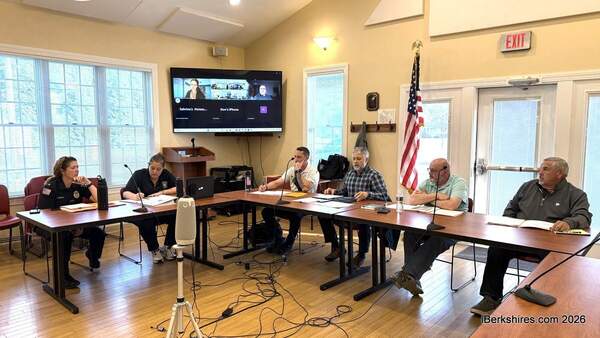
During Wednesday's Berkshire Green Drinks event hosted by the Berkshire Environmental Action Team, Rosemary Wessel discussed possible green outcomes for Pittsfield Generating Co. on Merrill Road.
"It might be in the interest of the city to leave behind yesterday's technology and start looking at what a clean energy future might look like," said Wessel, No Fracked Gas in Mass program director.
"By replacing it, decarbonizing our last peaker power plant could show that Pittsfield is forward-looking, an environmentally minded place that is friendly to the natural surroundings. Environmental tourism is a big part of Pittsfield and it makes sense to get rid of this last bit of fossil fuel technology that's still hanging around."
Peaking power plants — also known as peaker plants — run when there is a high demand for electricity. Facilities on Woodland Road in Lee and Doreen Street in Pittsfield were shut down in 2022 and have been removed entirely, with usable parts auctioned off.
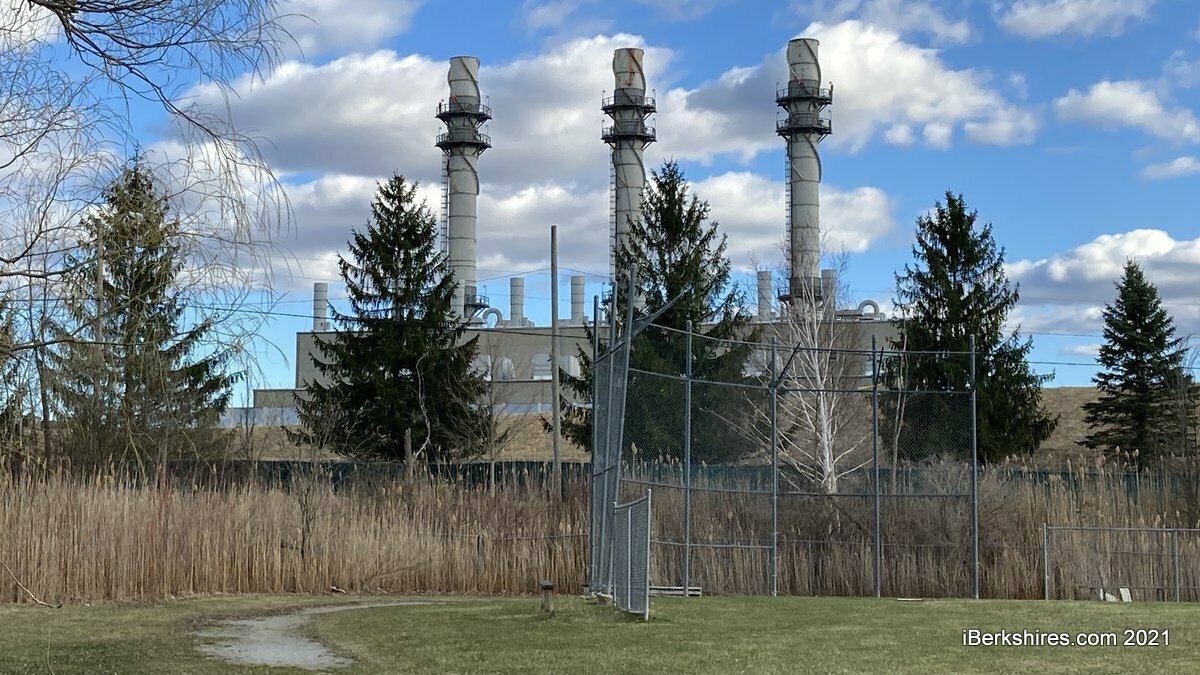
The remaining is Pittsfield Generating Co., owned by Hull Street Energy. Both the owners and the city have expressed interest in decarbonization, Wessel reported, but a joint meeting has not yet occurred.
She said everyone sounds willing but it hasn't moved yet.
"We'd like to see Pittsfield Generating have a discussion with the city about how to make the transition work," she said.
"They're interested in transitioning, they just haven't found a path yet and I really think that community cooperation might help push that forward."
Possible decarbonization scenarios include adding battery energy storage systems to operations, converting fossil fuel turbines to BESS, or converting to BESS and solar. BESS uses batteries to store and release electrical energy.
Over the summer, Gov. Maura Healey created an Energy Transformation Advisory Board that informs the newly established Office of Energy Transformation focused on affordably, equitably, and responsibly accelerating the gas-to-electric transition and readying the electric grid to meet the state's climate and clean energy mandates. A working group has been established to address peaking power plants.
Mayor Peter Marchetti is a member of the advisory board and Wessel reported that Hull Street Energy is a part of the advisory board and peaker working group.
"All of the regular base load plants that supply energy are running at full tilt and when it's really hot and everyone turns on the air conditioner and when it's really cold and they're competing with home heating for gas, that's when these peaker plants start to come on. They only run a very few hours, only a few days a year. It's usually about four hours, usually in the hottest weather. Sometimes it comes on in a real cold polar snap," Wessel said.
"Generally, they run 5 percent of the time or less. Pittsfield Generating, last time we talked to them, said that they run about 2 percent of the time currently but the problem is when they run, they produce a lot of pollution per megawatt of what they produce so since these tend to be very short run times, that short term demand can be met by battery energy storage systems that are charged during the non-peak hours, ideally using renewable energy."
The peaker plant is less than 1,000 feet from Allendale Elementary School and adjacent to environmental justice neighborhoods. Possible health effects from fossil fuel emissions include reduced lung function, asthma, preterm birth, and premature death with children and the elderly most vulnerable.
In 2021, the Pittsfield Board of Health signed a letter in support of the transfer from fossil fuels and to promote engagement with plant owners.
"One of the things that made us interested in the impacts of these power plants was the difference in life expectancy between different neighborhoods in Pittsfield," Wessel said.
"If you look at Morningside compared to the southeast, it's a life expectancy of 10 to 12 years less if you live in the middle of the city and granted, there are a lot of factors that contribute to that, socio-economic factors, access to nutrition, but there's also pollution and it's from traffic too but it's also from sources like power plants and this is something that we can do something about. We can remove at least one of those burdens by transitioning this power plant."
She reported that only two crew members work at the plant regularly and the 2 percent of the time it is running, up to six people work there.
"So it's not a huge labor force. I mean, granted, we don't want to see any jobs lost but that's a very small amount," she said.
"People see a big power plant and often think it's a good 10, 15-person kind of crew and it's fairly small so we could even help those people transition to other jobs."
The plant pays $693,000 in city taxes but appealed to the state board for a reduction for depreciation, now set to pay around $350,000. Wessel pointed out that the aging plant is more likely to produce more pollution per megawatt and pay less to the city.
She said the benefits of transitioning the power plant are many.
"It keeps the plant on the tax rolls for longer. One of the dangers of having an aging plant in place is that they will just let it run out until it dies. Basically, that's what happened to our trash-burning plant. It just kept running and malfunctioning until it just fell apart and somebody else bought it out. We would hate to see that source of income disappear for the city," she explained.
"It would also keep the tax base higher because it would be new technology, rather than old, depreciated fossil fuel technology so it ideally could contribute more like it used to back to the tax rolls in the city. It's in an ideal location, converting an already industrial zone with an existing interconnection to the grid in place. There would be no need for additional land acquisition or forest destruction needed for putting up a large solar array,"
"It also, above all, improves the local health outcomes for the community if this plant would transition to renewables and storage."
There are several possible options for the plant, including a municipal power takeover. Wessel is not sure if Pittsfield has the capacity for that but would like to talk to the City Council for more information.
She pointed to several funding opportunities that exist for this work such as the EPA Environmental and Climate Justice Community Change Grants Program and the Grid Resilience and Innovation Partnership Program.
"It would be great to see this conversation happen at the community level," she said.
Tags: clean energy,