Clarksburg Joining Drug Prevention Coalition
CLARKSBURG, Mass. — The Select Board has agreed to join a collaborative effort for drug prevention and harm reduction.
The new coalition will hire a North County community coordinator who will be headquartered on the North Adams Regional Hospital campus and who oversee allocations for harm reduction, education and prevention efforts. Berkshire Health Systems has also committed about $120,000 over the next five years.
Clarksburg, one of the first communities to sign on to the opioid lawsuit filed by a consortium of states several years ago, has so far received payouts of $23,594.78. It's expected to receive nearly $64,000 by the end of the 16-year payout.
In October, the board had discussed whether to pool that money with other communities, expressing concerns that the small town would not receive enough benefits.
"Anytime there's a pooling of money I think countywide, I think we know where the bulk goes to," said member Colton Andrew said Monday. "I'm more open to the idea of keeping the money here but open to hearing your intentions and how the mony will be allocated."
Chair Robert Norcross said he felt there seemed to be a focus on harm reduction, such as the use of Narcan, and not enough for prevention or problem-solving.
But after hearing from members of the nascent coalition, members voted Monday night to partner with other Northern Berkshire communities.
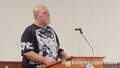
Richard Alcombright, a member of the now completed HEALing Communities Study, said the coalition isn't about specific things, like Narcan.
"This is about all things substance-use disorder from prevention right up until, I have to say this, right until someone dies of this disease," he said.
He offered a summary of the coalition's history, starting out with a group of 25 to 30 that met monthly to address the heroin epidemic during his term as mayor of North Adams. Despite a dip during the pandemic and changing members, a core group's focus on prevention and harm reduction resulted in the recent opening of a peer recovery center and region's participation in the federal study.
"Everything that we've done through our coalition, whether it was through the Northern Berkshire Community Coalition or through the HEALing Communities coalition has been done as a Northern Berkshire effort," Alcombright said.
"Anything that happens in North Adams, anything I've already mentioned and more, the benefactors of that are folks in Clarksburg, are folks from Adams, are folks from Cheshire, are folks from Savoy and in the mountains."
He agreed that prevention was a critical tool in addressing substance abuse and that not enough is being done as 17 percent of people nationwide have a substance abuse disorder.
"If we don't attack this at the youngest levels now, and 20 years from now, you're sitting at this table, and you still see it 17 percent we failed miserably," Alcombright said. "We need to educate these kids."
Meredith Starr, youth prevention coordinator with Northern Berkshire Community Coalition, a partner in the effort, said NBCC is working on a pilot health curriculum with Drury High School that could be rolled out to other schools. If it works out, they're hoping to hire a full-time health educator.
"What came to our attention is that our schools really don't have a health education curriculum, and so our kids are really missing out on a lot of this necessary information," she said. "And what we're hoping to do is to have this pilot program start going into the schools and teach a actual health education curriculum. ...
"It really covers the whole gambit, but we do want to focus specifically on substance use prevention."
NBCC Executive Director Amber Besaw said a regional approach to unify the message works as people move between communities and school.
"The biggest message is prevention is not about kids. Prevention is about adults, how they see what we do, how we prevent or how we give the message to youth about what use is and when it's appropriate," she said. "It's about environmental change. It's changing the laws and norms of our community to support the lay of youth and telling kids it's actually not OK to be 12 and drinking alcohol, it's not OK to be vaping in eighth grade, it's not OK to be doing those things because it's not good for you."
After hearing the reasoning, Andrews said he was fine with pooling resources.
"It's reassuring to me that it's going to be addressed here, specifically in Northern Berkshire County, it's good to see resources that stay locally," he said. "I'd like to see, obviously, an active presence by the group within Clarksburg School, because that really is our main resource and kind of touch point here in town."
The Adams Selectmen agreed to join the coalition on Wednesday.
Tags: drug prevention, substance abuse,