Health, Environmental Officials: Pittsfield GE Landfills Don't Pose Risk
PITTSFIELD, Mass. — Residents continue to express concerns about PCB exposure from the former General Electric campus but health and environmental experts say there is no risk.
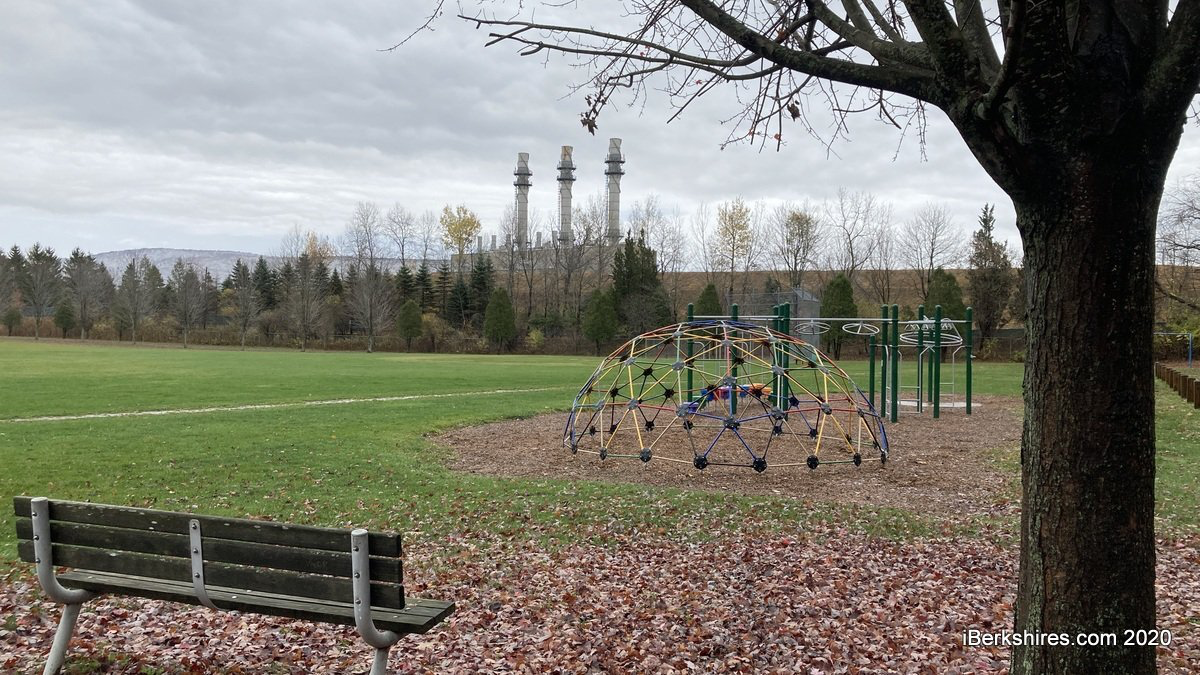
Last week, the council subcommittee on public health and safety received an annual update from the Environmental Protection Agency, state Department of Environmental Protection, and the state Department of Public Health on the capped landfills on Hill 78 and Building 71 that abut Allendale School.
"In summary, for the OPCAs, GE is conducting the long-term monitoring and maintenance program as required by the consent decree in GE's final report program overseen by federal EPA and Mass DEP with support from Mass DPH, and only routine maintenance and minor cap repairs have been required," said Richard Fisher, remedial project manager for the EPA Region 1.
"And the data shows there is no health threat posed to Allendale school or abutting neighborhood by vapors from contaminated groundwater, and that PCB concentrations in the ambient air have been well below the conservative from risk-based levels."
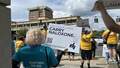
At the beginning of the meeting, Dan Avenue resident Valerie Anderson, who is also a member of the EPA GE Citizens Coordinating Council, said, "Many citizens are rightfully concerned about cancer rates in Pittsfield and the surrounding towns."
"On my small street of only 11 houses, six households have experienced cancer while living there, over 50 percent of the people on my little street," she said.
"My father worked at GE for 41 years in the factory area that recently has undergone demolition. He had cancer and my mother had cancer."
Foot Avenue resident Kaitlyn Pierce, a longtime advocate for transparency and action on PCB (polychlorinated biphenyl) contamination, said the community deserves risk evaluations that reflect current science such as indoor air quality and healthcare support.
"What are the specific measures being taken to ensure that local health care providers are equipped with the knowledge and resources to identify and manage PCB exposure effectively?" she asked.
"Without informed medical professionals, our community remains vulnerable and without proper treatment plans for chronic and serious illnesses."
Allendale was remediated in 1999, and some additional work was done in 2007 and 2008. GE placed remediation materials into the Hill 78 and Building 71 on-plant consolidation areas in the early 2000s, and both were closed and capped by 2009.
A long-term inspection, monitoring, and maintenance plan was included in GE's 2011 OPCA Final Completion Report. GE monitors the OPCAs' physical integrity and groundwater while sampling the air for PCBs and the EPA does air sampling for Allendale twice a year.
Groundwater monitoring is done twice a year on 12 wells surrounding the OPCAs with four additional downgrading wells to test for volatile organic compounds as needed. There are three monitoring wells between Allendale and the OPCAs and for the last 48 months, all were non-detect for PCE, TCE, and PCBs.
Groundwater is said to float away from the school.
"And actually, just before this meeting, I looked further back regarding PCBs just because the subject has been raised about the PCBs and the ground groundwater as related to the school," Fisher said.
"And in the, I think it was like 24 years of monitoring, there's never been a (GW-2 performance standard) exceedance for PCBs."
He said that, in summary, all OPCA monitoring wells continue to show no incremental risk to occupants of existing buildings via indoor air or surface water.
GE conducts air sampling on five locations on its property twice per year and the EPA conducts sampling at two locations on the Allendale property, which will continue until it is agreed to be unnecessary.
The 2021-2024 PCB air levels are 55 to 500 times below the risk-based action level set for the project and consistent with the EPA's latest toxicity information.
Fisher showed a chart that illustrated the air levels falling significantly below the "conservative" notification and action level since 2005, adding "Especially following the Building 71 closure, I mean, it's very very very low."
Ward 2 Councilor Brittany Noto emphasized the importance of indoor residential testingRegional Director Michael Gorski explained that DEP doesn't typically perform indoor air monitoring due to jurisdictional issues with entering people's homes.
"I think that there are a lot of things in buildings, even outside of Pittsfield, out of the areas with PCB concerns, they have PCBs in them," he said.
"So I think indoor air is something that should be considered at all times."
During the meeting, a 2022 study on PCBs in air and human blood in Pittsfield was referenced. The study, conducted by members of the University at Albany's Institute for Health and the Environment in New York, says:
"Concentrations of polychlorinated biphenyls (PCBs) and three chlorinated pesticides were determined in serum from 21 residents of Pittsfield, MA and in the basement, living room and outdoor air of the 10 homes in which they lived. Median serum PCB levels were 4.2 ng/g, which are at least four times the average level in the US population, and consisted primarily of more highly chlorinated, persistent congeners. This reflects contamination with PCBs coming from the local General Electric facility."
Dean Tagliaferro, EPA project manager, argued that the 2022 report did not have recent data and said he confirmed this with one of the contributors. Noto argued that the determinations, outcomes, and findings of the study are current.
Jessica Burkhamer of the MassDPH reported that they are looking at ways to address concerns about healthcare providers' education on PCB exposure.
The DPH's Bureau of Climate and Environmental Health is using data from the Massachusetts cancer registry to evaluate 10 selected cancer types in the communities of Pittsfield, Lenox League, Stockbridge, and Great Barrington over a 25-year period from 1995 through 2019. The data analysis has been completed and a final report is expected this winter.
"This has been going on for a long time so I'm wondering why this material is just being developed because this has been going on here for decades so our clinicians, our providers, should have materials," Councilor at Large Kathy Amuso said, later asking why the cancer study has taken more than five years to complete.
It was explained that the cancer registry only recently released the data but it was made available to DPH early for the study.
Tags: contamination, PCBs,