New Moon Lodge Holds Veterans Dinner and Resource Fair
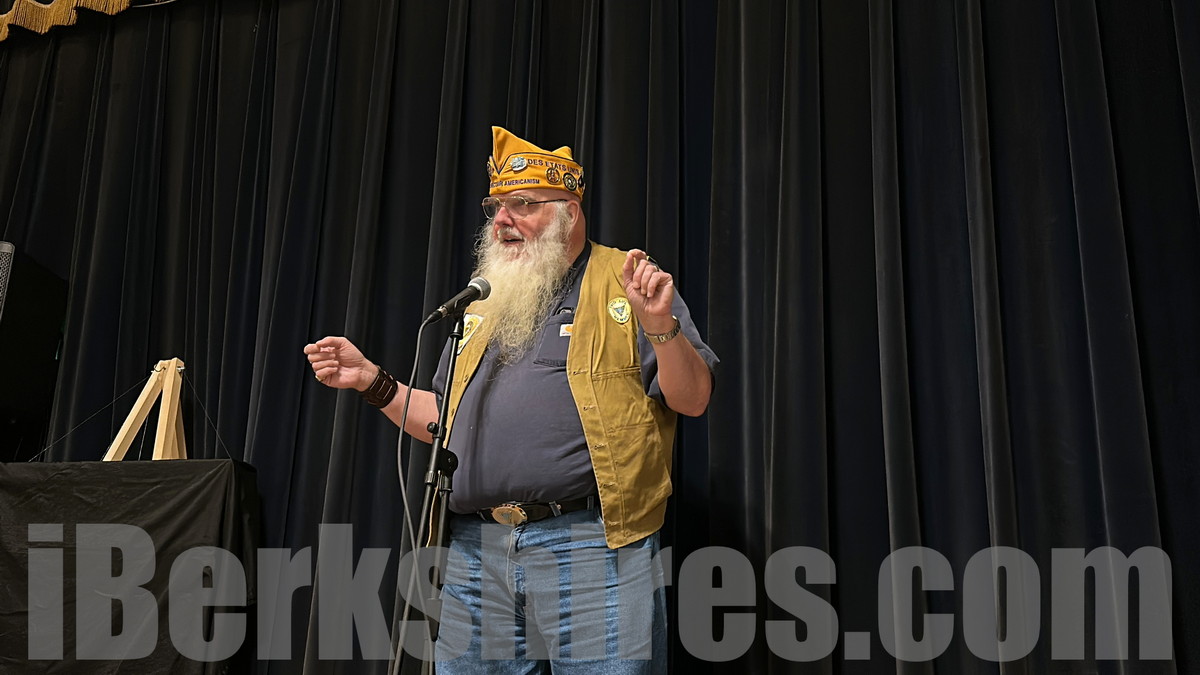
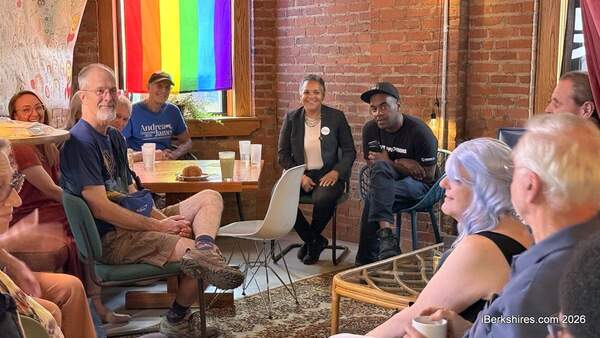
Andrew Berry, a psychologist who works with veterans, speaks at Saturday's resource fair. More photos here.
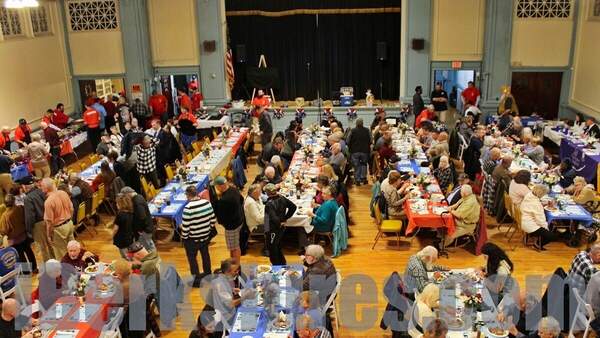
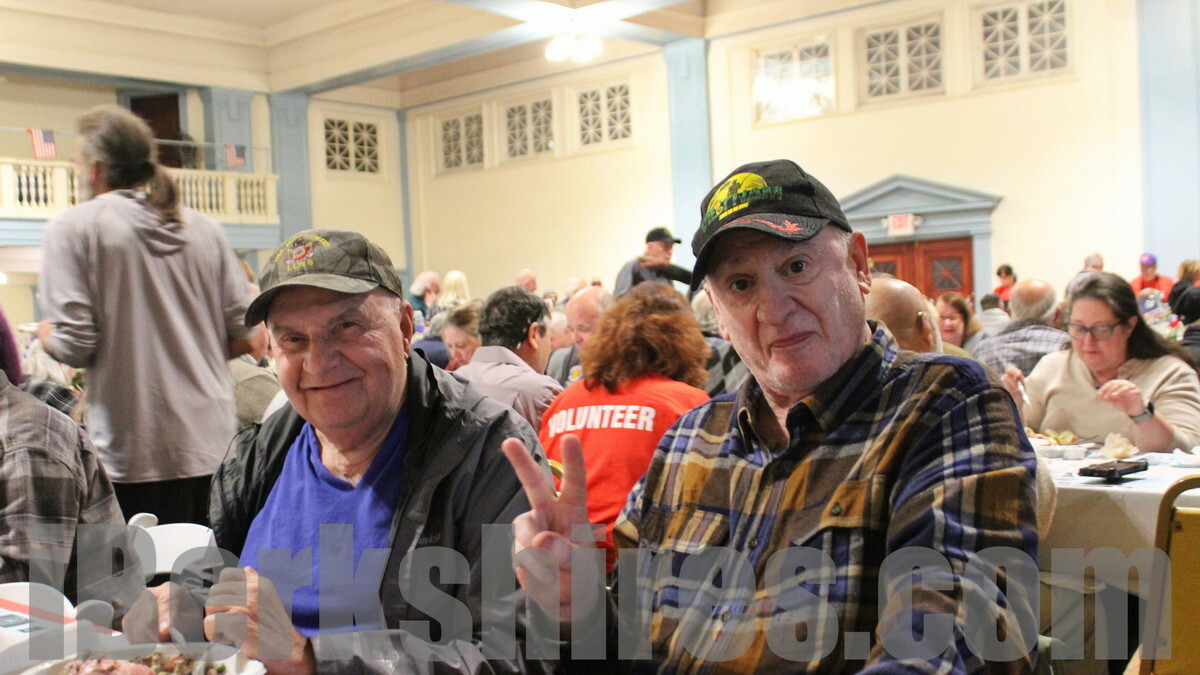
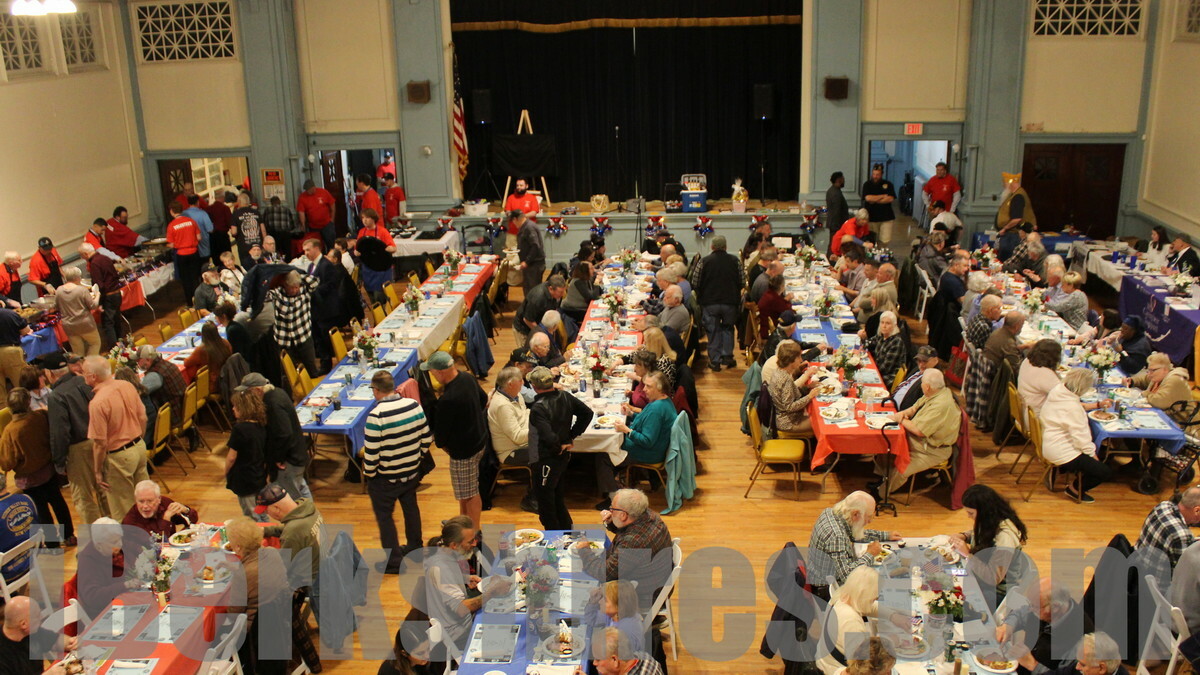
Organizations such as Hope for Warriors, American Veterans Archaeological Recovery, High & Mighty Therapeutic Riding Center, Veterans Affairs representatives and veterans service officers lined the hall at New Moon Lodge.
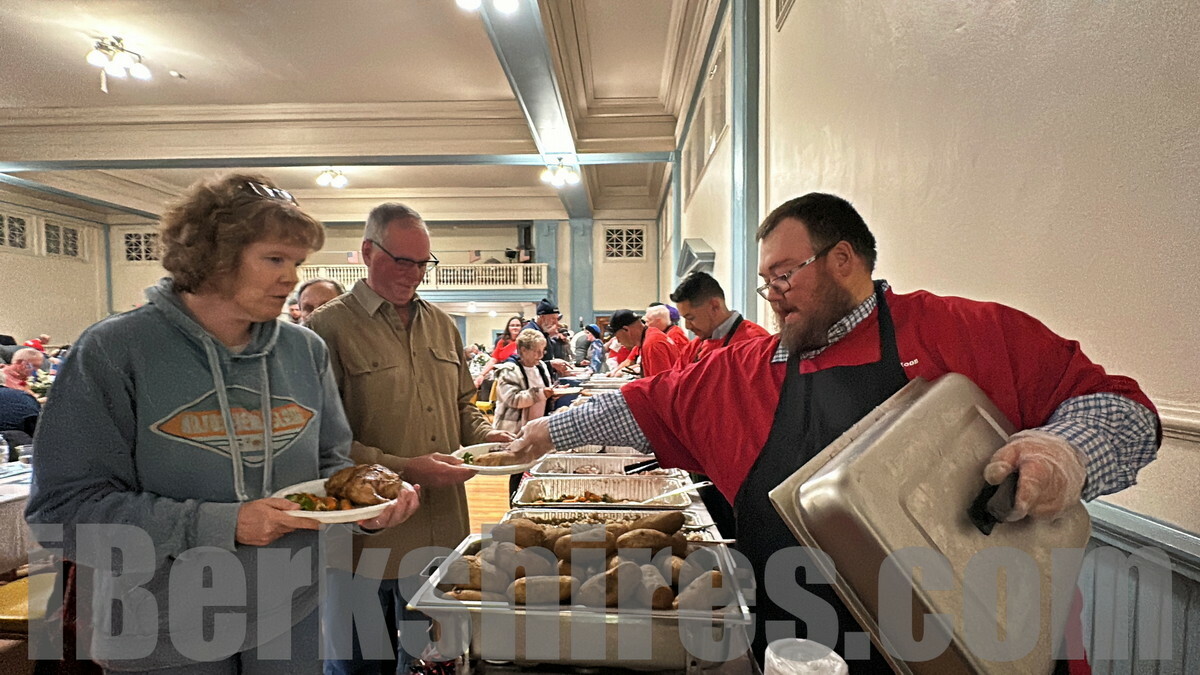
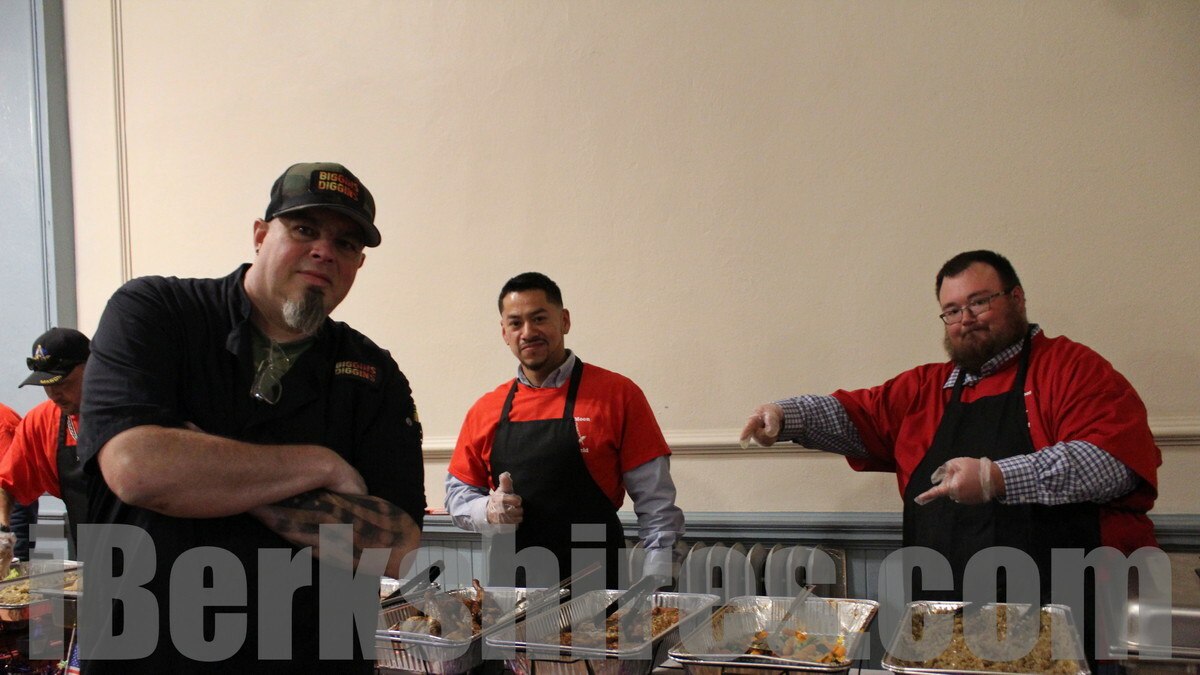
Local restaurant Biggins Diggins served up smoked prime rib, Cajun-smoked pork chops, smoked chicken, baked potatoes, and seasonal vegetables
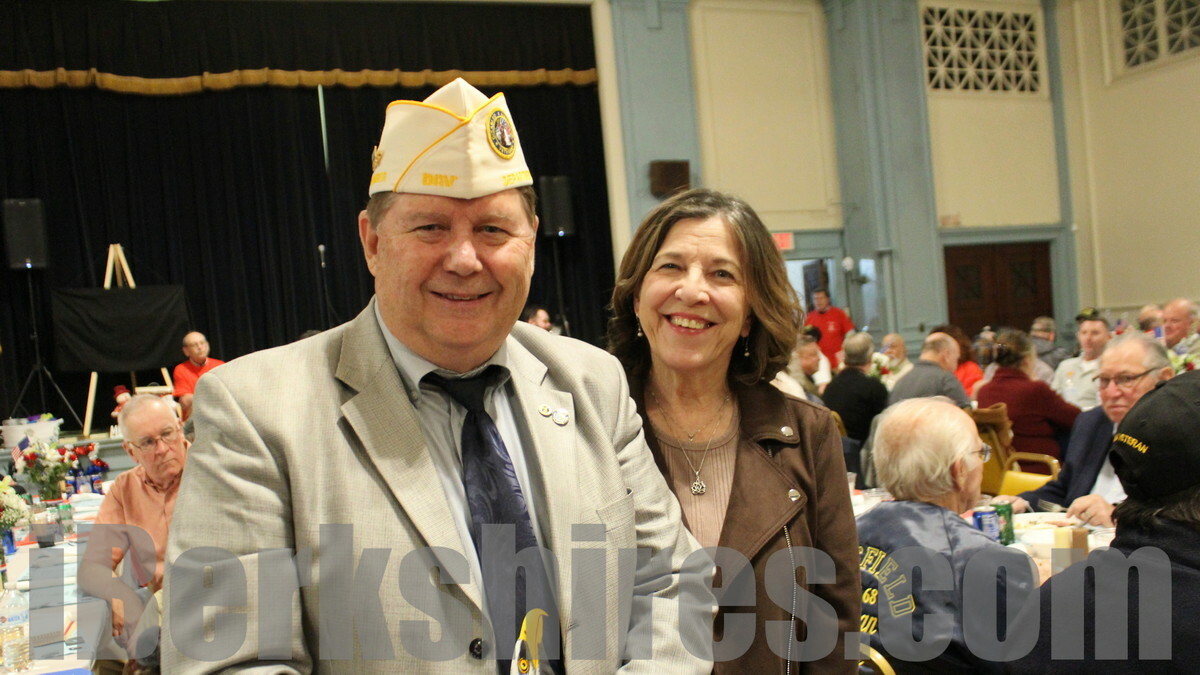
The Freemasons hosted the inaugural Veterans Dinner and Resource Fair at their South Street lodge with hopes it will be replicated elsewhere.
Lodge Master Bernard Tremblay said these resources had never been gathered in one place before.
"We keep copious records of what events and things that go on during the course of our history here, and the last time we had any type of event like this for veterans was at the end of World War One that I can see at the Dedication of the Memorial Plaque up in the lodge room upstairs," he said.
"So, this was very unique. I talked to the veteran services group around the perimeter, and they themselves said they haven't seen anything on a local level like this."
The idea for a resource fair came from Kyle Kuffel, veteran officer for Masonic District 31 of Massachusetts, which consists of four South Berkshire lodges. Kuffel is a retired Army sergeant who also works with Hope for Warriors.
"The thought occurred to me that I wasn't aware of all the things that are available to veterans. And so I thought, let's have resources fair with it, so that people can come and figure out and find out the information about these organizations," Kuffel said.
Kuffel and Tremblay want to create a roadmap to repeat this event down the road and in other Masonic communities across the state after they meet with the Grand Lodge of Masons in Massachusetts
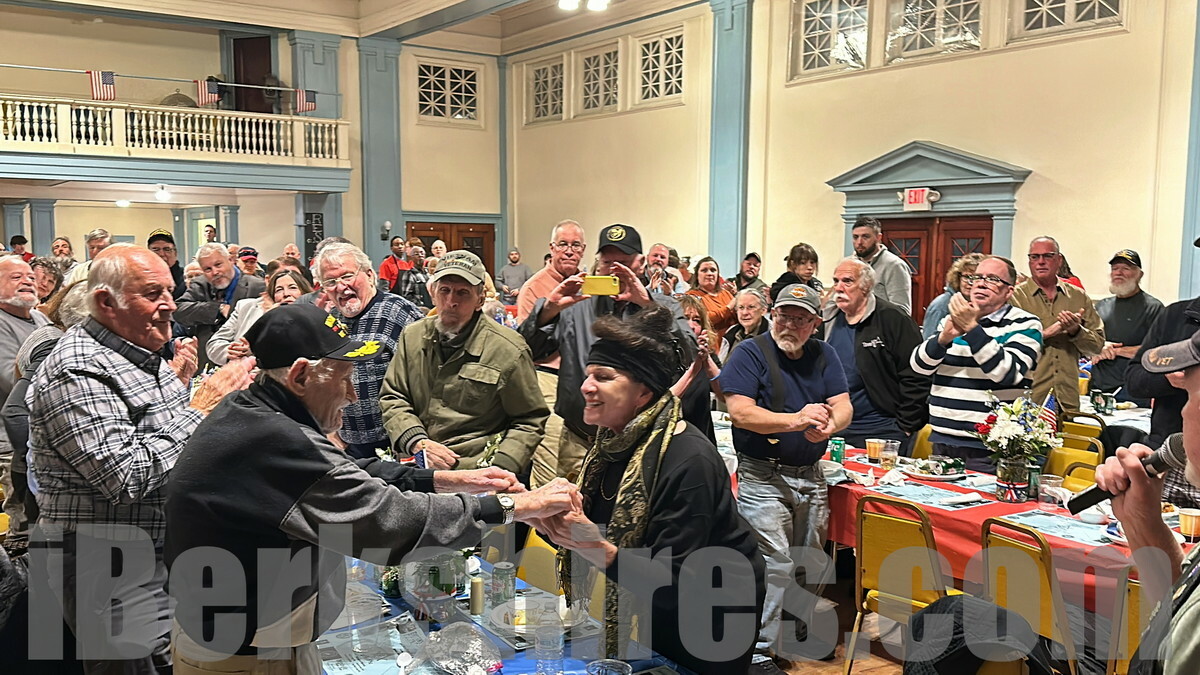
The lodge presented Biggins Diggins owner Terry Bishop with a 2024 Veterans Ally Award for his dedication and support to all veterans.
"You served us, and now we serve you," Kuffel said.
Bishop said an event like this is important because it shows veterans that they are truly loved and appreciated.
"It's something that they'll never ask for, but it's something that they absolutely deserve. As a business, we love to give back when we can. It's just our way of showing our appreciation to the community," he said.
"The environment this evening was absolutely incredible. There was lots of smiles, lots of happy faces, and I'm hoping lots of full bellies."
Speakers at the event emphasized the critical need for open dialogue, community engagement, and ongoing support to address the challenges veterans face transitioning back to civilian life.
Psychologist Andrew "Doc" Berry spoke on the profound changes that combat can have on a person's identity and mental well-being and the importance of open dialogue and community support to help veterans in crisis.
"The goal of me talking to you guys tonight is to get a conversation going, to get a real, meaningful conversation going. Let's make talking about this the norm instead of the exception. What am I emphasizing when I say that [is] simple — veterans and first responders are trained to think of everybody else around them absolutely first and themselves absolutely last, if at all," Berry said.
"That's necessary for mission completion, and I get it, but there is a time at the end of the mission, at the end of service, to start having a meaningful discussion about whether or not our veterans are okay. Folks, many of them are not, and many are hanging on by a thread."
He highlighted this with several stories, such as a Vietnam veteran who had a history of alcohol-related crimes and had essentially "drank his weight out of his own life."
His first and second wives would not talk to him, and his kids hated him. His story was "a gothic horror tale that we have heard many, many … too, many times," Berry said. When he asked the man what he missed the most, he burst into tears, saying, "I miss me. I used to be a nice guy."
What civilians don't understand is that when veterans return home, they are not the same person. Combat changes the central nervous system and the biochemistry and physiology of the brain, Berry said.
"Combat is comprised of adrenaline blasts that go on for hours, nonexistent sleep that goes on for days or even weeks, terrible food, those god awful sounds, those god awful screams, and they come back, and they are expected to just live their lives. It doesn't work that way," he said.
How can our society reduce the 22 veterans who commit suicide daily in the United States down to zero — by talking about it, Berry said.
"This formula is very simple, and I'm going to say it twice because it has to register with everybody in this room: You open your mouth, and the pain comes out," he said.
Mayor Peter Marchetti also highlighted the importance of open dialogue and communication about veterans' experiences by drawing on his own personal regret of not having those conversations with his father.
When his father passed away, he had to call city veterans office to know what to put in his father's obituary.
"I knew my dad served. I saw pictures of my dad in uniform, but we've never talked about it. And so, how did I know that my dad enlisted in 1965, and how did I know he was honorably discharged in 1970? I read out a piece of paper that came from the city of Pittsfield veterans office because we never talked about it," Marchetti said.
"I feel cheated that I need to get to have conversations with my dad about an important time in his life because he didn't want to talk about it. And so for me, as I've become mayor and become more involved in the veterans issues, it's really because I've missed an opportunity, and I don't want others to miss that same opportunity."
Tags: Masons, resource center, veterans, veterans organizations,