Clark Art Blockchain and the Arts System
Print Story | Email Story
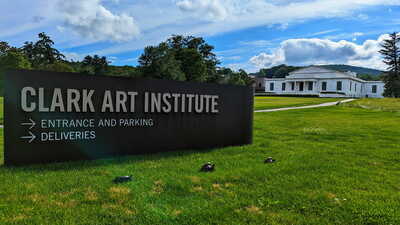
WILLIAMSTOWN, Mass. — Friday, Nov. 22 from 1:30 to 6:00 pm, the Clark Art Institute hosts a one-day symposium on the new connections between blockchain and the arts system. 
 
This free event takes place in the Clark's Michael Conforti Pavilion.
 
According to a press release:
 
Blockchain—defined as a shared, immutable ledger that facilitates the process of recording transactions and tracking assets in a network—stands to offer solutions to long-standing inequities in the arts and culture sector. This symposium explores the potential of blockchain to create greater equity within arts' systems by bringing together practitioners at the forefront of these developments to discuss their work, assess new possibilities for blockchain's use throughout the art market, and to engage with community members interested in understanding blockchain and its applications. 
 
Participants include Frances Liddell (University of Edinburgh), Amy Whitaker (New York University), Destinee Filmore (Metropolitan Museum of Art), Rhea Myers (artist), Tina Rivers Ryan (Artforum), Yayoi Shionoiri (Powerhouse Arts), Kelani Nichole (TRANSFER), Cheryl Finley (Cornell University), Lauren van Haaften-Schick (Teachers College, Columbia University), and christian reeder (Mariane Ibrahim Gallery). Following the presentations, Filmore and van Haaften-Schick moderate an open forum for community members to pose questions, offer comments, and to further discuss projects and initiatives led by the convening participants. 
 
Free. Visit clarkart.edu/Research-Academic for the full program schedule. Accessible seats available; for information, call 413 458 0524. This event will not be recorded or livestreamed.

Tags: Clark Art,   
If you would like to contribute information on this article, contact us at info@iberkshires.com.

Discrimination Against Muslim Americans Persists 25 Years After 9/11

By Stephen DravisiBerkshires Staff
WILLIAMSTOWN, Mass. — Dozens of Muslim Americans were among people killed in the Sept. 11 terrorist attacks.
 
Untold numbers of Muslim Americans have suffered countless acts of discrimination in their aftermath.
 
"Of course, you'll find several accounts of Muslims from all over the U.S. describing how they went from the unknown kids in the school to being stereotyped or ridiculed for their Muslim names," Sidra Mahmood recalled recently. "However, many Americans forget that the victims of 9/11 were also Muslim Americans.
 
"I can't forget the time when a classmate broke down in sobs when 9/11 came up in our classroom at the Islamic seminary I went to in Texas, because her father's best friend who was like an uncle to her, died on 9/11."
 
Today, Mahmood is a chaplain at Williams College. In 2001, she was growing up in Karachi, Pakistan, when terrorists forced two passenger jets into the Twin Towers in lower Manhattan and another plane into the Pentagon outside Washington, D.C. A third plane, which terrorists hoped to crash into a D.C. landmark, was brought down in western Pennsylvania after passengers and crew fought back against the hijackers.
 
The attacks, which ultimately claimed 2,976 lives, horrified people around the world, including in Mahmood's native land.
 
"I remember being aghast like anyone who witnessed the fall of the Twin Towers in real time," she said. "However, even as a child, fear gripped me about the possibility of war, especially once we learned that Afghanistan, right adjacent to Pakistan, would be attacked by the U.S. My mother had told me about the 1971 war between India and Pakistan when she remembered hiding in the dark after bomb sirens would go off in Punjab after intentional blackouts.
 
View Full Story

More Williamstown Stories