Pittsfield ConCom OKs Bel Air Dam Removal
PITTSFIELD, Mass.— Local approval for the $20 million removal of the Bel Air Dam has been secured.
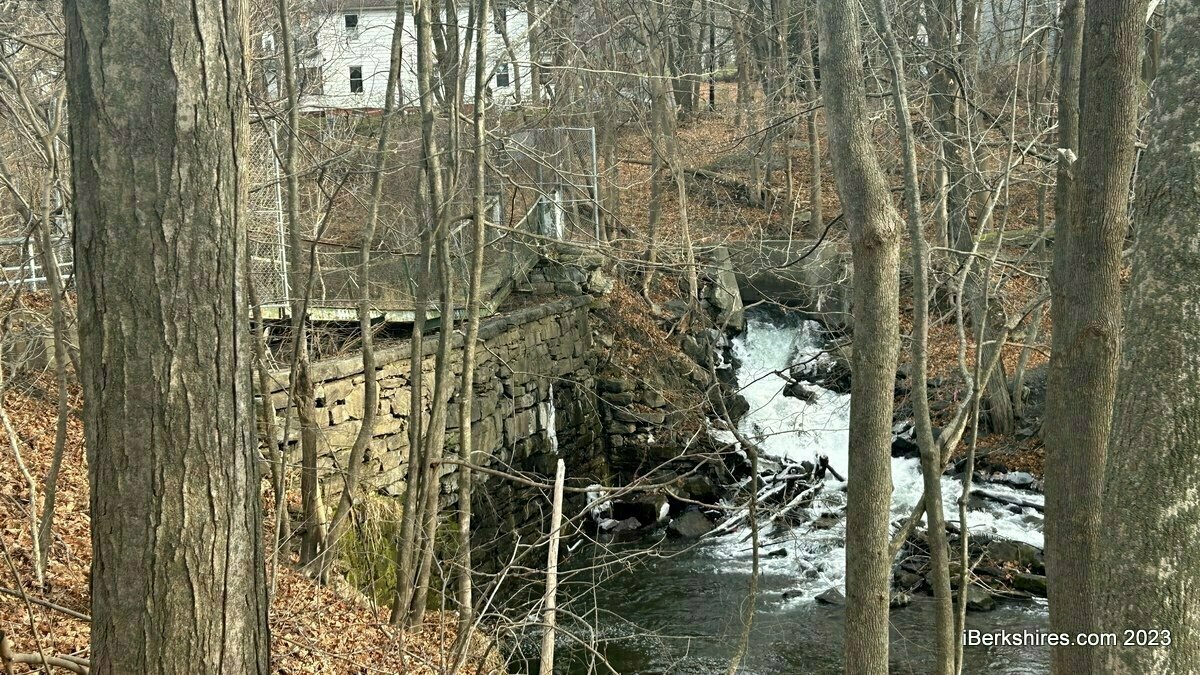
On Thursday, the Conservation Commission issued an order of conditions for the state Department of Conservation and Recreation's Office of Dam Safety to demolish the nearly 200-year-old structure and restore the natural stream channel.
"Get that dam down," Commissioner Thomas Sakshaug said.
Last year, $20 million in American Rescue Plan Act dollars was allocated to remove the deteriorating, potentially deadly dam on Wahconah Street. It has been an area of concern for more than a decade, with the city and DCR conducting inspections, maintenance, and repairs. In 2020, it was identified as a high-priority project.
The dam is one of six included in the pilot abandoned dams program.
In August, it was emphasized that the large chunk of funding will expire at the end of the year if a contractor is not chosen. Still, the commission couldn't issue an order of conditions due to a missing water quality certificate.
Doug Gove of AECOM, the project engineers, explained that the early October hearing could not be closed because of a missing dam safety permit that has since been provided to the commission.
"Also, since our last meeting, we had a site visit with the ConCom on September 16," he said, adding that previously expressed comments have been addressed and updated drawings that depict the changes were provided earlier in the day.
"We're asking the ConCom tonight to close the hearing and issue a restoration order of conditions."
AECOM (Architecture, Engineering, Construction, Operations, and Management) and DCR have been working closely with the city since 2019 on the ecological restoration proposal that aims to restore a natural hydraulic regime, lower the risk of flooding in the immediate vicinity, improve water quality by removing accumulated contaminated sediment, and improve the wildlife habitat adjacent to the restored stream.
The classified "high hazard" structure is about 200 feet long 26 1/2 feet wide with a collapsed bridge and danger sign warding people away.
Testing over the last five years has identified accumulated sediment with elevated levels of metals and pH, among others. The project involves removing 35,000 cubic yards of substrate in order to reconnect and contour the river channel. A cap will then will be placed over those grades, per the Massachusetts Contingency Plan.
Berkshire Environmental Action Team Executive Director Jane Winn feels like Pittsfield, once again, is "getting nailed" because it is accepting only half of the contamination getting removed.
"The rest will basically be a capped dump on the banks of the river. We've already got two toxic waste dumps on the east side, not to mention a bunch of covered-up material there. We've got the King Street dump. I'm really upset that we have to accept this," she said.
"I think it's really important that we get the dam out of there as quickly as possible and we're put in a no-win position. I think the Conservation Commission should hold DCR responsible for getting the rest of the contamination out of there when there is money available. I don't know if that's possible but thank you for your consideration."
Local activist Kamaar Taliaferro said capping pollution has happened at the Hathorne Mill Dam, and a brand-new park on Dewey Avenue.
"We know that that's what happened on King Street and now it's also going to happen here so while it's great that the river is hopefully going to heal as we remove these dams, I think as important is allowing people to have a relationship with that river," he said.
"And right now, the relationship with that particular branch of the river is basically BEAT organizing people to pull trash out of it, right? There's very little spontaneity. There's very little creativity around what we can do."
He pointed out that health surveying found that the dam's neighborhood has a lower average lifespan than more affluent neighborhoods and that the Berkshire Regional Planning Commission has launched an initiative to change the area from gray to green to buffer against urban heat island effect.
"And so before you is a plan that won't allow any trees to be planted along the river because pollution is being left and I think that's a really raw deal to give to that neighborhood," Taliaferro said, adding that they should not allow the state to leave pollution.
Commissioner Jonathan Lothrop recognized that people not on the panel might not be aware of everything that went into this approval. He and his colleagues would love to rid the area of all the pollution but see this as the best way forward within the given budget.
"I do want to go on the record that this commission pushed very hard for the applicants to clean up as much of the pollution as humanly possible and we were effectively told, and certainly clearly articulatable, that there's $20 million for this project, it's ARPA money, and it must be within a certain position, expended, or encumbered by the end of this fiscal year," he explained.
"So the answer we got was we basically have two primary cost structures. One is the actual dam removal itself and the other is the cleanup and with $20 million essentially, which sounds like a lot to an average person but in terms of getting in the muck of the river, it's not unfortunately. So what we had done as a commission, I think, is really pushed very hard to say we want as much out as possible and what this project is able to provide within the budget that exists is the deepest part of sort of the river channel will be completely removed, but then the upper banks that are sort of less contaminated, for lack of a better term, that's where the armoring will come in."
He said this is an important project and it is rare that the city has an opportunity to deal with an abandoned dam when there is no responsible party to be held accountable.
"Would I like to see another $10 million of cleanup? Absolutely but I also am kind of guided by my core principles being raised as 'We've got to make it better than it was,' and this will make it a lot better than it was, right?" he added.
"This is going to be an improvement over our current status because if we pick it to death and say it's not good enough, it's not this, it's not that, we're not going to get anything, it's going to stay right the way it is, and the truth is we've got to get that dam out because if that thing ever goes, we're going to have major flooding downstream and that will impact a lot of low-income neighborhoods and it could even impact our hospital, which is a major community asset, needless to say."
DCR is hosting a public meeting with Central Berkshire Habitat for Humanity as a local partner on Wednesday, Oct. 23, at 5:30 p.m. at the Polish Falcons Club on Bel Air Avenue.
The organization says the meeting will:
- Share updates on the project design — dam removal, sediment removal, and habitat and stream restoration.
- Discuss community impacts anticipated during construction, and mitigation measures such as traffic changes, air quality monitoring, and plans for contaminated materials.
- Hear additional concerns and questions with ample time for discussion and information sharing.
- Identify how the project managers and community members can identify urgent concerns during construction, and how concerns will be addressed.
Tags: conservation commission, dam removal, public hearing,