BRPC Outlines Busy Year Addressing Region's Needs
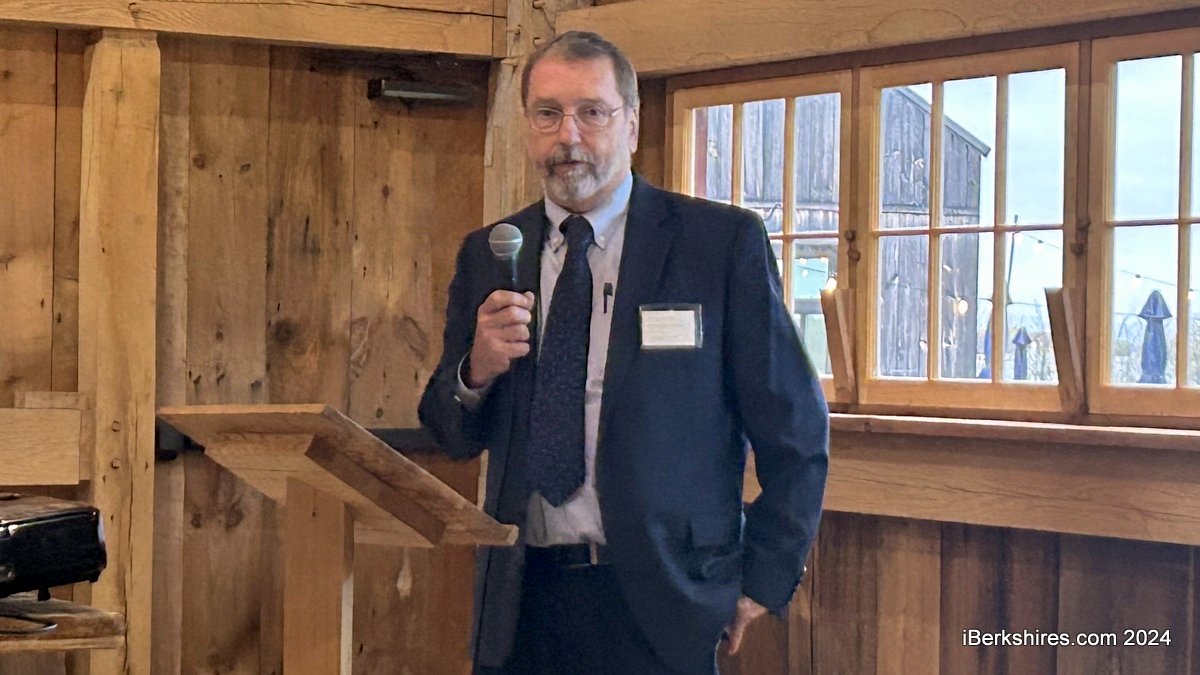
RICHMOND, Mass.— Berkshire Regional Planning Commission had a busy year addressing the region's needs through a dozen cross-cutting programs.
"We really are out of the COVID era and have gotten into a real routine working with our communities and other organizations," Executive Director Thomas Matuszko said.
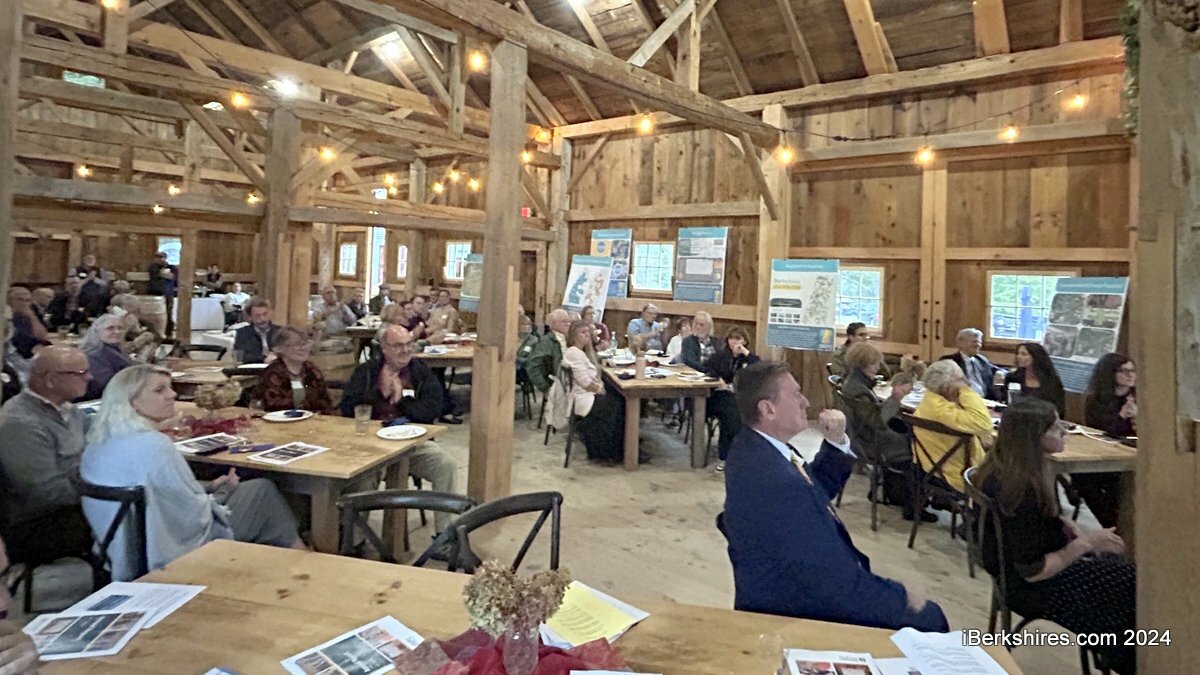
Community members filled the barn at Balderdash Winery on Wednesday for BRPC's annual meeting. The regional planning agency closed fiscal year 2024 with a revenue increase of nearly $858,000 over the previous year, and a total income of more than $6.9 million from grants, local organizations, and nonprofit agreements.
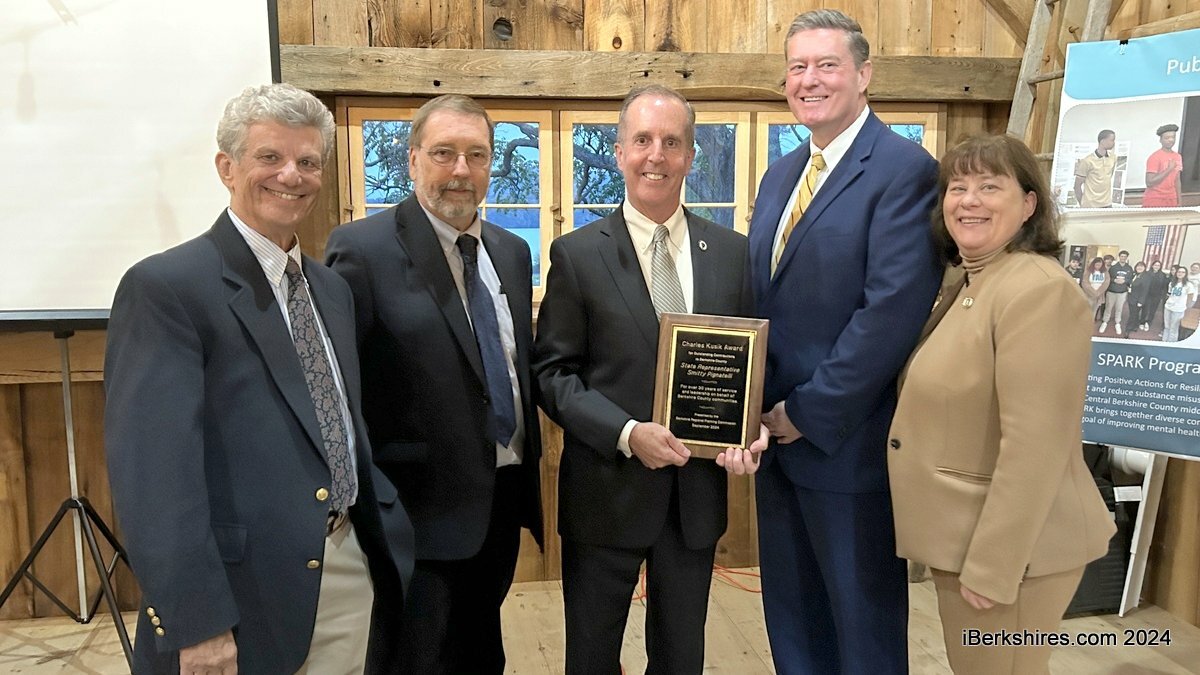
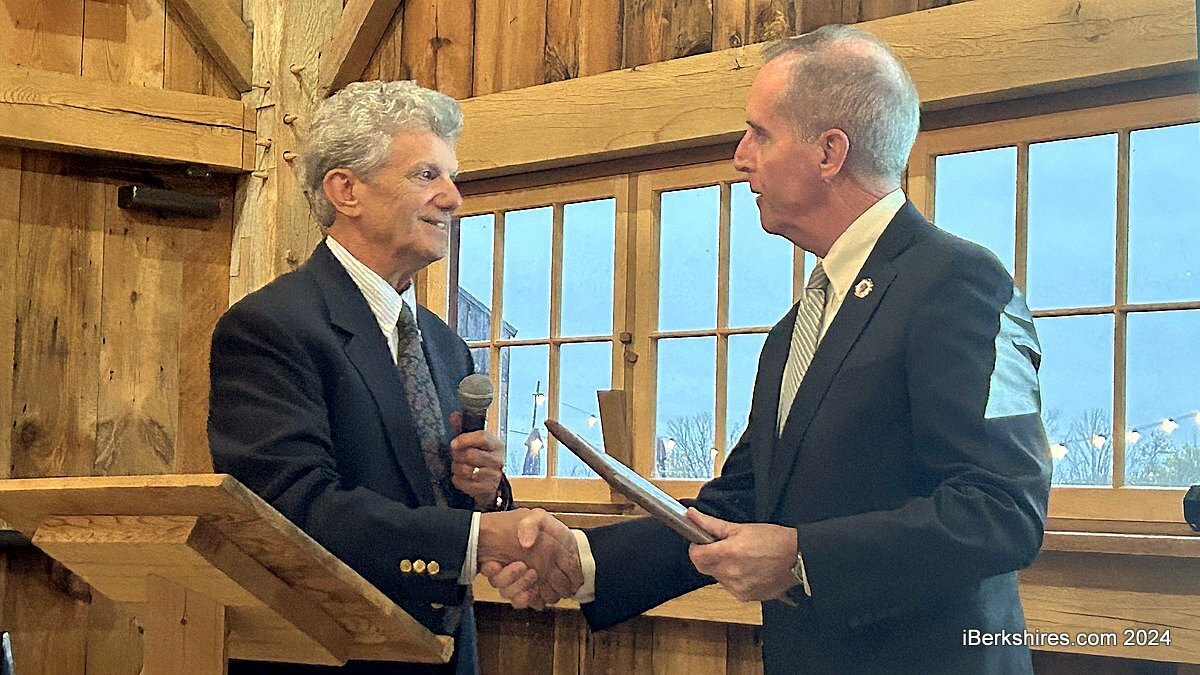
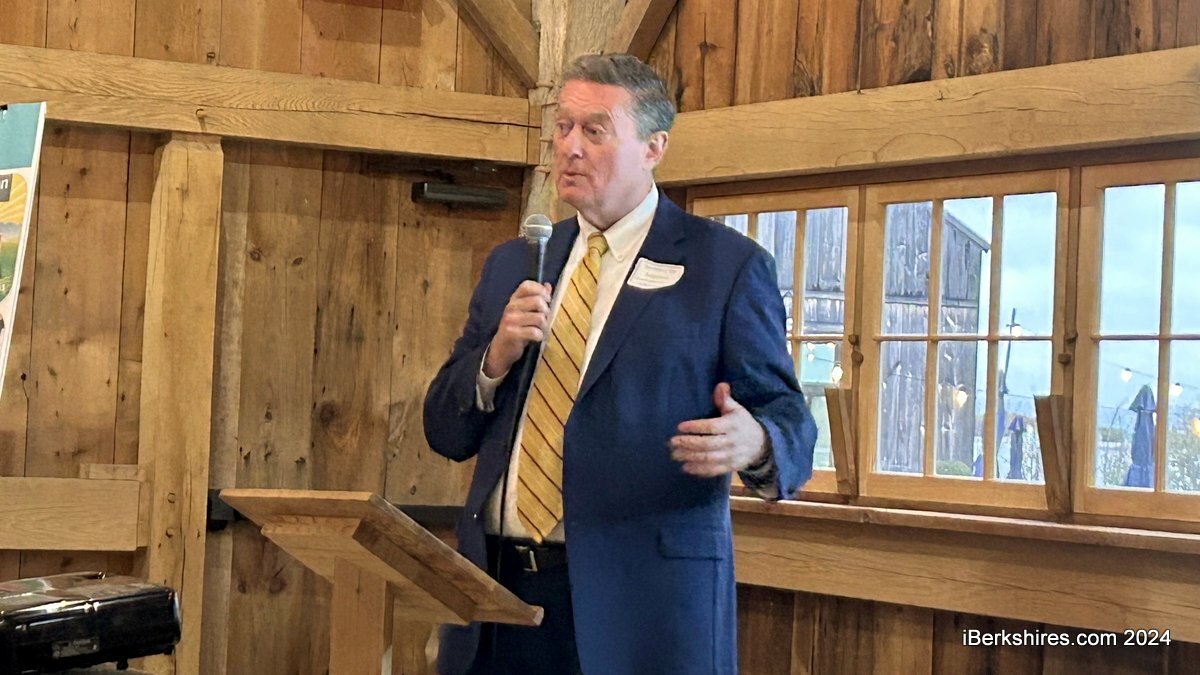
State Rep. William "Smitty" Pignatelli was given the Kusik Award for making outstanding contributions to planning in Berkshire County and Housing and Livable Communities Secretary Edward Augustus spoke about the Healey-Driscoll administration's $5.1 billion Affordable Homes Act.
Both commended BRPC on the dizzying amount of work it puts into the county.
"I'm exhausted just listening to all of the things that you're working on," Augustus said. "It's incredible, the breadth of topics and certainly the breadth of communities that you're working in."
Similarly, Pignatelli said, "You are the only countywide organization that has their fingerprints and footprints in every single community in Berkshire County."
The annual Kusik Award is named in honor of the late Charles Kusik, a Richmond resident who placed his expert imprint on the zoning bylaws of nearly every town in the Berkshires for over three decades.
Pignatelli, who is stepping down after 22 years in the State House, was awarded for his tireless advocacy.
"It may seem strange to give a planning award to a legislator but planning in the commonwealth is only possible, as we've discovered today through the presentation, it's only possible through the framework and funds provided by the legislation," BRPC Chair Malcolm Fick said.
"Whether it's securing funds for local planning, funding for housing and housing rehab, legislation concerning local control of land use, energy planning, the west-east rail service, shared services among the towns, fostering home ownership. These are all issues that Smitty has championed for our county and for us and we owe him a lot."
Matuszko pointed out that housing is a crisis in Berkshire County, as it is all over the state. This continues to be a priority for BRPC and was strengthened by the hiring of a senior planner who focuses on housing planning and leads the Community Development Block Grant program.
BRPC assists municipalities in applying for and administering the federally-awarded funds, many of which went to housing rehabilitation. It also works with communities to make homes more accessible in line with federal law and administers a home modification loan program for those with needed accessibility improvements.
The agency saw several housing-related planning projects over the last year, including assistance to smaller towns and working with land-use regulations to create new housing opportunities.
There was continued implementation of the Housing Vision for the Berkshires, a 2022 regional strategy developed with the support of a working group comprising housing practitioners from throughout Berkshire County, with the help of 1Berkshire and Hearthway.
Augustus said the Healey-Driscoll administration has identified housing as the most pressing issue that the commonwealth faces and that has manifested itself in many different ways.
"We know that the emergency assisted shelter system, which is the family shelter system, is at an all-time high, nearly 7,500 families in that system right now. To give you a sense of what that means in terms of people, that's close to 25,000 people that are in that system. That's probably larger than most of the communities in Berkshire County and other parts of the state as well," he explained.
"So that is a massive responsibility that we have to try to find not only immediate shelter but then ultimately move those families to permanent housing. That is their goal and that is our goal as a state. Shelter should be brief, it should be temporary, and it should be non-reoccurring."
The Affordable Homes Act includes $2 billion in funding for the rehabilitation of public housing, $800 million in new capital authorization for the Affordable Housing Trust Fund, expanded tax credit and incentive programs, and almost 50 policy initiatives.
The act now allows accessory dwelling units up to 900 square feet by right with single-family homes.
"We estimate that 8,000 to 10,000 units in the next five years will be created as a result of that one policy. It doesn't cost the Commonwealth of Massachusetts any money. It is simply removing restrictions to the creation of ADUs and we've seen California, New Hampshire have done this. When they've done that, they unlock this opportunity to create housing across their states but they also create movement in the housing space," Augustus explained.
"So you may have a senior who's now living alone, their spouse has passed away, their kids have grown up. They want to stay in their community. This is the town that they love. Everything they care about, their faith-based community is right here but there's nowhere to go. There's no way to downsize in that community. Creating these ADUs will create opportunities to do that and then free up that house that might be appropriate for a growing family that needs the three bedrooms and the yard."
The law goes into motion on Feb. 7 and the state is working to roll out special financing mechanisms to make ADUs more accessible and will possibly generate a few free designs that residents can use.
"We want to do everything we can," he said.
"It's not enough just to pass the law. We've got to help with the financing side, we've got to help with the design and the public awareness side, and we're really committed to doing that."
Augustus pointed out that the state is losing residents ages 26 to 35 years old — often due to the high costs of housing.
"You're just getting out of school, you're maybe thinking about buying your first home, you're beginning your career, you get an offer from a company or employer here in Massachusetts and you get an offer from a company or employer in Florida or Texas or North Carolina," he explained.
"And there you going to spend 30 percent of your income on housing and here you're going to spend 50 percent of your income on housing and too often, we're on the short end of that decision and we've got to change that, because that's our future."
He added that the state has, in many cases, invested in these people's education from prekindergarten to high school and that talent is being exported to different places.
"That's not a smart public policy. We have to do smart things and we're a smart state," he said.
"So aligning all of our kind of tools to really keep that talent here, retain that talent here, and bring the companies and the jobs and the employees who are looking for that talent everywhere across the world."
Matuszko also outlined the organization's work in economic and community development, environmental and energy planning, public health, and transportation. BRPC managed about 170 contracts and projects in FY24.
The public health program has been the agency's largest for several years. It includes the Berkshire Public Health Alliance, the Berkshire Overdose Addiction Prevention Collaborative, and a Community Health Improvement Plan that is a long-term, systematic effort.
"Our Public Health Alliance is 25 member municipalities working together to try to make public health a consistent standard across Berkshire County," Matuszko explained.
"And along with that, BRPC provides public health inspectional services to several communities and we provide public health nursing services in 19 different towns in Berkshire County."
Pignatelli spoke of his father's advocacy for regionalized services when he was a county commissioner in the 1970s.
"My father was on the county commission when they started the 911 dispatch. Think about where we would be today with 32 dispatch centers in Berkshire County when the state of Texas has one, the state of California has four. Berkshire County is now down to seven," he said.
"We're facing the reality that we need to do things with our neighbors."
During the presentation, an attendee voiced support for regionalized ambulance services. Pignatelli said he was spot on, as many large employers have left or downsized and the county still has nearly 32 police chiefs, 32 fire chiefs, and 32 department of public works chiefs.
"When I hit 911, and knock on wood I never had to, but if I ever did, I personally do not care who shows up at my door. I just want to make sure somebody does show up," he said.
"And I don't care if it says the town of Lenox or Tri-Town EMS or Becket, I really don't care. We just want people to be there when we need them the most."
Tags: annual meeting, BRPC, housing,