Housing Secretary Applauds County's Collaborative Housing Efforts
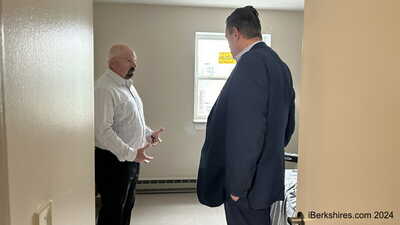 |
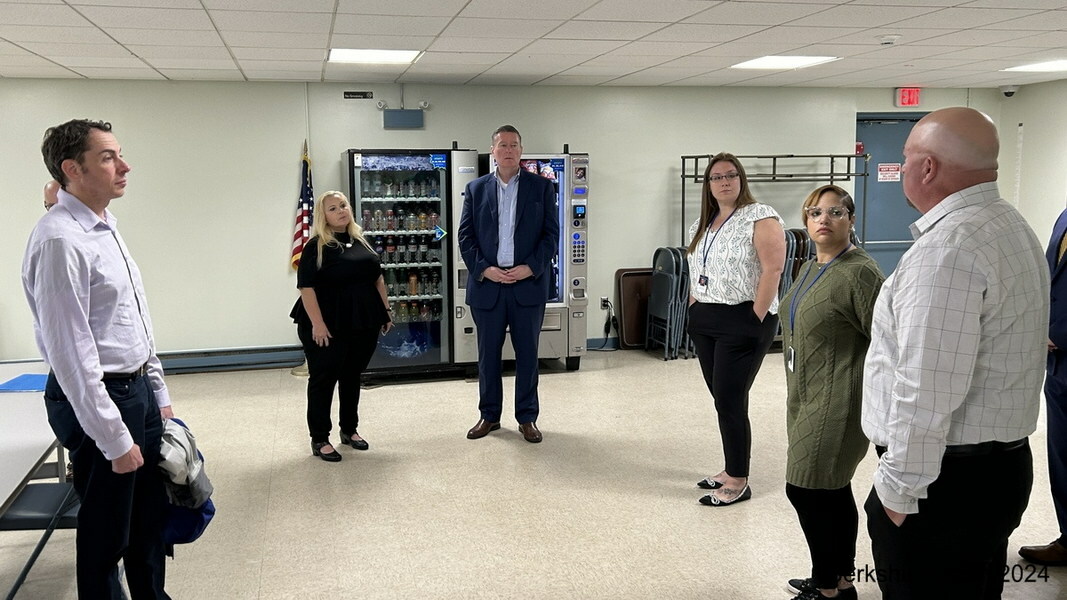
| taking a tour with PHA director of facilities Patrick Pettit |
PITTSFIELD, Mass.—State leadership recognized the collaborative spirit that drives Berkshire County to address hard-hitting issues with a multi-faceted approach.
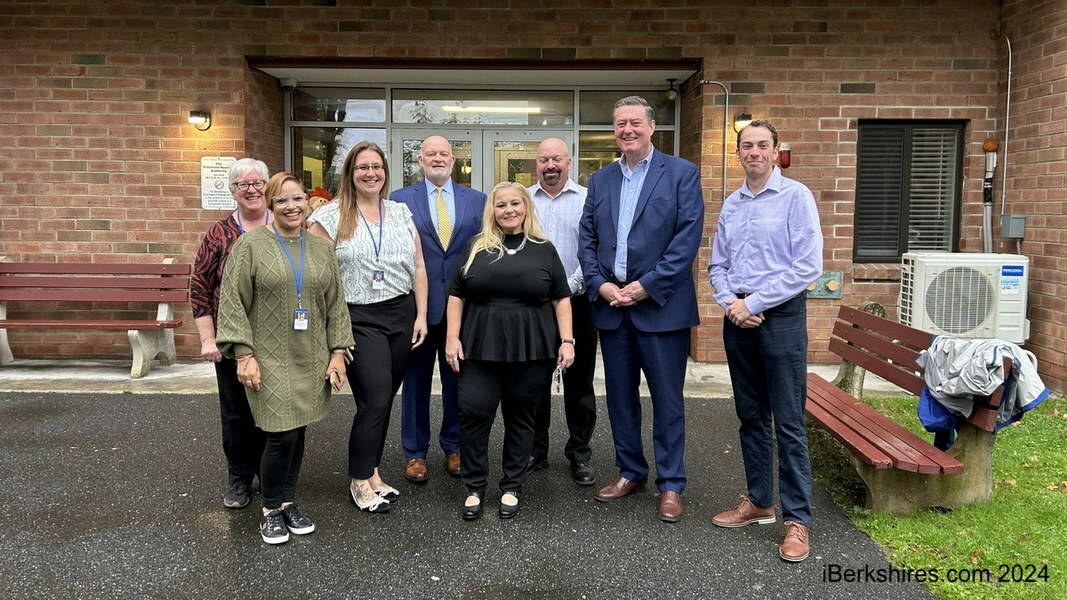
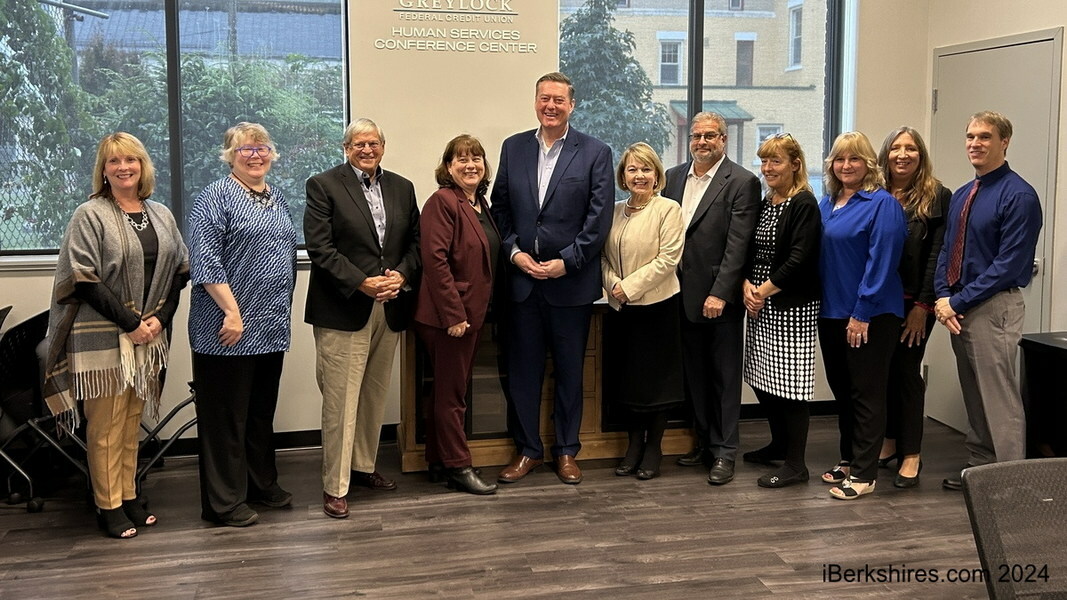
On Thursday, Secretary of Housing and Livable Communities Ed Augustus visited Pittsfield Housing Authority (PHA) and Berkshire Community Action Council's central office.
His overarching observation? The collaborative spirit that surrounds nonprofit providers, state, federal, and local government.
"It's not about turf, it's not about fiefdom, it's about who you're trying to serve and the difference you're trying to make with your targeted population," he said, adding that there is still a lot of work to do and they will need the state's help with funding and technical assistance.
PHA owns and administers public housing for over 200 families and more than 400 individual tenants. Augustus walked through Columbia Arms, which houses elders and disabled community members through income-based rental apartments.
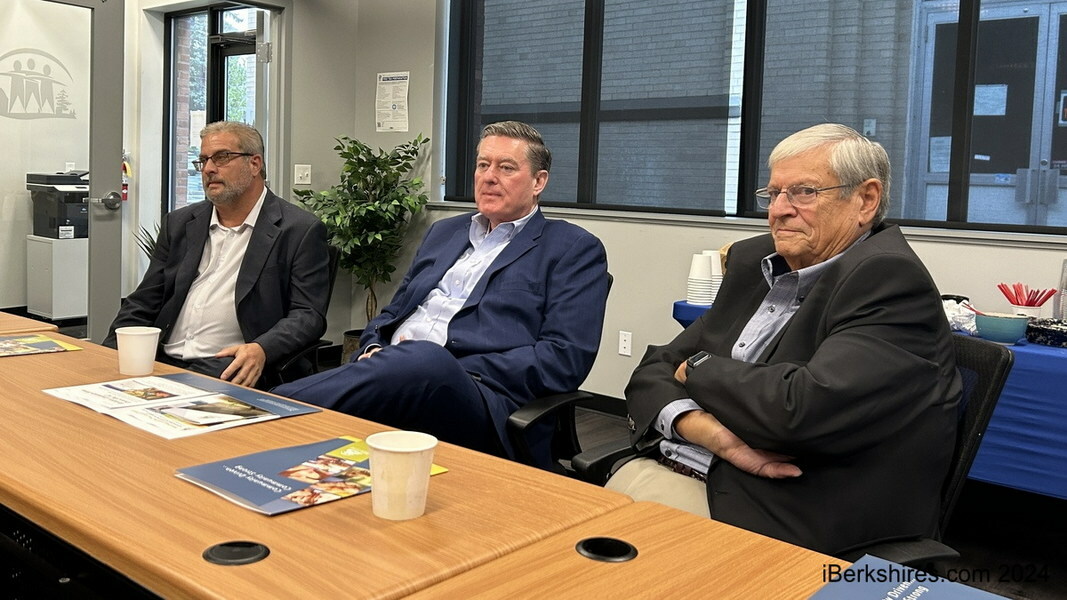
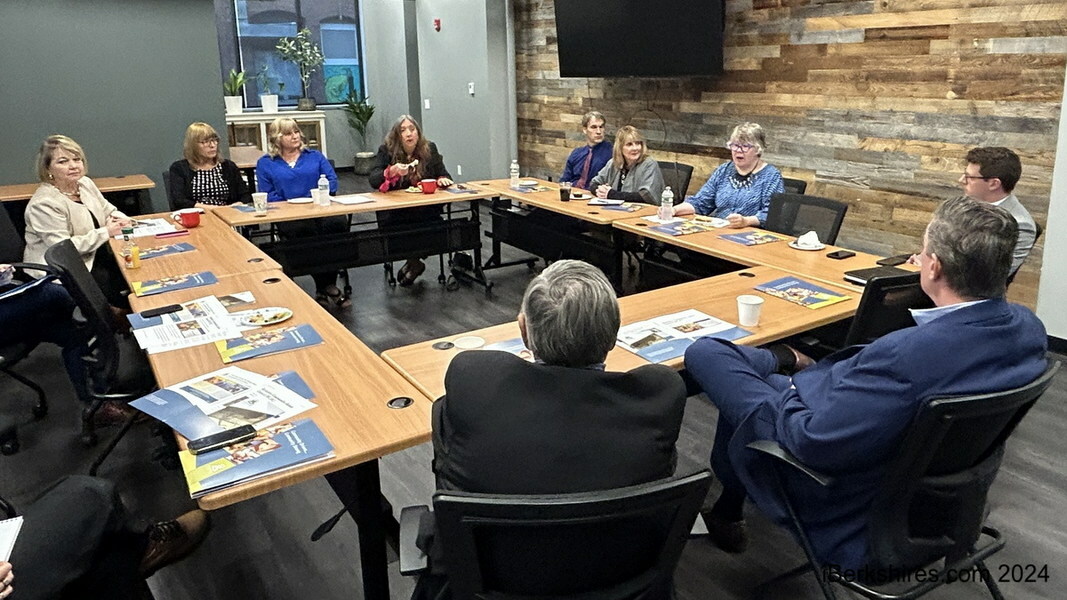
Earlier this year, Tina Danzy was hired as the executive director. During a private meeting, she and other PHA representatives discussed the city's aging housing stock, CARES Act funding increases, and community coordinators' positive impact.
Augustus explained that both the housing authority and state are enthused about community coordinators, which track issues and assist with developing programs and events.
"We know what a difference it makes to the quality of life of tenants in public housing but also the operations of public housing because when you have tenants who have behavioral issues, health issues, substance abuse issues, they can drain a lot of resources from the maintenance and administrative staff who aren't always equipped to deal with those underlying conditions," he said.
"And just evicting folks doesn't really help solve the problem."
The state much prefers solving problems and figuring out ways to support folks where they are, he added.
During his keynote address at Berkshire Regional Planning Commission's annual meeting on Wednesday, Augustus said the biggest growth area within individual homelessness is senior citizens.
"They may be living in a rental property and all of a sudden, somebody else buys the property and says, 'Hey, I can get $500 more a month in rent than your landlord previously was charging you,' jacks it up, and the individuals, couple, don't have the ability to absorb those kind of rent increases and at 70 or 80 years old, find themselves living in a car or ultimately in the shelter," he said.
"That is unacceptable in Massachusetts and so we are doing everything we can to really support those individuals and work upstream."
Within the $5.16 billion Affordable Homes Act signed into law earlier this year included $2 billions or public housing.
"Massachusetts is the only state in the country that has 43,000 units of state-owned public housing," Augustus said.
"That is a huge benefit that we have as a state. Most of those elderly folks, folks with disabilities, or families who live in our state-owned public housing across the Commonwealth are folks who are living on less than 30 percent area median income so they are the most vulnerable folks in our communities. There are 70,000 people that live in those 43,000 units."
Since 1966, BCAC has been designated as the anti-poverty community action agency for the county. It assists limited-income residents with heating and weatherization programs, food and warm clothing programs, financial assistance and money management programs, and more.
"Our community action is not directly involved in housing per se," Executive Director Deborah Leonezyk explained.
"What we are involved in is that preventative work to keep existing housing online."
In 2023, over 9,100 families were assisted with the Low Income Energy Assistance Program which is in partnership with the Department of Housing and Community Development, and BCAC's Heating Emergency Assistance Retrofit Task Weatherization Assistance program replaced 174 heating systems.
The agency received $500,000 in American Rescue Plan Act funding from the city and spent $433,000 to weatherize 69 homes. It was described as "life-giving."
"At an average cost of $6,000 of federal money, we were able to put in $14,000 per home of repairs and upgrades," Leonezyk reported.
"So the leveraging power of that utility money to government money is pretty substantial. We put in about $1.30 for every dollar that we spent of federal money."
BCAC is currently in the process of writing a federal grant that would allow it to address 300 existing homes in the county, as 37 percent of the area's homes were built before 1939.
Leonezyk said the demand for weatherization and energy efficiency projects is skyrocketing and utility companies are willing to pay for the work but housing deterioration poses a problem.
On Wednesday, Augustus said that one of the first jobs with the Affordable Homes Act is to protect the state's existing housing stock. Much of the public housing system was built for returning veterans from World War Two and is in desperate need of capital repairs, he reported.
"We also want to shrink our carbon footprint. Housing is the biggest contributor to carbon emissions and we're never going to hit our carbon emission goals as a state unless we decarbonize our existing housing stock we ought to lead by example with the state and focus on our 43,000 units of state-owned housing," he said.
"Transition to renewable energy sources, solar, better insulated, better windows, so that that is also what we're accomplishing, not just the housing needs but our climate goals at the same time, and our public housing needs to be and deserves to be healthy and safe and dignified and this $2 billion investment is going to help us get a long way toward that goal."
State Rep. Tricia Farley-Bouvier wants to see wifi become a utility at every public housing facility, explaining that it should be the same as having electricity, water, and heat.
"People need this and they shouldn't be paying these outrageous prices and there shouldn't be this digital divide," she said.
During the COVID-19 pandemic, Farley-Bouvier was chagrined to learn that many children couldn't access virtual education because they didn't have wifi access. She said that the state needs to make sure it uses Massachusetts Broadband Institute monies to eliminate the digital divide and putting connectivity into public housing is one great way to do it.
Tags: housing,