Research Highlights Mass as National Leader in Food Waste Reduction

Print Story | Email Story

BOSTON — A new peer-reviewed report from researchers at the University of Texas and the University of California-San Diego cites Massachusetts as a nationwide leader in food waste reduction.

The findings recommend a re-assessment of food waste bans in other states, using Massachusetts as a benchmark for success. The report, published in Science, calculated a significant 25.7 percent decrease in greenhouse gas emissions per ton of disposal after the state's commercial food waste ban was put in place. The ban has caused more than 380,000 tons of food waste to be diverted and repurposed each year, resulting in more than 3,300 tons of avoided methane emissions annually.

"In Massachusetts we pride ourselves on being leaders. This new research is another example of the competitive advantage we have here in our state," said Governor Maura Healey. "Kudos to the team at MassDEP for the hard work they've put in to make this initiative so successful and a special credit to our state's businesses and institutions that have stepped up to the plate to innovate and reduce their waste."

In 2014, the Massachusetts Department of Environmental Protection (MassDEP) implemented a waste ban, requiring generators of more than one ton of food waste per week to divert those materials to uses like composting, rather than disposing of it in landfills. In 2022, that limit was adjusted to a half-ton of food waste per week, bringing in a significant number of additional entities required to divert rather than dispose. Diverted materials see new life as useable foods are donated or used as animal feed, composted, or otherwise repurposed. The state has invested more than $7.3 million in businesses and communities to support infrastructure and programs to make the policy a success – creating new jobs and economic opportunities along the way.

"Reducing food waste is a critical component of both our climate goals and our waste reduction goals," said EEA Secretary Rebecca Tepper. "This report is a testament to the hard work of state and local officials, and our local businesses and institutions."

The report notes that food waste and loss account for about 50 percent of the global food system's emissions. It also emphasizes that significant emission reductions can be achieved through recycling methods like composting, which produces 38 to 84 percent less methane emissions than landfilling. Such measures are critical to limiting global temperature rise, and also help conserve limited landfill capacity in Massachusetts. The report specifically cites MassDEP's inspection efforts as reason for the program's success. The agency has inspected more than 45,000 loads of trash since 2014 and taken more than 140 enforcement actions against violators. This compliance activity was more than 200 percent higher than the next highest state.

A copy of the report can be found at www.aaas.org.

MassDEP's 2030 Solid Waste Master Plan has established aggressive waste reduction goals of reduced disposal statewide by 30 percent (from 5.7 million tons in 2018 to 4 million tons in 2030) over the next decade and a 90 percent reduction in disposal to 570,000 tons by 2050. Drastically lowering the amount of food that is wasted in the first place and the amount that is sent to landfills, is a key component of the strategy for meeting those goals.

For more information on MassDEP's solid waste master plan and the food waste ban, please visit the MassDEP 2030 Solid Waste Master Plan.

MassDEP's mission is to protect and enhance the Commonwealth's natural resources – air, water and land – to provide for the health, safety and welfare of all people, and to ensure a clean and safe environment for future generations. In carrying out this mission, MassDEP commits to address and advance environmental justice and equity for all people of the Commonwealth; to provide meaningful, inclusive opportunities for people to participate in agency decisions that affect their lives; and to ensure a diverse workforce that reflects the communities we serve.


Tags: MassDEP,   
If you would like to contribute information on this article, contact us at info@iberkshires.com.

BRTA Focuses on a New Run Schedule

By Breanna SteeleiBerkshires Staff

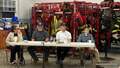
PITTSFIELD, Mass. — The Berkshire Regional Transit Authority is still working on maintaining its run schedules after dropping the route realignment proposal.

Last Thursday's meeting was Administrator Kathleen Lambert's first official meeting taking over the reins; retiring director Robert Malnati stayed during a transition period that ended last month.

Lambert is trying to create a schedule that will lessen cancellations. There was a two-hour meeting the week before with the drivers union to negotiate run bids and Lambert is working with the new operating company Keolis, which is taking over from Transdev.

The board spoke about anonymous emails from drivers, which Lambert said she has not seen. iBerkshires was not able to see those letters, but has received some. 

"They were lengthy emails from someone describing themselves as concerning BRTA employee, and there was a signed letter from a whole group of employees basically stating their concerns. So, you know, to me, it was a set of whistleblowers, and that, what my understanding is that this really triggers a need for some type of process to review the merits of these whistleblowers, not going to call them accusations, but basically expressions of concern," said member Stephen Bannon.

A letter iBerkshires received spoke of unhappy drivers who were considering quitting because of decisions being made without "input from frontline staff," frustration and falling morale, and the removal of the former general manager shortly after Lambert came in.

Lambert said it's difficult to navigate a new change. She also noted many drivers don't want to do Saturday runs and it has been hard negotiating with drivers on the new runs.

"I would like you all to keep in mind that the process of change is super difficult. Transdev has been here for 20 years, and some of these drivers have never known any other operating company, the way some of the operations have been handled has been archaic," she said. "So getting folks up to speed on how a modern transit system works is going to be painful for them. So I don't want to say that I'm unsympathetic, because I am sympathetic, but I am trying to coax people along with a system that's going to seem very strange to them."

The board spoke about better communication between them and Lambert, citing cooperation will be best moving forward.

"There's just a lot of stuff in the air right now, and there are a lot of fires to put out to make this a coordinated effort. And if we don't keep our communications open and be straightforward, then you get blindsided about how you know the input that you could get from us about your position, and how you know what's going on in your direction, and we get blindsided. And I think that we have to make sure that this is a collaboration," said member Sherry Youngkin.

"Both sides have responsibilities, because in the long run, this advisory board is going to have to make decisions as to how we brought forward and if we've gone forward in a fair and helpful way. And I think that's hopefully what everybody is looking for also." 

Transdev and Keolis held a three-day recruiting event interviewing almost 40 candidates and offering jobs to eight, but only three stayed on to start training. Lambert said it was disappointing but she will keep trying to retain more people.

In her first report to the board, she noted that ridership dipped a little over 10 percent, but still remains higher than last year, adding that was because of cancellations of services because of the lack of drivers.

Like the last meeting, some of the advisory board members were torn over the start of the Link413 service, worried that the start of the service took drivers away and the numbers of riders are low.

Lambert, however, said the ridership has doubled from last month.

"As I've spoken before, we have, generally, a six-month adoption for brand-new service before you can really go in and evaluate, are you being successful based on the grant that my predecessor wrote along with the team for PBTA and RTA, we are ahead of schedule, which is pretty good, so I'm hoping that will continue to improve," she said.

Member Renee Wood said the board never approved the service, adding the only thing she could find in the minutes was a vote to accept the equipment. She said it was supposed to be put on the agenda to discuss.

"The Link413 service has been three years in the making. It's been a grant that was accepted and has been working with our partners, PVTA and FRTA, to put into place. So I don't have the entire history of how that process worked, but it's been three years in the making, and did we not understand that once we accept that grant that we were going to put in new service?" Lambert said.

The board discussed if Title VI, the Civil Rights Act, was followed with an accurate review and accurate amount of time for public comment period on the service changes and if its attorney should review if the  grant conditions were properly followed.

Lambert said changes had the 60-day comment period included in the proposed route realignment packet, giving the opportunity for the community to respond to that as well but will look into the legality of the situation with their attorney.

View Full Story

More Pittsfield Stories