Mosquito-Borne Illness: What You Need to Know
 |
With the start of fall, you may be looking forward to venturing outdoors. But you also may have heard recent reports of dangerous mosquito-borne illnesses in the region.
"Everyone should get outdoors during this beautiful season, but do so safely," advises Elizabeth A. Talbot, MD, an infectious disease and international health specialist at Dartmouth Hitchcock Medical Center. "Yes, there is a risk of acquiring serious infections from mosquitos, but that risk can be substantially lowered," she said.
EEEV is rare in our region
Eastern Equine Encephalitis Virus (EEEV) is a rare but serious disease transmitted to people by infected mosquitos.
The last reported human EEEV infection in New Hampshire was in 2014, when the New Hampshire Department of Health and Human Services (DHHS) identified three human infections, including two fatalities. This year, the region has seen higher numbers of mosquitos testing positive for EEEV.
This August, the Departments of Health in Vermont, Massachusetts and New Hampshire all reported a human case of EEEV. The infected adult from Hampstead, New Hampshire, had to be hospitalized due to severe central nervous system disease and died of the illness.
What other diseases are mosquitos carrying this year?
"In New Hampshire, mosquitos transmit infections including Eastern Equine Encephalitis Virus, West Nile Virus (WNV), and Jamestown Canyon Virus (JCV)," said New Hampshire State Epidemiologist Benjamin P. Chan, MD, in the August 27th announcement of the Hampstead EEEV case.
A few weeks prior, the Vermont Department of Health reported that it had collected mosquitos that carried EEEV and WNV.
Infection in people is rare
The good news is that if you are bitten by a mosquito, you are at low risk of contracting any of these three diseases. One reason is that there are more than 40 species of mosquitos in New Hampshire and only a small number carry and spread mosquito-borne illnesses, according to the DHHS.
Although Vermont has some 45 mosquito species, only a few mosquito pools have tested positive with WNV or EEE, so risk of infection is low in that state, too.
What to look out for
But if you do get bitten by a mosquito, keep an eye out for symptoms.
The CDC (Centers for Disease Control and Prevention) says most people with EEE or WNV have either no or mild symptoms and should recover from the illness unscathed.
But the 20 percent to 30 percent of people with WNV who do get symptoms may experience a fever, headache, weakness, pains in their muscles or joints, gastrointestinal issues, and even a rash. In rare cases, WNV can lead to severe neurological disease, causing paralysis, meningitis or brain damage.
EEEV has some similar characteristics but is more severe. People with EEEV also usually do not develop symptoms, but among those who do, the virus can result in febrile illness—with fever, chills, body aches and joint pain—or neurologic diseases such as meningitis or encephalitis,
Come the fall, there is less risk of the Jamestown Canyon Virus as it tends to taper out toward the end of the summer, says New Hampshire's DHHS. But those symptoms also can include fever, muscle aches, fatigue, dizziness, headache and, in severe cases, encephalitis and meningitis, too.
When a mosquito bite means contacting a doctor
Mosquito bites are usually no reason to worry. But if you do get one and start showing any of the symptoms associated with these mosquito-borne illnesses, seek medical attention.
Karen Hsu Blatman, MD, an allergist and clinical immunologist at Dartmouth Health, notes that mosquito bites can swell and be uncomfortable for some people who react to the mosquito's saliva. When people contact her because of discomfort or swelling, she often recommends icing and applying a topical steroid to the bite. If a person scratches the bite area and breaks the skin, it may lead to a secondary infection. If the bite is accompanied by yellow pus, blisters, or fever—or gives you reason for concern—you should contact your provider.
How to stay safe
All this does not mean you should not go outside, but you can take precautions to lower your risk of being bitten.
"We believe there is an elevated risk for EEEV infections this year in New England given the positive mosquito samples identified. The risk will continue into the fall until there is a hard frost that kills the mosquitos. Everybody should take steps to prevent mosquito bites when they are outdoors," advised Chan.
These steps include getting rid of any standing water around your home to prevent mosquitoes from breeding nearby.
You also should wear protective clothing such as socks, long-sleeved shirts, and long pants. Consider, too, avoiding outdoor activities in the early morning and evening when mosquitoes are most active. In Vermont, health officials are recommending people avoid spending time outdoors as much as possible from 6 pm to 6 am in towns deemed at high-risk of mosquito-borne illnesses. As of August 28th, these towns included Alburgh, Burlington, Colchester, and Swanton. The recommendation remains in place until the first hard frost that kills mosquitos.
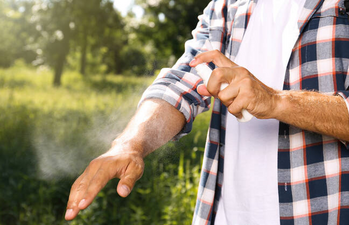
Lastly, use an insect repellent that contains DEET, picaridin, oil of lemon eucalyptus or another EPA-registered repellent when outdoors. The EPA has a search tool that can help you find the best product.
What about tick-borne illnesses?
And lest you get complacent about other risks, remember that, while tick-borne illnesses are highest from March to July when the black-legged tick is most active, ticks can be found anytime when temperatures are above freezing. Protective clothing and other precautions can help keep you safe from ticks as well.
So when you come indoors, do not forget to check yourself for ticks, as well as mosquito bites.
Resources
- New Hampshire Health Alert Network
- Vermont Health Alerts & Advisories
- Pediatrician Rebecca Murphy on choosing an insect repellent

Tags: svhc, SVMC,