Williams Grad Takes Silver at Paralympic Games
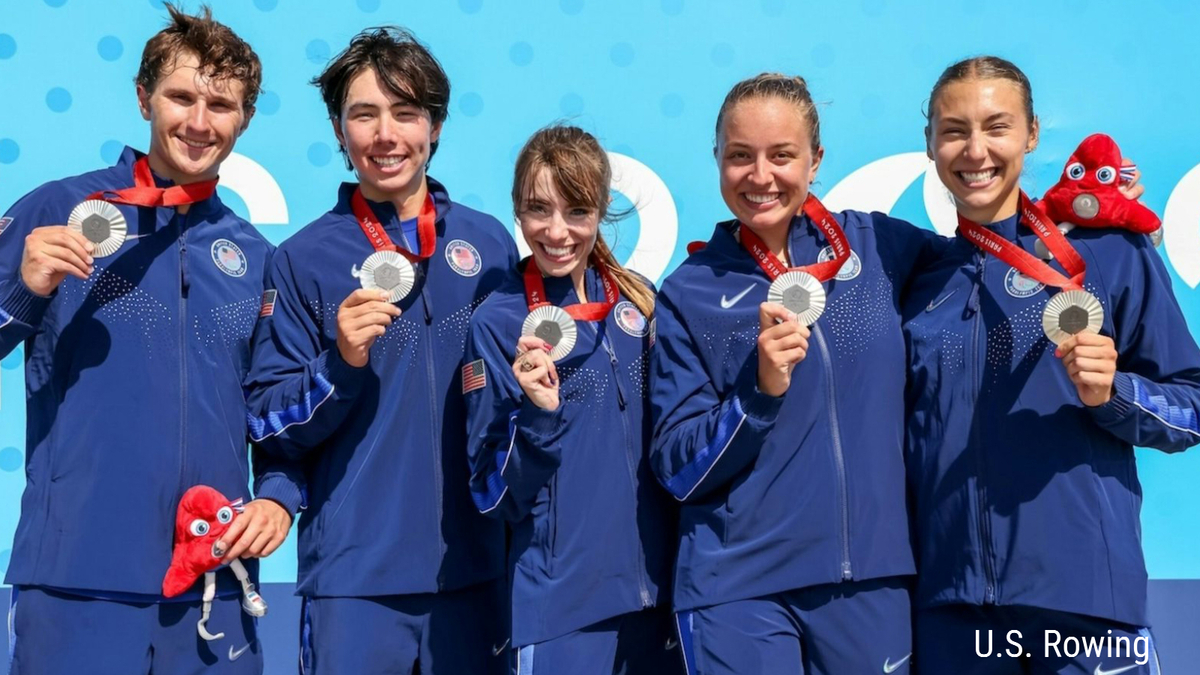
PARIS -- Sitting in the starting blocks of the Mixed PR3 Coxed Four A Final, lined up next to Italy, France, Great Britain, Germany, and Australia, 2023 Williams College graduate Ben Washburne and his crew were determined to take home a medal from the 2024 Paralympic Games on Sunday.
The American boat had won its heat two days earlier and pulled the third fastest time overall, so the United States boat was conceivably in contention for podium spots.
As the traffic lights on the start dock went from red to green, the race was off, and every crew came flying off the line with something to prove. For the first 250 meters, the leader of the race was anyone's guess. At the 500, the pack had started to separate, with Great Britain narrowly in front. Close behind were the Americans, the French, and Germans.
Through 1k, there was clearer separation, with Great Britain and the Americans pulling away from the rest of the field. The British looked unstoppable, but the USA wasn't going to let them get away easily. France and Germany were fighting each other hard for third but still trailed the Americans substantially.
This held true for the rest of the race, and despite a deep push from the USA to catch Great Britain, the British crossed the line first with a time of 6:55.30. Team USA finished second, going 6:58.59. They were followed by France (7:03.11), Germany (7:03.17), Australia (7:14.78), and Italy (7:15.63).
"Just crazy intense," Washburne said. "We were just all in the entire time, going for a medal. It seemed like we were possibly going to get it after the race started. Just trying to hold on the whole way through and pushing."
Washburne was the first Williams alumnus to compete at the Paralympic Games.
"Ben brought many special things to our team that are impossible to quantify," Williams coach Marc Mandel said. "Simply put, he set the standard for natural leadership and a relentless spirit that led his boats and our team. When Ben began pursuing his national team rowing career going into his senior year at Williams, I knew then and there that he would be rowing in Paris in 2024. I couldn't be more excited for and proud of Ben and his teammates - they rowed with discipline and confidence, challenging the British crew over the full measure of the race.
"I know all past and current Williams Crew athletes join me in congratulating Ben, and we can't wait to celebrate with him in person. At this point it is only fitting that one of our four-person shells be named 'Ben Washburne '23,' and we can't wait to leverage that relentless spirit during future Onota Lake practice sessions."