image description
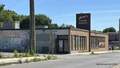
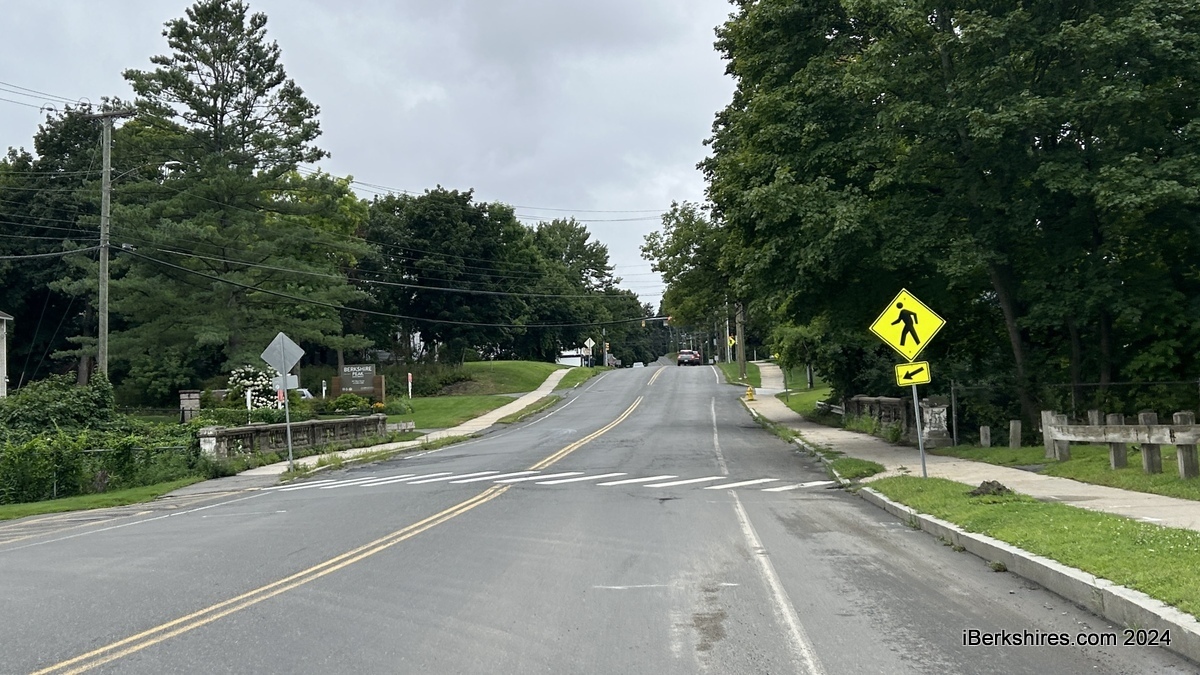
The crosswalk in front of Dorothy Amos Park where a fatality occurred will have a raised sidewalk.

State Grant Supports Pedestrian Safety on Pittsfield's West Street

By Brittany PolitoiBerkshires Staff
Print Story | Email Story

PITTSFIELD, Mass. — A $235,000 boost from the state will fund "road diet" improvements on West Street, a corridor that saw two pedestrian fatalities last year.

The Massachusetts Department of Transportation on Monday announced $6.5 million in funding through the Healey-Driscoll administration's Shared Streets and Spaces Program. Pittsfield was the only Berkshire County community in the list of 28 municipalities and two Regional Transit Authorities.

The $235,000 will go toward continued safety efforts on West Street, which includes a "road diet" from Valentine Road to the Government Drive/College Way split, ADA-compliant curb ramps, separated bike lanes, pavement markings, and rectangular rapid flashing beacons.

Commissioner of Public Services and Utilities Ricardo Morales explained that the funding will go toward green bike lane paint and the beacons, which cost about $180,000 alone.

The beacons are placed on both sides of a crosswalk below the pedestrian crossing sign and above the diagonal downward arrow plaque, pointing at the crossing. There will be six total that accompany raised crosswalks, with two placed at three locations:

  • The mid-block between Dewey Avenue and College Way
  • West of the Eversource driveway
  • East of Euclid Avenue

These have been compared to a similar design on Tyler Street meant to slow traffic.

"If you've driven Tyler Street and you kind of check your speedometer if you're going 30 miles an hour, you're not going to bite your tongue off," City Engineer Tyler Shedd said during a public hearing last month.

"If you're going 20, 25 miles an hour you might not really notice the bump. If you're going 40, you'll feel it and that's sort of the intent is that it encourages people through a slightly punitive measure to follow the speed limit."

Last year, the city began having public hearings to devise a pedestrian safety plan in the corridor. In January 2023, Shaloon Milord was struck and killed while crossing in front of Dorothy Amos Park, and in October 2023, Shane Cassavant was struck and killed farther up the street while doing roadwork.

The Shared Streets and Spaces Program encourages quick implementation of projects to improve plazas, sidewalks, curbs, streets, bus stops, parking areas, and other public spaces to support public health, safe mobility, and strengthened commerce.


In 2020, the city received $238,826 to support 20 placemaking projects. This included enhanced mobility projects such as reducing travel lanes on the first block of North Street from two to one lane and adding the protected bike lanes.

It also included treatment to the Wahconah and North streets, Linden and North streets, Bradford and North streets intersections, and the added bike lanes on Columbus Avenue and Melville Street.  

For the place-making part of the grant, much of the funding went to the purchase of parklets to provide more outdoor dining space. The definition of a parklet is a publicly used space that takes the space of a parking spot. The goal of a parklet is to be an extension of the sidewalk.

The community has called for safety solutions and three of four scheduled project hearings have occurred. There is one more community meeting before the bid is finalized.

After a few iterations, the updated design reduces the footprint and adds a signal at the intersection of lower and upper West Street. The City Council has authorized a $2 million capital borrowing for the streetscape improvements on the corridor and the hope is to bid work in the fall with construction beginning in the springtime.

Planners said there wasn't another change that would improve pedestrian safety without sacrificing vehicle travel time. A traffic study showed that going from a single stop sign coming from lower West Street to a signalized intersection raised the intersection's grade classification by several points.

A roundabout was another option but there is not a lot of space there. There was a proposal to eliminate the right-hand turn lane going onto lower West Street but it did not bode well with the community and was scrapped.

The project area from Jubilee Hill to Backman Avenue is a 25 mph corridor that is said to see the most egregious speeding. It aims to improve pedestrian comfort, add bike lanes in line with the Bike Facilities Master Plan, and bring vehicle speeds to compliance.


Tags: complete streets,   traffic safety,   
If you would like to contribute information on this article, contact us at info@iberkshires.com.

BRTA Focuses on a New Run Schedule

By Breanna SteeleiBerkshires Staff

PITTSFIELD, Mass. — The Berkshire Regional Transit Authority is still working on maintaining its run schedules after dropping the route realignment proposal.

Last Thursday's meeting was Administrator Kathleen Lambert's first official meeting taking over the reins; retiring director Robert Malnati stayed during a transition period that ended last month.

Lambert is trying to create a schedule that will lessen cancellations. There was a two-hour meeting the week before with the drivers union to negotiate run bids and Lambert is working with the new operating company Keolis, which is taking over from Transdev.

The board spoke about anonymous emails from drivers, which Lambert said she has not seen. iBerkshires was not able to see those letters, but has received some. 

"They were lengthy emails from someone describing themselves as concerning BRTA employee, and there was a signed letter from a whole group of employees basically stating their concerns. So, you know, to me, it was a set of whistleblowers, and that, what my understanding is that this really triggers a need for some type of process to review the merits of these whistleblowers, not going to call them accusations, but basically expressions of concern," said member Stephen Bannon.

A letter iBerkshires received spoke of unhappy drivers who were considering quitting because of decisions being made without "input from frontline staff," frustration and falling morale, and the removal of the former general manager shortly after Lambert came in.

Lambert said it's difficult to navigate a new change. She also noted many drivers don't want to do Saturday runs and it has been hard negotiating with drivers on the new runs.

"I would like you all to keep in mind that the process of change is super difficult. Transdev has been here for 20 years, and some of these drivers have never known any other operating company, the way some of the operations have been handled has been archaic," she said. "So getting folks up to speed on how a modern transit system works is going to be painful for them. So I don't want to say that I'm unsympathetic, because I am sympathetic, but I am trying to coax people along with a system that's going to seem very strange to them."

The board spoke about better communication between them and Lambert, citing cooperation will be best moving forward.

"There's just a lot of stuff in the air right now, and there are a lot of fires to put out to make this a coordinated effort. And if we don't keep our communications open and be straightforward, then you get blindsided about how you know the input that you could get from us about your position, and how you know what's going on in your direction, and we get blindsided. And I think that we have to make sure that this is a collaboration," said member Sherry Youngkin.

"Both sides have responsibilities, because in the long run, this advisory board is going to have to make decisions as to how we brought forward and if we've gone forward in a fair and helpful way. And I think that's hopefully what everybody is looking for also." 

Transdev and Keolis held a three-day recruiting event interviewing almost 40 candidates and offering jobs to eight, but only three stayed on to start training. Lambert said it was disappointing but she will keep trying to retain more people.

In her first report to the board, she noted that ridership dipped a little over 10 percent, but still remains higher than last year, adding that was because of cancellations of services because of the lack of drivers.

Like the last meeting, some of the advisory board members were torn over the start of the Link413 service, worried that the start of the service took drivers away and the numbers of riders are low.

Lambert, however, said the ridership has doubled from last month.

"As I've spoken before, we have, generally, a six-month adoption for brand-new service before you can really go in and evaluate, are you being successful based on the grant that my predecessor wrote along with the team for PBTA and RTA, we are ahead of schedule, which is pretty good, so I'm hoping that will continue to improve," she said.

Member Renee Wood said the board never approved the service, adding the only thing she could find in the minutes was a vote to accept the equipment. She said it was supposed to be put on the agenda to discuss.

"The Link413 service has been three years in the making. It's been a grant that was accepted and has been working with our partners, PVTA and FRTA, to put into place. So I don't have the entire history of how that process worked, but it's been three years in the making, and did we not understand that once we accept that grant that we were going to put in new service?" Lambert said.

The board discussed if Title VI, the Civil Rights Act, was followed with an accurate review and accurate amount of time for public comment period on the service changes and if its attorney should review if the  grant conditions were properly followed.

Lambert said changes had the 60-day comment period included in the proposed route realignment packet, giving the opportunity for the community to respond to that as well but will look into the legality of the situation with their attorney.

View Full Story

More Pittsfield Stories