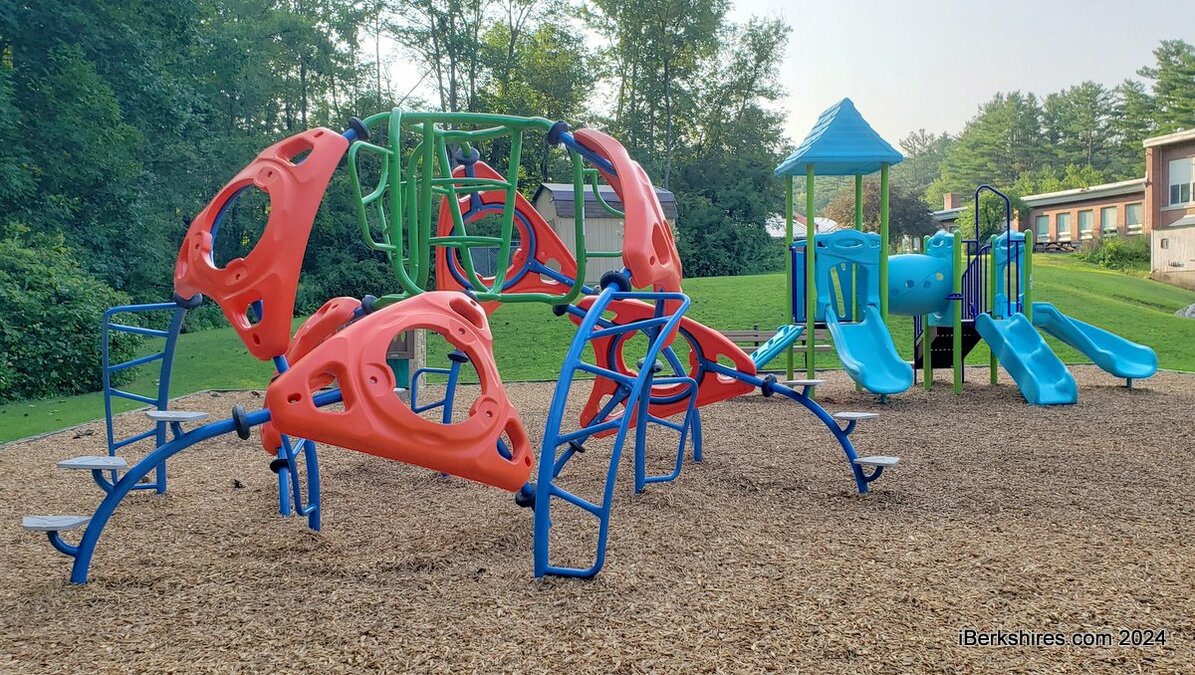
Clarksburg School Gets New Playground Equipment, Awaits Stairlift
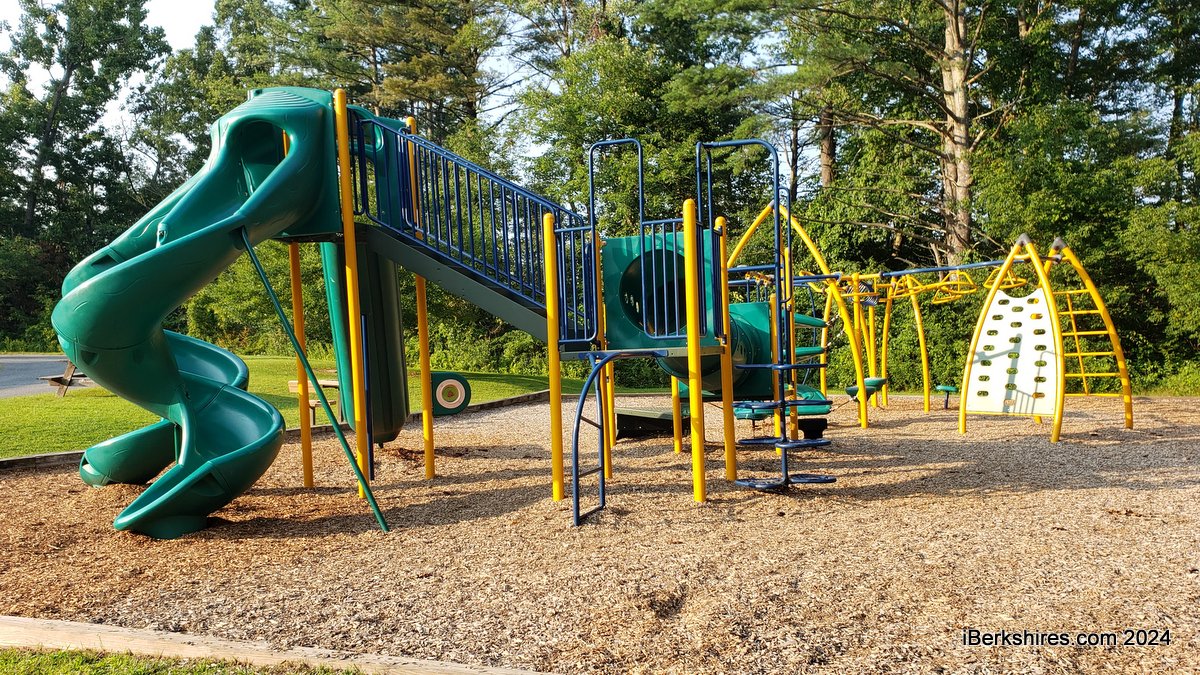
The school has an existing playground for the older children.
The school received a $64,000 Feigenbaum Foundation grant a couple years ago, but because of supply and shipping delays from the pandemic, the equipment was not delivered until this past winter. Cascades had stored the playground until it could be installed.
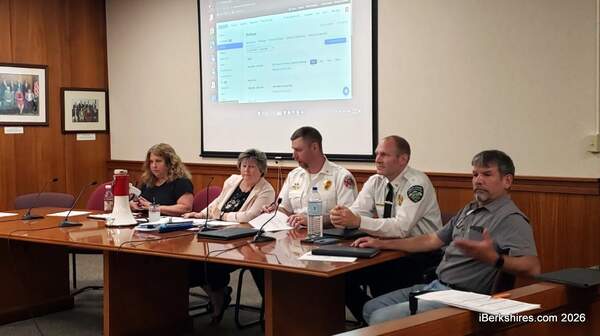
"The two main pieces that are actually concreted into the ground were $37,000 just to purchase and $16,000 to install," Jordan Rennell told the School Committee on Thursday. "Then there's a couple thousand worth of woodchips and a couple of thousand to take the old playground down that was there."
Rennell, a speech pathologist and director of summer programming for the Northern Berkshire School Union, said the 30-year-old wooden structure had to be discarded because it was decaying from dry rot, splintering the children's hands and the plastic pieces were all cracked.
"We cut it up and threw it away," she said. School Committee member Mary Giron commented that the old playground was "an accident waiting to happen."
The Parent-Teacher Group had helped with the extra funds to have the new equipment installed and Whitney's Garden Center had offered a "good price" on the wood chips.
Rennell thought the funds would be enough for one large fixture but the prices were quite high.
"The one 29 years ago ... the school purchased that playground for $29,000 and today to repurchase it, it's $165,000," she said. "The little playground is for our preschool-age students, so 3 to 6; the climber is for 5 to 12 and then the big playground is from 5 to 12. So we tried to pick something that was for the littles and the bigs."
The school could have relied on volunteers to install the structures but Rennell said the company contracted was licensed and insured to do the work.
Another project in the school is expected to finally be done this week. A chair lift in the back stairwell to connect the upper classrooms to the cafeteria/gymnasium has been in the works for more than a year. A number of delays pushed the installation into the summer, where it ran into the summer camp program.
Superintendent John Franzoni said the company didn't want to go through the state's Criminal Offender Record Information (CORI) check for the few days of work while students were on the school grounds.
Tom Bona, who has volunteered as the liaison with the company, said everything is ready to go with the exception of a handrail that has to be taken off to accommodate the equipment. He would be contacting the company to confirm the Aug. 7 date before that is done. Franzoni thought it a good idea since "we've had several dates that have not been met."
School officials are hoping to have the lift in time for the start of school. Currently, anyone with mobility issues has to be taken outside and around the back of the building to get to the cafeteria. The lift is being funded through the American Rescue Plan Act.
In other business, the School Committee declined to open up any school choice slots this year because of lack of space. Franzoni noted that kindergarten is already at 16 children.
"We've talked about the trend going up," he said, of families moving into Clarksburg. "While school choice is nice ... you get a lot more money when they're living in town."
Principal Sandy Cote said the school has been getting a lot of calls about school-choice slots.
• The committee generally discussed finances, including closing out of the year and amending the warrant system to get bills paid faster.
• Rennell reported on the Step Up Summer Program noting that in four years its gone from 40 participating to 148. However, the funding has "dwindled down drastically."
"We're not ending the red but we're ending low," she said.
• Franzoni said he attended a superintendents roundtable with Education Secretary Patrick Tutwiler, who was in Pittsfield last week for an early education listening session. There was a lengthy discussion about the school choice directive — which postulates elementary districts that accept school choice students are responsible for their high school education — and how it is a disincentive for sharing. There is also talk of a regional study of Northern Berkshire and future grant funding.
He also said the school is doing better on reducing chronic absenteeism by impressing the importance of school on parents and children and offering incentives such as recognitions to children who have good attendance.
Tags: Clarksburg School, playgrounds,