image description
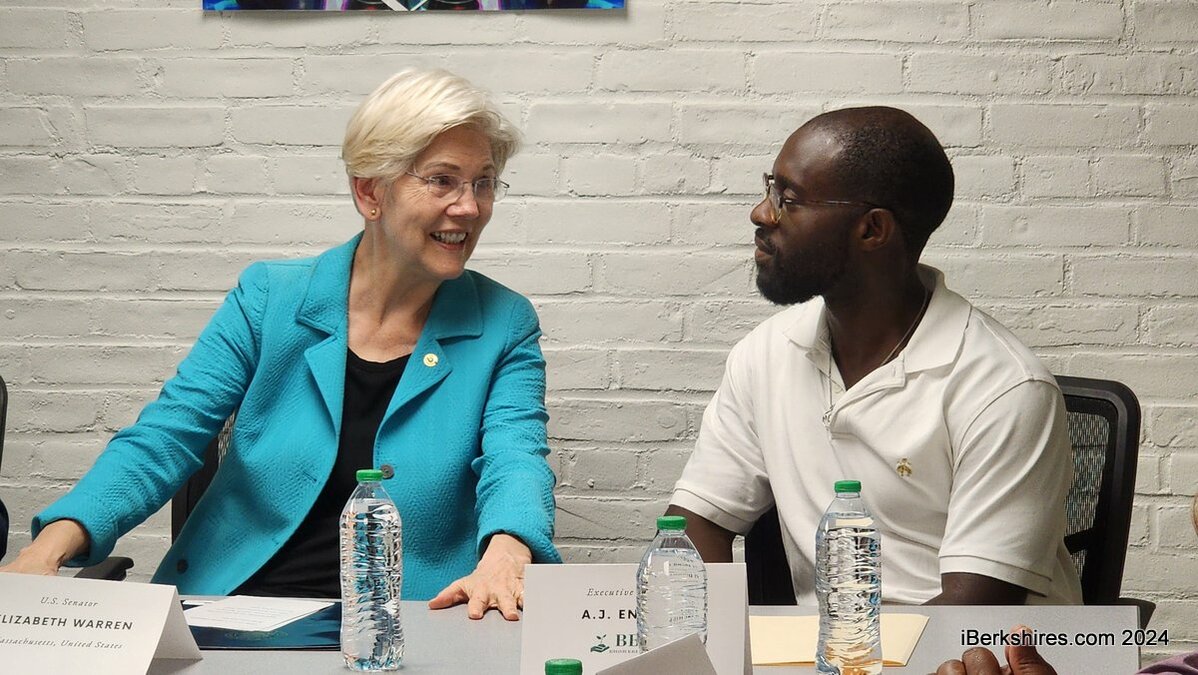
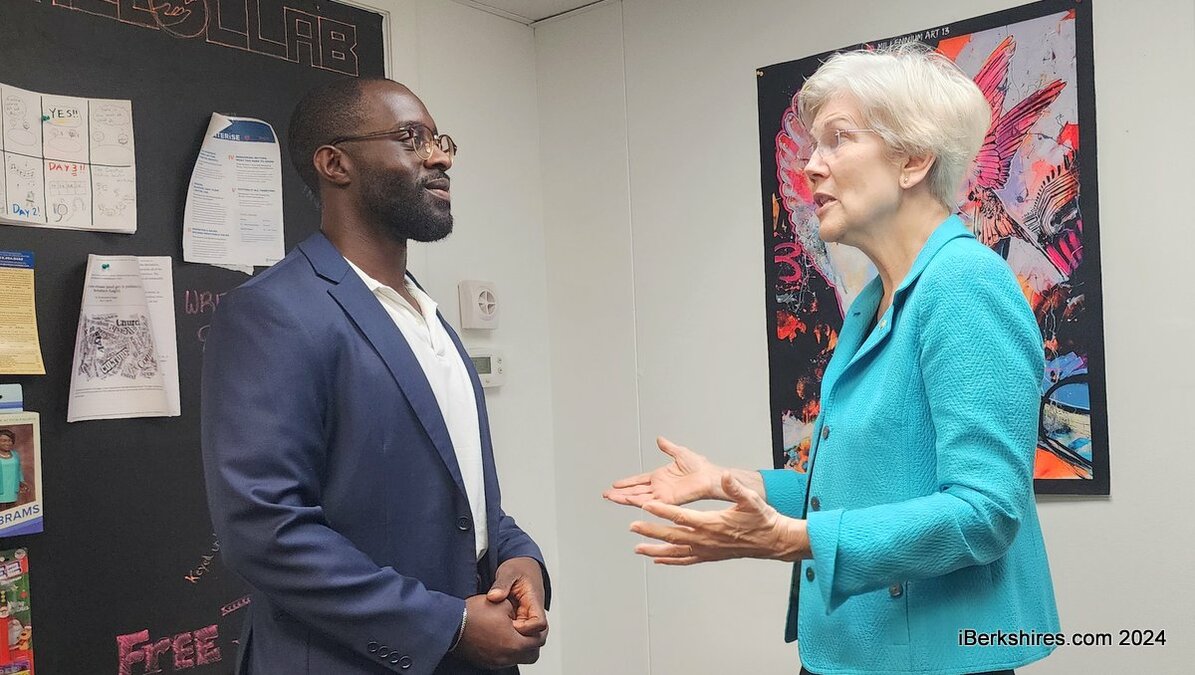
U.S. Sen. Elizabeth Warren speaks with Berkshire Black Economic Council President A.J. Enchill before a roundtable with entrepreneurs at The Collab in Pittsfield.
image description
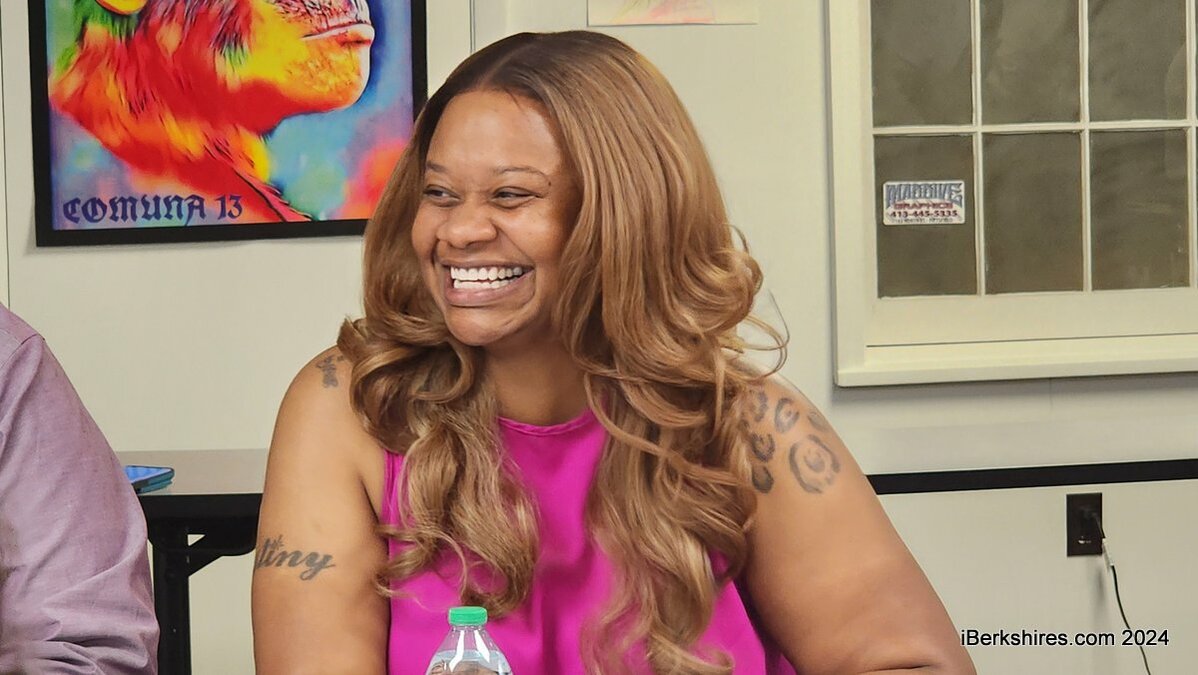
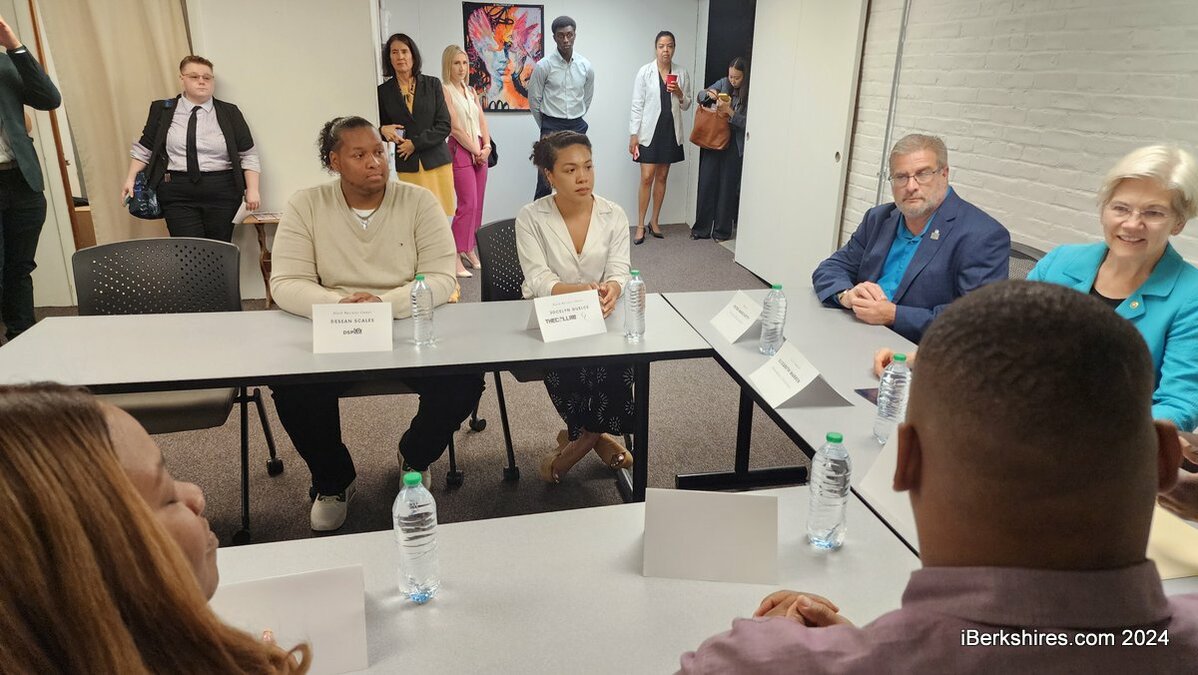
Destiny Saunders tell the senator about opening Dolc'e Rose Beauty Supply.
image description
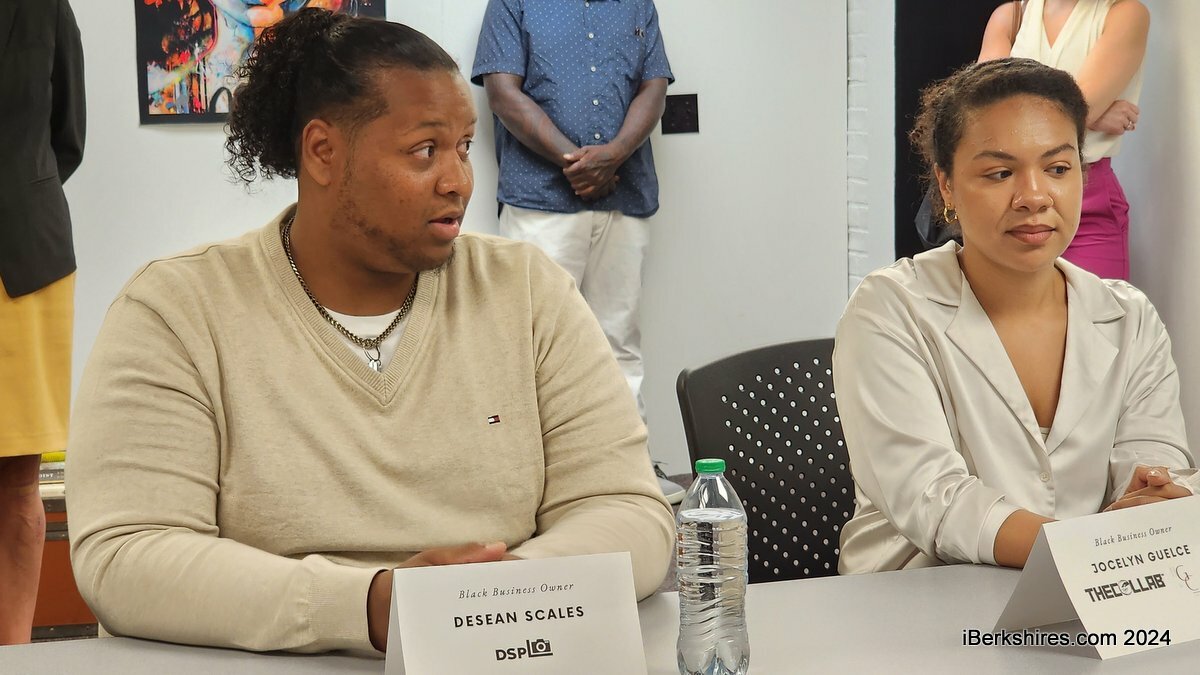
Jocelyn Guelce spoke about opening The Collab and Desean Scales about his photography business.
image description
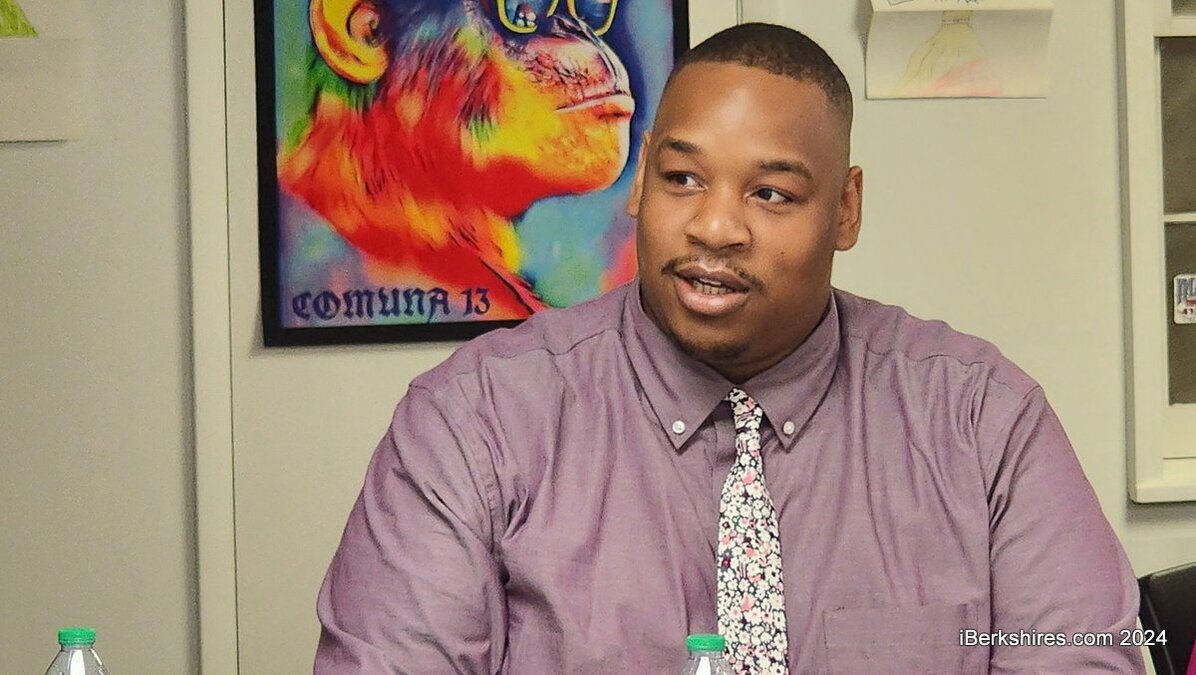
Ludwig Jean-Louis purchased Cravins ice cream parlor on Elm Street.
image description
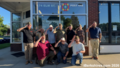
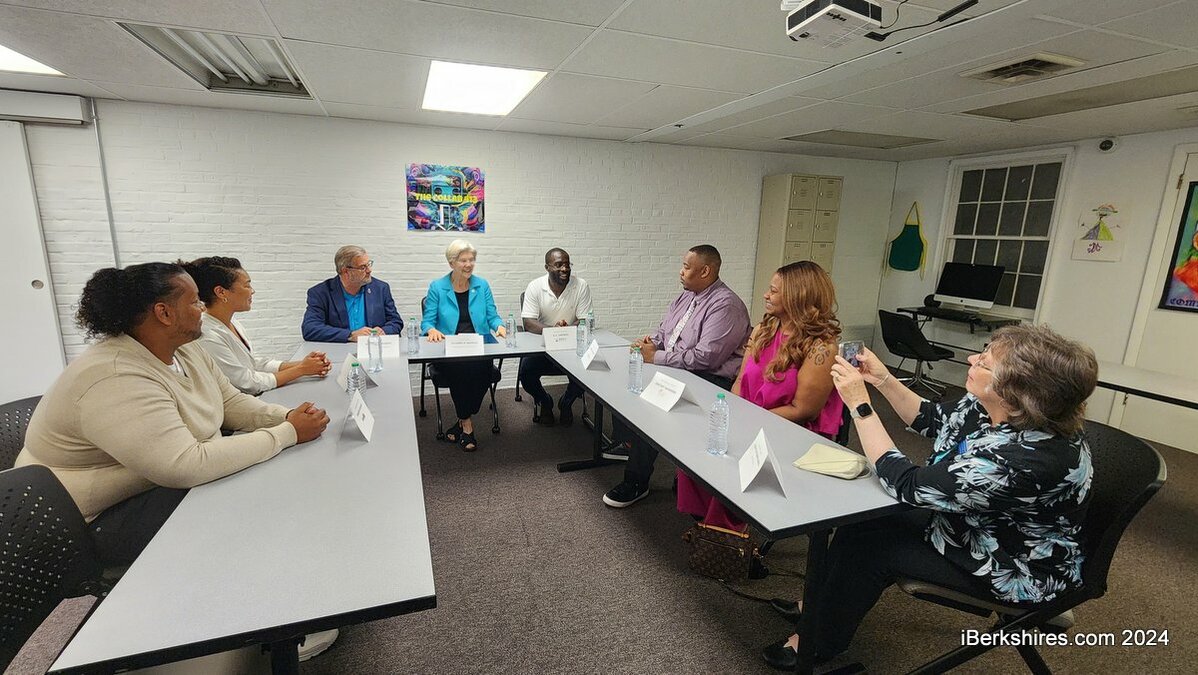
Lisa Fletcher-Udel from state Rep. Tricia Farley-Bouvier's office takes a picture of the group.
image description
image description
image description

Warren Talks Small-Business Investment with Pittsfield Entrepreneurs
By Tammy DanielsiBerkshires Staff
Print Story | Email Story

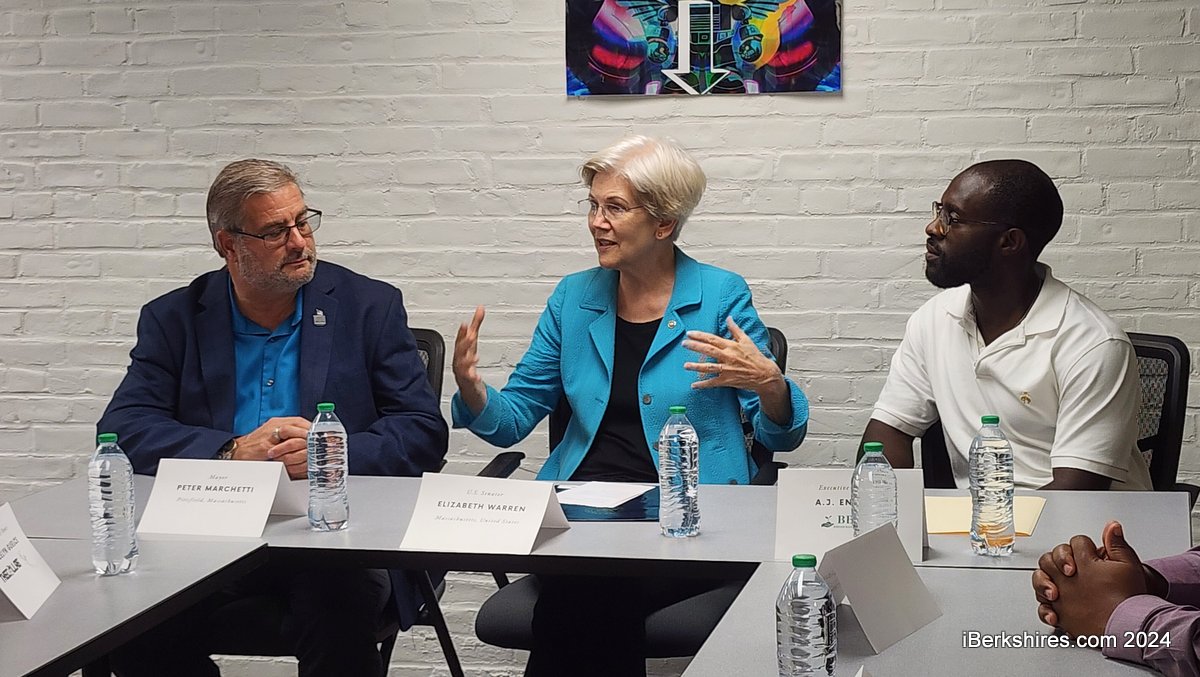
Sen. Warren says small business is the backbone of the country with Mayor Peter Marchetti and BBEC President and Executive Director A.J. Enchill. 
PITTSFIELD, Mass. — The Berkshire Black Economic Council's work to support and attract new small businesses to the gateway city got boost with $455,000 secured by U.S. Sen. Elizabeth Warren in last year's appropriations package.
 
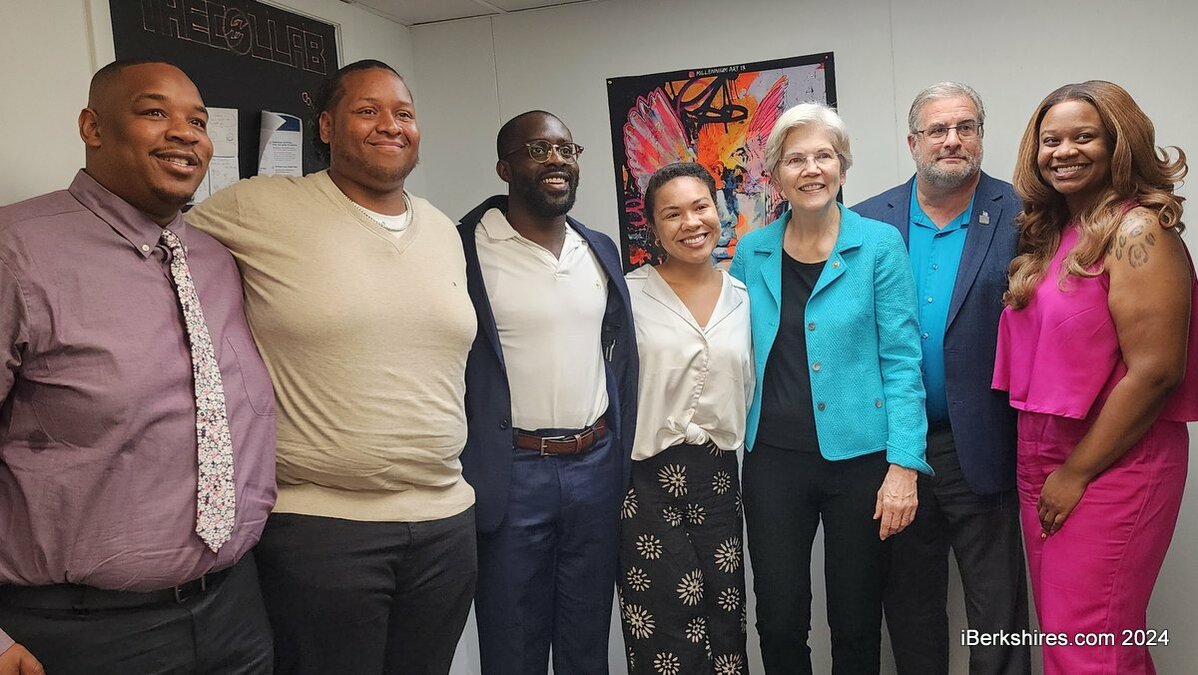
The state's senior senator was in the city on Thursday to talk small business opportunities and local health care, and met with four small-business owners who have received assistance, advice and promotion through the council's programs before joining another roundtable at Soldier On.  
 
"I'm here to celebrate partnership because I really do believe that we have the pieces right, every part of it then starts to work better," Warren said. "And of course, I'm also here to celebrate being able to put nearly half a million dollars into funding this effort, and the work that is being done here to make sure that small businesses, that Black-owned small businesses, are not at a competitive disadvantage."
 
A.J. Enchill, president and executive director, said the funds will be used for engineering and design for an incubator space, possibly at the William Stanley Business Park.
 
That's the next chapter for the 3-year-old council that is averaging about six meetings a week with different businesses and has 60 or so members — businesses, nonprofits, foundations, educational institutions, government agencies — who consistently show up at gatherings. Networking has also attracted businesses from Turners Falls to Springfield, and a few have relocated or considering relocating to Pittsfield. 
 
"We're Berkshires focused," said Enchill. "That being said, we do everything we can to pull businesses our way."
 
He told Warren that the council is taking part in the revitalization of the downtown. In collaboration with MassDevelopment, it helped springboard five new businesses into vacant storefronts. 
 
The senator heard from Destiny Saunders, who with her mother, Gloria, moved from a makeup, hair and personal care pop-up to the brick-and-mortar Dolc'e Rose Beauty Supply, providing much-needed products for area Black women and, she added, for Williams College students.
 
"When we started out doing a pop-up shop, we noticed that the excitement and the live energy that we noticed would come into the pop-up shop buying shampoo, conditioners, wigs, and makeup, and so on, so forth," she said. "Our grand opening was in February, it was a really great turnout."
 
Jocelyn Guelce spoke about opening The Collab, where the meeting was held, and its use as a gallery space and recording studio, and for meetings, co-working and events. 
 
"It's really intended to be a well-rounded third place for the community to just come and connect with limited barriers to access," she said. 
 
Photographer Desean Scales said it's been like a snowball effect since he participated in the Black Arts Council's talent show. 
 
"I feel like so much has grown since then, helped me get out of my comfort zone," he said. "But it also allowed me to be able to connect with the community more and also get myself and my business out there. Being self taught and kind of doing this entire business journey alone. It was hard to, I guess, find a way to spread myself and spread the awareness of my business."
 
Ludwig Jean-Louis purchased Cravins ice cream parlor on Elm Street two years ago with help from an equipment and infrastructure grant through the BBEC. The oldest of five, he started working in an ice cream shop in high school and tried a pop-up ice cream business on North Street that didn't do well for lack of advertising. 
 
"I saw the need, and I had the resources to make it happen. But then the few steps were missing in implementation of it," he said, but when Cravins went up for sale he decided to go for it. "It's kind of challenging to just do an outstanding, single, one job. And so far, so good. We are in our third season. With the help of BBEC, we were able to locate and do the repairs needed to get our equipment up and running."
 
Warren enthusiastically peppered the entrepreneurs with questions about aspirations and challenges, shared how she had her own small business with a friend selling plants many years ago and made plans to stop for ice cream at Cravins (which she did.)
 
"I'm always struck, that anyone who starts a new business takes enormous energy, gotta have a vision, got to have creativity, gotta be crazy, optimistic, and forward thinking," she said. "But it's like you got to be good at 10 different jobs."
 
That's just not realistic, and one of the reasons she wanted to fund the BBEC is that it's an investment in small business and an investment in the region. 
 
"I worry that we, increasingly, as a country, that big businesses have such a comparative advantage, because they can hire all the lawyers. They have plenty of capital, so they can run it for a year or two at a complete loss," she said.  
 
"But ultimately, if we let all our work be done by the big guys, it's going to snuff out the innovation, the creation in small towns, in rural areas. So to me, this investment is an investment in you all individually. But it's also an investment of how we think about building in this region."
 
How can I be helpful? the senator asked. 
 
"Keep doing what you're doing," responded Enchill. "You've made this commitment, this investment in our region. And it's allowing us to take the proof of concept that we're building community to revitalize our downtown storefronts and revitalize our history."

Tags: BBEC,   economic development,   small business,   Warren,   
If you would like to contribute information on this article, contact us at info@iberkshires.com.

BRTA Focuses on a New Run Schedule

By Breanna SteeleiBerkshires Staff

PITTSFIELD, Mass. — The Berkshire Regional Transit Authority is still working on maintaining its run schedules after dropping the route realignment proposal.

Last Thursday's meeting was Administrator Kathleen Lambert's first official meeting taking over the reins; retiring director Robert Malnati stayed during a transition period that ended last month.

Lambert is trying to create a schedule that will lessen cancellations. There was a two-hour meeting the week before with the drivers union to negotiate run bids and Lambert is working with the new operating company Keolis, which is taking over from Transdev.

The board spoke about anonymous emails from drivers, which Lambert said she has not seen. iBerkshires was not able to see those letters, but has received some. 

"They were lengthy emails from someone describing themselves as concerning BRTA employee, and there was a signed letter from a whole group of employees basically stating their concerns. So, you know, to me, it was a set of whistleblowers, and that, what my understanding is that this really triggers a need for some type of process to review the merits of these whistleblowers, not going to call them accusations, but basically expressions of concern," said member Stephen Bannon.

A letter iBerkshires received spoke of unhappy drivers who were considering quitting because of decisions being made without "input from frontline staff," frustration and falling morale, and the removal of the former general manager shortly after Lambert came in.

Lambert said it's difficult to navigate a new change. She also noted many drivers don't want to do Saturday runs and it has been hard negotiating with drivers on the new runs.

"I would like you all to keep in mind that the process of change is super difficult. Transdev has been here for 20 years, and some of these drivers have never known any other operating company, the way some of the operations have been handled has been archaic," she said. "So getting folks up to speed on how a modern transit system works is going to be painful for them. So I don't want to say that I'm unsympathetic, because I am sympathetic, but I am trying to coax people along with a system that's going to seem very strange to them."

The board spoke about better communication between them and Lambert, citing cooperation will be best moving forward.

"There's just a lot of stuff in the air right now, and there are a lot of fires to put out to make this a coordinated effort. And if we don't keep our communications open and be straightforward, then you get blindsided about how you know the input that you could get from us about your position, and how you know what's going on in your direction, and we get blindsided. And I think that we have to make sure that this is a collaboration," said member Sherry Youngkin.

"Both sides have responsibilities, because in the long run, this advisory board is going to have to make decisions as to how we brought forward and if we've gone forward in a fair and helpful way. And I think that's hopefully what everybody is looking for also." 

Transdev and Keolis held a three-day recruiting event interviewing almost 40 candidates and offering jobs to eight, but only three stayed on to start training. Lambert said it was disappointing but she will keep trying to retain more people.

In her first report to the board, she noted that ridership dipped a little over 10 percent, but still remains higher than last year, adding that was because of cancellations of services because of the lack of drivers.

Like the last meeting, some of the advisory board members were torn over the start of the Link413 service, worried that the start of the service took drivers away and the numbers of riders are low.

Lambert, however, said the ridership has doubled from last month.

"As I've spoken before, we have, generally, a six-month adoption for brand-new service before you can really go in and evaluate, are you being successful based on the grant that my predecessor wrote along with the team for PBTA and RTA, we are ahead of schedule, which is pretty good, so I'm hoping that will continue to improve," she said.

Member Renee Wood said the board never approved the service, adding the only thing she could find in the minutes was a vote to accept the equipment. She said it was supposed to be put on the agenda to discuss.

"The Link413 service has been three years in the making. It's been a grant that was accepted and has been working with our partners, PVTA and FRTA, to put into place. So I don't have the entire history of how that process worked, but it's been three years in the making, and did we not understand that once we accept that grant that we were going to put in new service?" Lambert said.

The board discussed if Title VI, the Civil Rights Act, was followed with an accurate review and accurate amount of time for public comment period on the service changes and if its attorney should review if the  grant conditions were properly followed.

Lambert said changes had the 60-day comment period included in the proposed route realignment packet, giving the opportunity for the community to respond to that as well but will look into the legality of the situation with their attorney.

View Full Story

More Pittsfield Stories