Pittsfield Council Preliminarily OKs Water Sewer Calculation, Rates
PITTSFIELD, Mass. — The City Council is amicable to a new calculation for water and sewer rates.
A formula-based approach that aims to fairly adjust rates yearly was preliminarily approved along with an eight percent water and sewer increase for fiscal year 2025. Mayor Peter Marchetti's proposed ordinance bases rates on the Consumer Price Index Factor (CPIF) and the Operational Stability Factor (OSF.)
"Any mayor would love to take the City Council out of the process, say 'Here's the formula.' Every year, bang, there's those rates. We didn't do that," Marchetti said.
"We wanted to be fair and transparent and here's our formula, you guys still need to approve it so again, it isn't something happening downstairs in the corner office all by myself trying to make stuff."
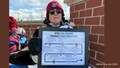
Commissioner of Public Service and Utilities Ricardo Morales displayed a graph of rates over the last 10 years and said, "we have been all over the place." He thanked the council for asking the city to provide a history of rate changes because it was not much of a consideration in the past.
With a method that systematically changes rates, Morales said that the erratic line can be calmed, more programmatic, and more purposeful.
"This method provides predictable changes, it provides stability to our rate structure, it promotes a sense of transparency because you know what to expect at the very least on the CPI side and you know what's going to come if we are proposing more improvements to our infrastructure," he explained.
"It improves our resource management and accounts for our current and future needs."
The CPIF is a way to adjust for inflation or deflation and is calculated by comparing the year-over-year change in February of the CPI index for water and sewer, the administration says, and the OSF aims at ensuring enough funding for future capital upgrades, maintenance, and unexpected challenges with a ten percent cap.
The council voted to change that to an eight percent cap, as motioned by Councilor at Large Earl Persip III.
Currently, the city ordinance states that sewer and water charges are established from time to time by the commissioner of public services and utilities and adopted by the City Council. Rates are computed based on the total amount budgeted for sewer works operation and administration plus equipment replacement, capital improvements, depreciation, and projections of water use and wastewater discharge by system users and other necessary factors.
"Currently it essentially states that the commissioner sets some number and submits it to the City Council for approval. That is pretty much unchanged," Morales said. "What I'm proposing tonight and in this change for an ordinance is how we get to do that."
The CPI is tied to water and sewer metrics that affect daily activities as well as the budget and revenue based on infrastructure needs, he said, and the OSF captures what the city needs to cover to be able to operate facilities and infrastructure in a sustainable way without deferring maintenance and upgrading systems to meet demands.
"With this, we look at essentially two goals: we have a retained earnings goal and we have a debt service goal," Morales added.
Ward 1 Councilor Kenneth Warren was not convinced, stating that if the goal is to make it more planned and predictable with fewer council votes, the ordinance does not do it. He does not support the OSF portion of the ordinance.
"It doesn't change the need for an annual City Council vote," he said. "It works against planning, it works against predictability."
Coming from a career in banking, fundraising, and economic development, Ward 7 Councilor Rhonda Serre "really truly deeply" appreciated the risk management attitude taken in developing this.
She noted that it is "very common" in most business worlds — and government doesn't always work like the business and we don't want it to — but at the same time, it's good to look at best practices and the setting of guardrails for upper and lower limits.
"There may be some discussion of whether 10 percent is the right level for it but I do like the design of this, I think it is sound practice and it would be very good to help us as a City Council from year to year quickly and efficiently be able to judge whether or not we feel like sewer and water programs are going forward in a way that we as a council, expect."
Councilor at Large Alisa Costa appreciated the work put into this and said it is a better way to come up with rates so that they can be debated properly.
"It's important that we're investing in our infrastructure and that we don't break the backs of our taxpayers and our residents by doing that," she said.
Marchetti explained that he told Morales to find a formula that works, noting that the cap was set as a protection. He noted that this process didn't previously consider the future.
"We had some 25, 30, 45, 50 percent increases but if you look at the year or two prior, we didn't raise any rates," he said.
The proposed water and sewer rates would raise the average water bill for one toilet by about $24 per year, rising from $295.52 in FY24 to $322.44, and the average sewer bill by about $30, rising from $378.80 in FY24 to $409.12. The annual bill would total around $732.
Additional toilets would rise from about $149 in FY24 to about $161 for water and about $190 in FY24 to about $205 for sewer, totaling about $366 annually. Metered water would rise from $2.16 per cubic foot in FY24 to $2.33 for water and from $4.50 to $4.86 for sewer.
In FY24, water rates rose 12 percent and sewer rates 25 percent.
Tags: sewer rates, water bills,