Pittsfield Council Advances Toter Contract to Final Vote

By Brittany PolitoiBerkshires Staff
Print Story | Email Story

PITTSFIELD, Mass. — The City Council has taken a move toward toters, preliminarily approving a five-year contract with Casella Waste Management.

After hours of deliberation, councilors on Monday gave the initial OK for an agreement that uses automated collection instead of unlimited trash pickup.  A final vote will be taken next week.

"I think people are nervous of change, people don't like change, toters are a scary thing — carts as you call them. There's hills everywhere, there's one-way streets everywhere, there's snow everywhere. It gets figured out in other places. There will be hiccups, there will be problems," Councilor at Large Earl Persip III said, adding that he is hopeful about Casella providing the service because they have been "a great team member."

"I am encouraged that you are actually rolling out our toter program if it passes."

The city currently spends about $5.2 million on trash per year and the new contract would trim the budget by about $600,000 to $4.6 million.

Pittsfield's nearly 17,400 households produce about 1,800 pounds of trash per household annually, collectively generating close to 20 tons as a community.  The proposal aims to reduce each household's waste to 1,370 pounds annually.

Casella representatives Stephen Haeder and Kilian Flynn answered queries ranging from customer service and pickup times to a $120 yearly sticker that allows residents to access the Hubbard Avenue transfer station and have free recycling and yard waste.

"Every transfer station that I've run or every transfer station that has a drop-off, throughout Berkshire County and throughout the area, has paid a sticker and it fluctuates anywhere from $85 to $150," Flynn said when told the $120 price tag was high.

He said he has been involved with the city contract since 1993 and that they want to make sure it's affordable while Casella is successful in providing it and not operating at a loss.

The biggest change is the use of 48-gallon toters for trash and recycling, provided to residents at no cost. The size of the toters has been under scrutiny, with some thinking they are too small and others too large.

Ward 4 Councilor James Conant unsuccessfully motioned to increase recycling containers to 64-gallon toters, reporting that likely 90 percent of the ward recycles. He said on paper sees cardboard piled inside of boxes on recycling weeks.

He also noted that many people buy online, which results in box recycling, and that the collection is bi-weekly, as it rotates between bottles and cans and paper.

"There's a lot of cardboard generated, paper generated, and my concern is that the 48-gallon toter is not large enough for recycling," he said.

Though councilors supported the effort, they felt it was somewhat over-ambitious.  It failed with Conant, Ward 1 Councilor Kenneth Warren, and Ward 6 Councilor Dina Lampiasi voting in favor. Ward 3 Councilor Matthew Wrinn was absent.


"I think as you go back out there, many of the seniors are going to be saying, 'I have no place to put a 64-gallon toter,'" Mayor Peter Marchetti said, adding that residents can request a second recycling toter at no cost.

He reported hearing the opposite request of 64 gallons for trash and 48 for recycling.

"That tells me that we're not buying into what we're trying to do here in getting folks to recycle so I prefer to stay with 48, 48 and allowing a second toter of recyclables," Marchetti said. "But this part of the process is on you guys. You are hearing from the voters just as much. This isn't a done deal, this isn't a one-man show, and we attempted to do this communitywide and get as many voices heard as we could."

Persip "kind of" agreed, explaining that he recycles a lot, but prefers to have two 48-gallon toters to separate plastics and paper. Councilor at Large Kathy Amuso agreed, reporting that constituents have expressed a want for two 48-gallon recycling toters.

"My own thoughts on it are I like the idea of being able to request a second 48 and going up to 96 rather than starting with 64," President Pete White said.

Councilor at Large Alisa Costa was "torn," given that the city has a recycling rate of only 9 percent.

"I love the idea of making it visually that recycling is more important and so making it bigger but we have some community challenges when I think about small households or more densely populated areas that don't have a garage or someplace to store them," she said.

"Which is I think what we heard at the community meeting."

Commissioner of Public Services and Utilities Ricardo Morales has found that 65-gallon recycling toters are preferred when studying other Massachusetts communities.

"There are 120 communities that mandate a specific size toter and from there, similar size to Pittsfield, most of them have a 65-gallon taller for recycling," he reported.

Former councilor Karen Kalinowsky said 48 gallons is too small for trash, reporting that there are "tons of garbage" at the curb on pickup day and even the 64-gallon toter would lessen the amount taken in.

Councilors also asked that representatives look into several contractual items before the final approval, including yard waste access for local residents, a reduced sticker rate for seniors, and Christmas tree pickup.


Tags: recycling,   trash,   
If you would like to contribute information on this article, contact us at info@iberkshires.com.

BRTA Focuses on a New Run Schedule

By Breanna SteeleiBerkshires Staff

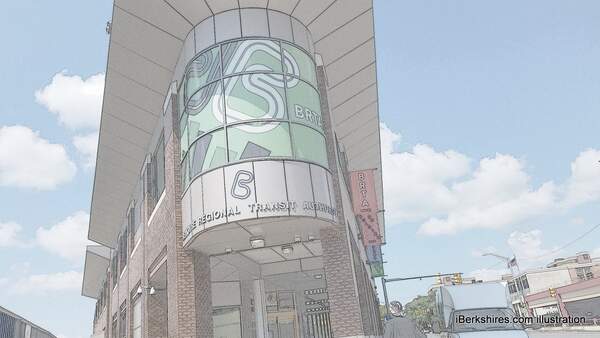
PITTSFIELD, Mass. — The Berkshire Regional Transit Authority is still working on maintaining its run schedules after dropping the route realignment proposal.

Last Thursday's meeting was Administrator Kathleen Lambert's first official meeting taking over the reins; retiring director Robert Malnati stayed during a transition period that ended last month.

Lambert is trying to create a schedule that will lessen cancellations. There was a two-hour meeting the week before with the drivers union to negotiate run bids and Lambert is working with the new operating company Keolis, which is taking over from Transdev.

The board spoke about anonymous emails from drivers, which Lambert said she has not seen. iBerkshires was not able to see those letters, but has received some. 

"They were lengthy emails from someone describing themselves as concerning BRTA employee, and there was a signed letter from a whole group of employees basically stating their concerns. So, you know, to me, it was a set of whistleblowers, and that, what my understanding is that this really triggers a need for some type of process to review the merits of these whistleblowers, not going to call them accusations, but basically expressions of concern," said member Stephen Bannon.

A letter iBerkshires received spoke of unhappy drivers who were considering quitting because of decisions being made without "input from frontline staff," frustration and falling morale, and the removal of the former general manager shortly after Lambert came in.

Lambert said it's difficult to navigate a new change. She also noted many drivers don't want to do Saturday runs and it has been hard negotiating with drivers on the new runs.

"I would like you all to keep in mind that the process of change is super difficult. Transdev has been here for 20 years, and some of these drivers have never known any other operating company, the way some of the operations have been handled has been archaic," she said. "So getting folks up to speed on how a modern transit system works is going to be painful for them. So I don't want to say that I'm unsympathetic, because I am sympathetic, but I am trying to coax people along with a system that's going to seem very strange to them."

The board spoke about better communication between them and Lambert, citing cooperation will be best moving forward.

"There's just a lot of stuff in the air right now, and there are a lot of fires to put out to make this a coordinated effort. And if we don't keep our communications open and be straightforward, then you get blindsided about how you know the input that you could get from us about your position, and how you know what's going on in your direction, and we get blindsided. And I think that we have to make sure that this is a collaboration," said member Sherry Youngkin.

"Both sides have responsibilities, because in the long run, this advisory board is going to have to make decisions as to how we brought forward and if we've gone forward in a fair and helpful way. And I think that's hopefully what everybody is looking for also." 

Transdev and Keolis held a three-day recruiting event interviewing almost 40 candidates and offering jobs to eight, but only three stayed on to start training. Lambert said it was disappointing but she will keep trying to retain more people.

In her first report to the board, she noted that ridership dipped a little over 10 percent, but still remains higher than last year, adding that was because of cancellations of services because of the lack of drivers.

Like the last meeting, some of the advisory board members were torn over the start of the Link413 service, worried that the start of the service took drivers away and the numbers of riders are low.

Lambert, however, said the ridership has doubled from last month.

"As I've spoken before, we have, generally, a six-month adoption for brand-new service before you can really go in and evaluate, are you being successful based on the grant that my predecessor wrote along with the team for PBTA and RTA, we are ahead of schedule, which is pretty good, so I'm hoping that will continue to improve," she said.

Member Renee Wood said the board never approved the service, adding the only thing she could find in the minutes was a vote to accept the equipment. She said it was supposed to be put on the agenda to discuss.

"The Link413 service has been three years in the making. It's been a grant that was accepted and has been working with our partners, PVTA and FRTA, to put into place. So I don't have the entire history of how that process worked, but it's been three years in the making, and did we not understand that once we accept that grant that we were going to put in new service?" Lambert said.

The board discussed if Title VI, the Civil Rights Act, was followed with an accurate review and accurate amount of time for public comment period on the service changes and if its attorney should review if the  grant conditions were properly followed.

Lambert said changes had the 60-day comment period included in the proposed route realignment packet, giving the opportunity for the community to respond to that as well but will look into the legality of the situation with their attorney.

View Full Story

More Pittsfield Stories