ServiceNet Cuts Ribbon on Vocational Farm to 'Sow Seeds of Hope'
PITTSFIELD, Mass. — Smiles were all around as farmers, human service workers, and officials cut the ribbon Friday on ServiceNet's new vocational farm on Crane Avenue.
Whether it is planting flowers or growing fresh produce, the program is for "sowing seeds of hope" for those with developmental disabilities.
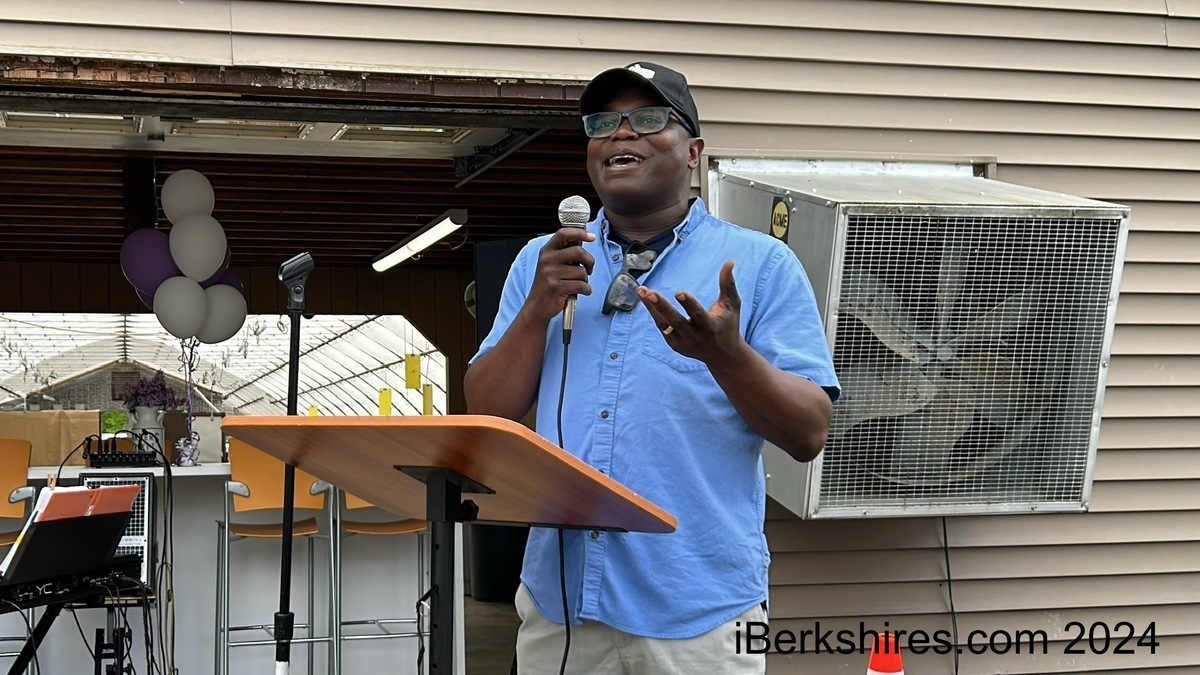
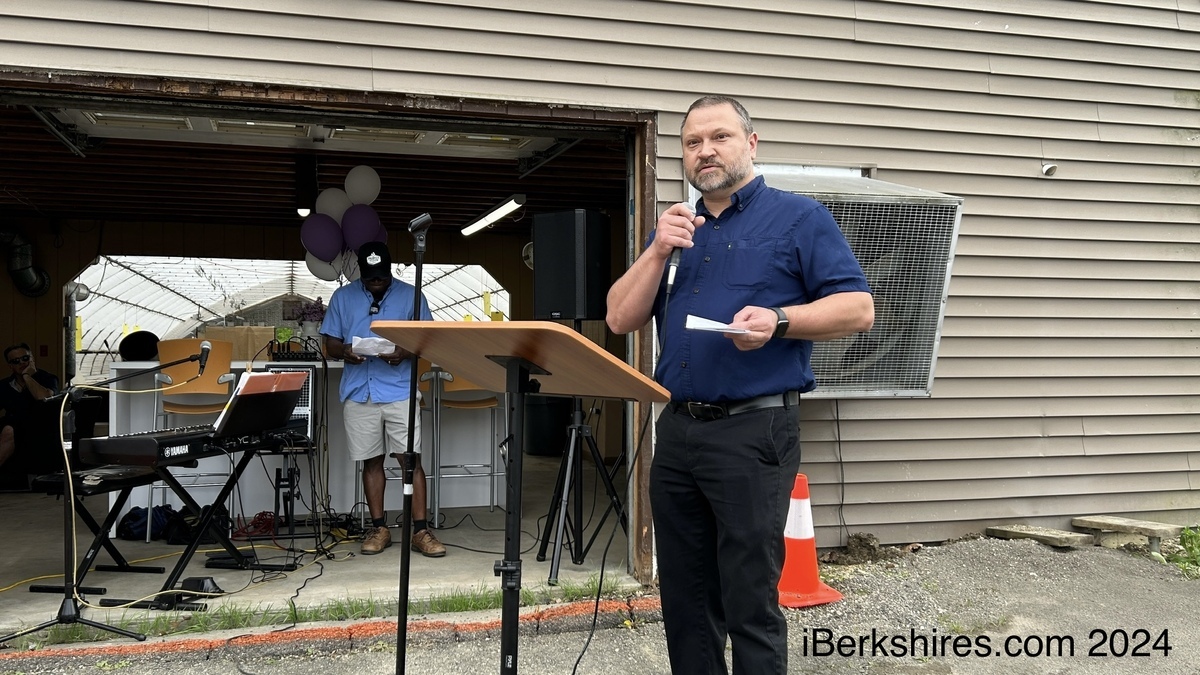
"What Prospect Meadow Farm is about is changing lives," Vice President of Vocational Services Shawn Robinson said.
"Giving people something meaningful to do, a community to belong to, a place to go every day and to make a paycheck, and again, I am seeing that every day from our first 17 farmhands the smiles on their faces. They're glad to be here. They're glad to be making money."
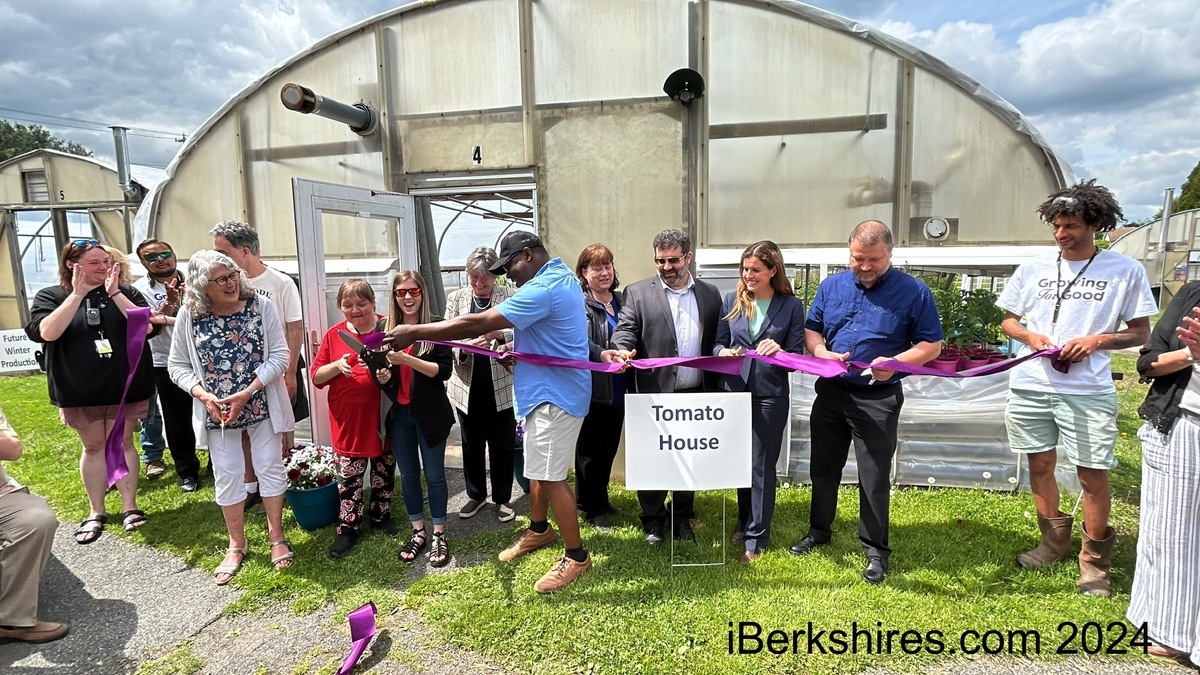
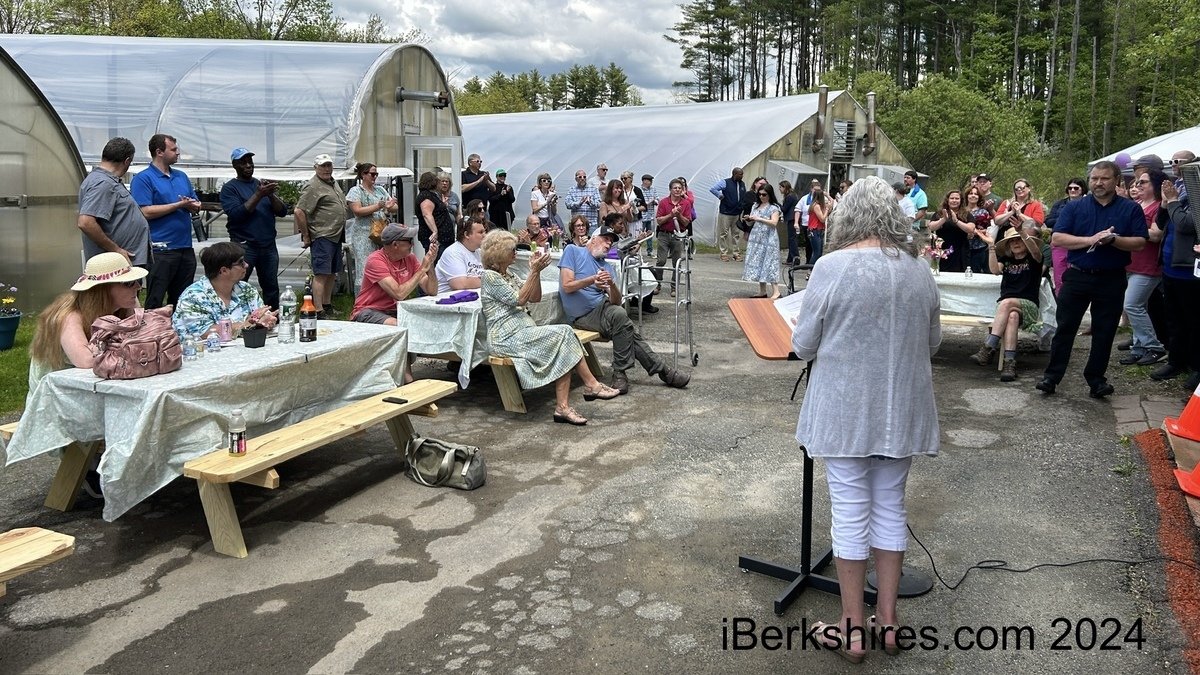
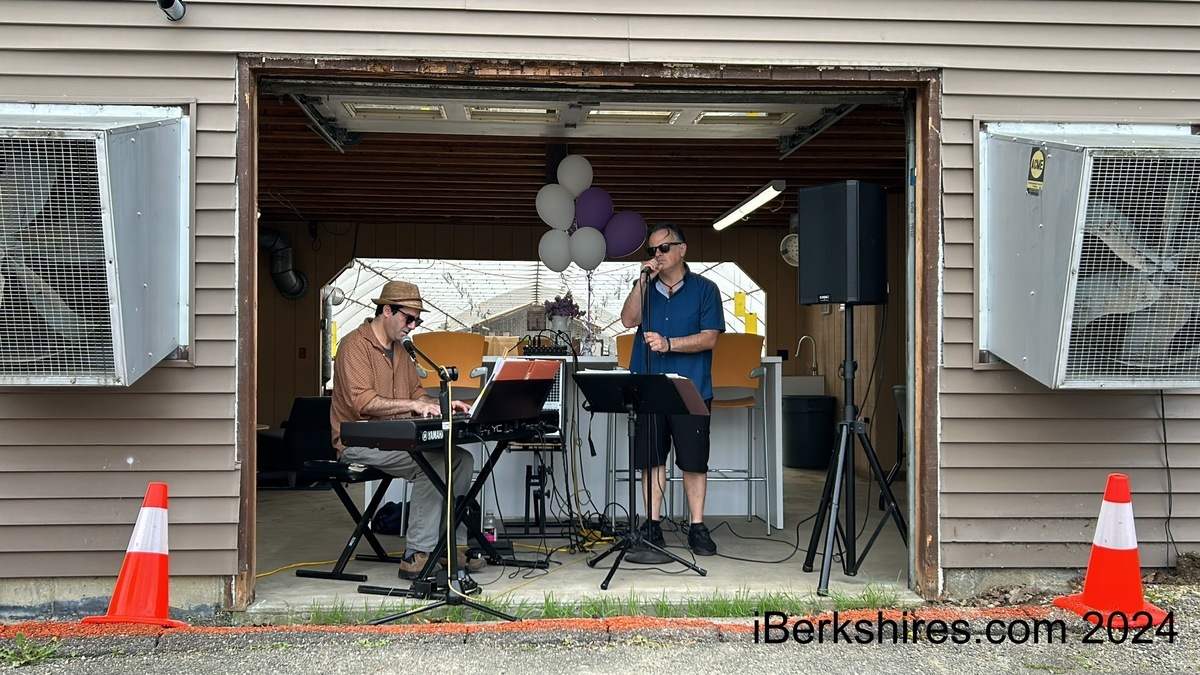
Prospect Meadow Farm Berkshires held a launch event on Friday with tours, music, snacks, and a ribbon cutting in front of its tomato greenhouse. The nonprofit human service agency closed on the former Jodi's Seasonal on Crane Avenue earlier this year.
It is an expansion of ServiceNet's first farm in Hatfield that has provided meaningful agricultural work, fair wages, and personal and professional growth to hundreds of individuals with intellectual and developmental disabilities since opening in 2011.
Eventually, the farm will employ 50 individuals with developmental disabilities year-round and another 20 to 25 local folks supporting their work.
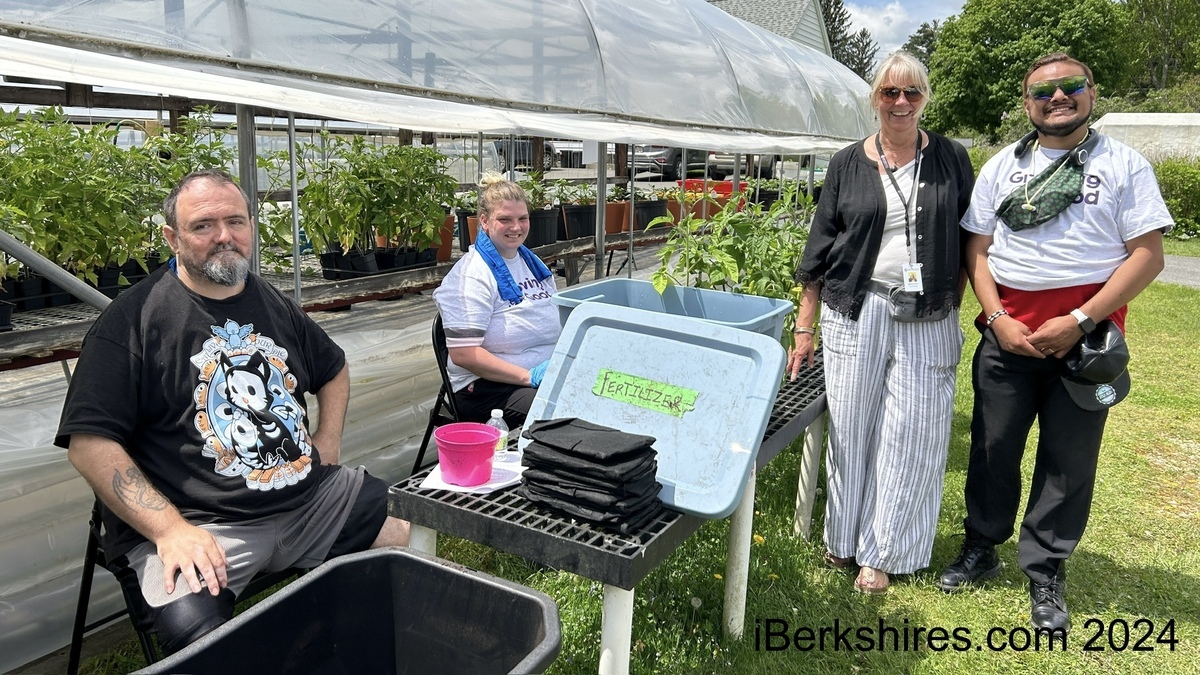
The pay is a great aspect for Billy Baker, who is learning valuable skills for future employment doing various tasks around the farm. He has known some of the ServiceNet community for over a decade.
"I just go wherever they need me to help," he said. "I'm more of a hands-on person."
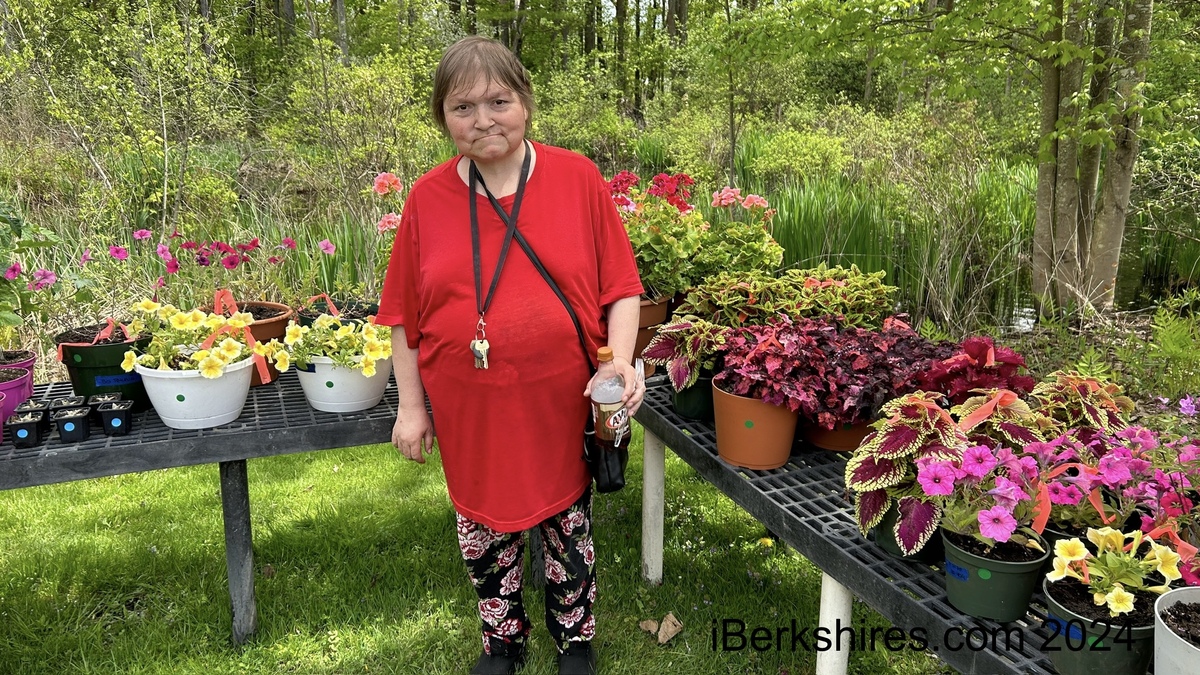
Lori Carnute, who is also employed on the farm, plants flowers as well as doing housekeeping tasks. She aspires to be an art teacher, citing her love of crafts.
"You see more people, you see my friends," she said about her experience on the farm.
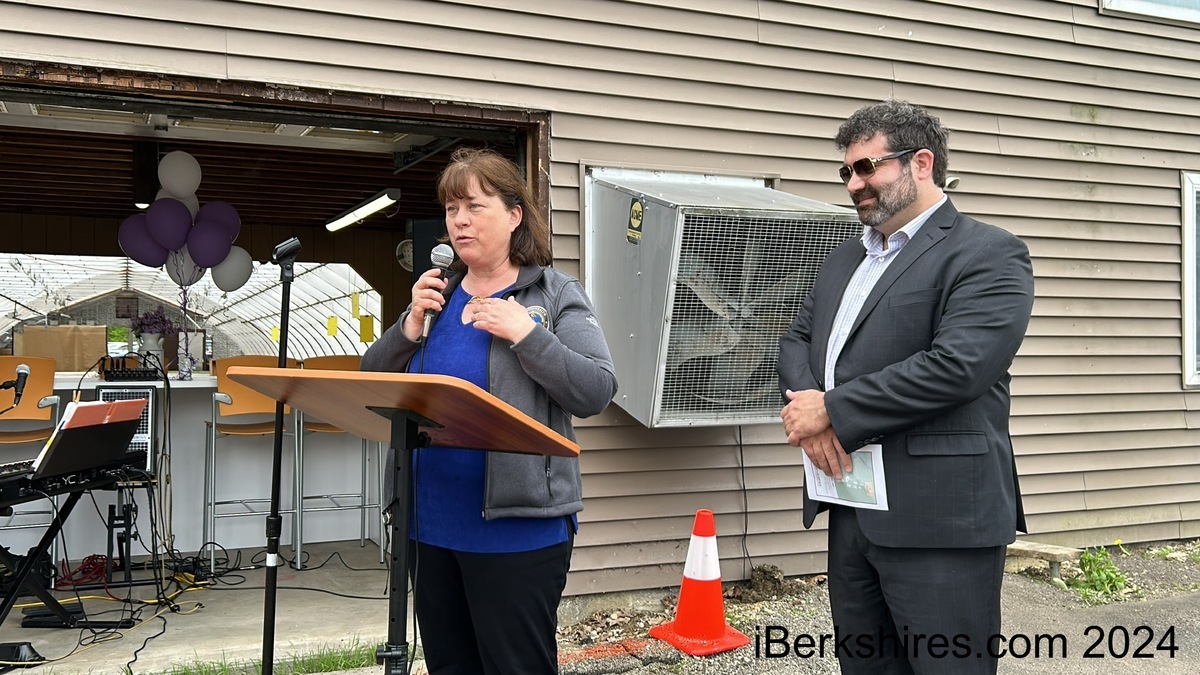
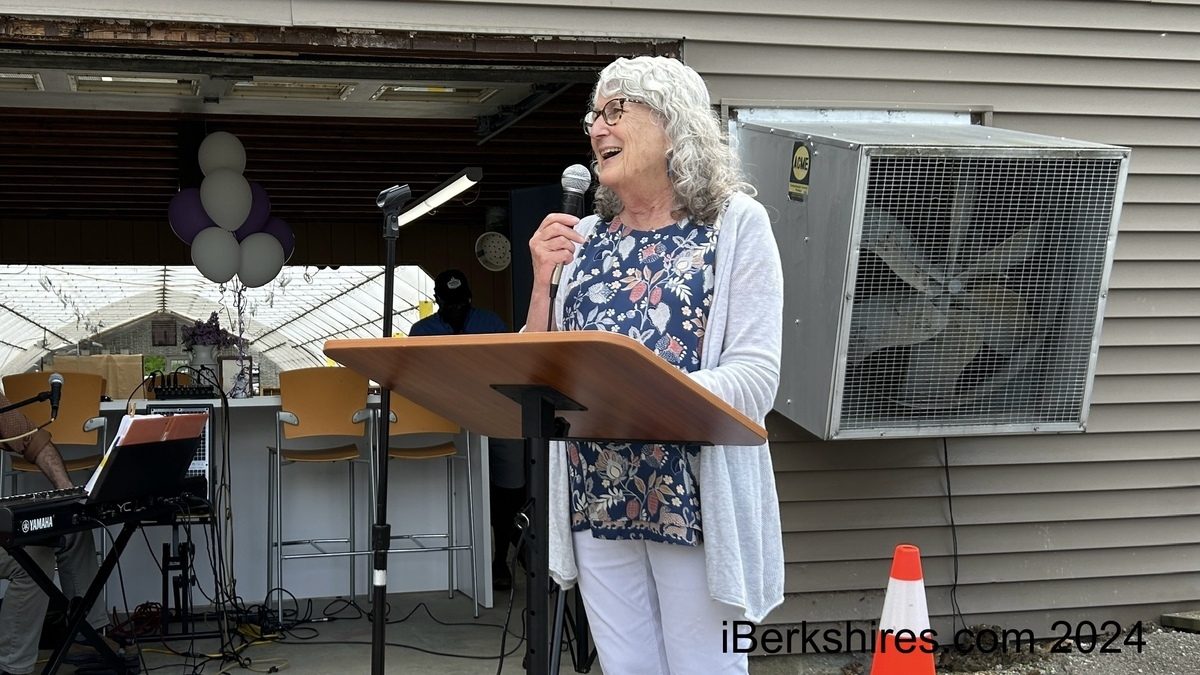
President and CEO Sue Stubbs explained that when ServiceNet purchased its first farm in Hatfield in 2010, it was known that good things happen when people work outside, grow things, and form bonds with animals.
"We'd already seen it at one of our group homes where a neighbor had gifted us a pair of llamas, that was the beginning of the whole journey, and we imagined some of the opportunities that lay ahead as we expanded our vocational services programming with this new shift into agriculture," she said.
Stubbs credited Robinson for really making it take off.
"Shawn did not have a farming background. He knew how to work with people, identify their gifts and abilities, and inspire them to do their best. He also knew how to connect with area farmers and others to learn what he needed to learn," she said.
"As the enterprise grew, as farm hands learned valuable skills while earning a good paycheck, and his family and community enthusiasm continued to build, we acquired a second farm in Hatfield to expand the opportunities available and now here we are in Pittsfield, adapting the Prospect Meadow model to grow more agricultural jobs for people with different abilities, this time at a much-loved flower farm whose owners had been seeking a buyer to carry their work forward."
This gathering reminded Robinson of the saying "Farming is a profession of hope."
"Today we're sowing the seeds of hope for a brighter future for all of our participants. Each day that I come and visit here, I'm reminded of that when I see the bright smiles on all of their faces working here," he said.
"Many of the farmhands here were in center-based programming where maybe they were doing different activities like art and other things that were meaningful but not, physical labor, not earning a check. and not being outside. They quickly adjusted to that transition, and you can just feel it and see it and each one of the farmhands."
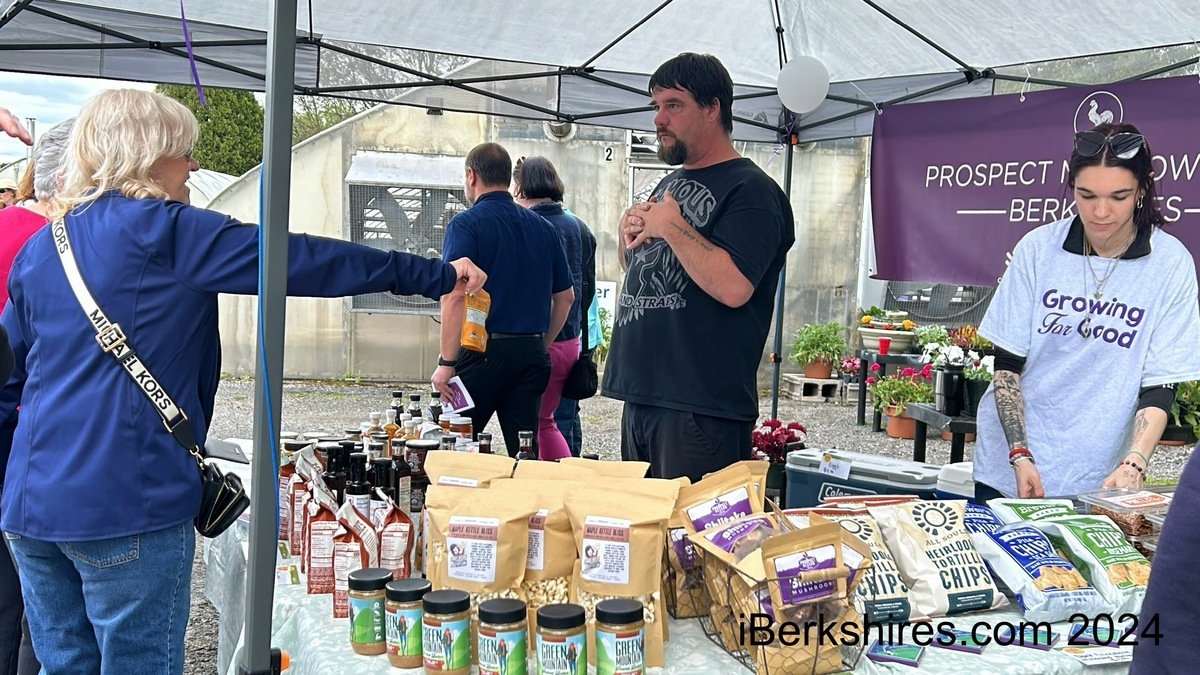
Prospect Meadow Farm holds itself to high standards, he said, from the quality of people's work experience to the products that they grow. Jodi's 40-year flower farm tradition will be continued with the addition of growing microgreens, shiitake mushrooms, and other vegetables year-round.
Produce will be available to low-income residents at ServiceNet shelters and group homes, local pantries, and through the Berkshire Grown network. Products will also be sold on-site in the farm store.
The Hatfield location is providing 125 farm shares to low-income seniors in the Hampshire, Hamden, and Franklin counties and the hope is to bring that to Berkshire County.
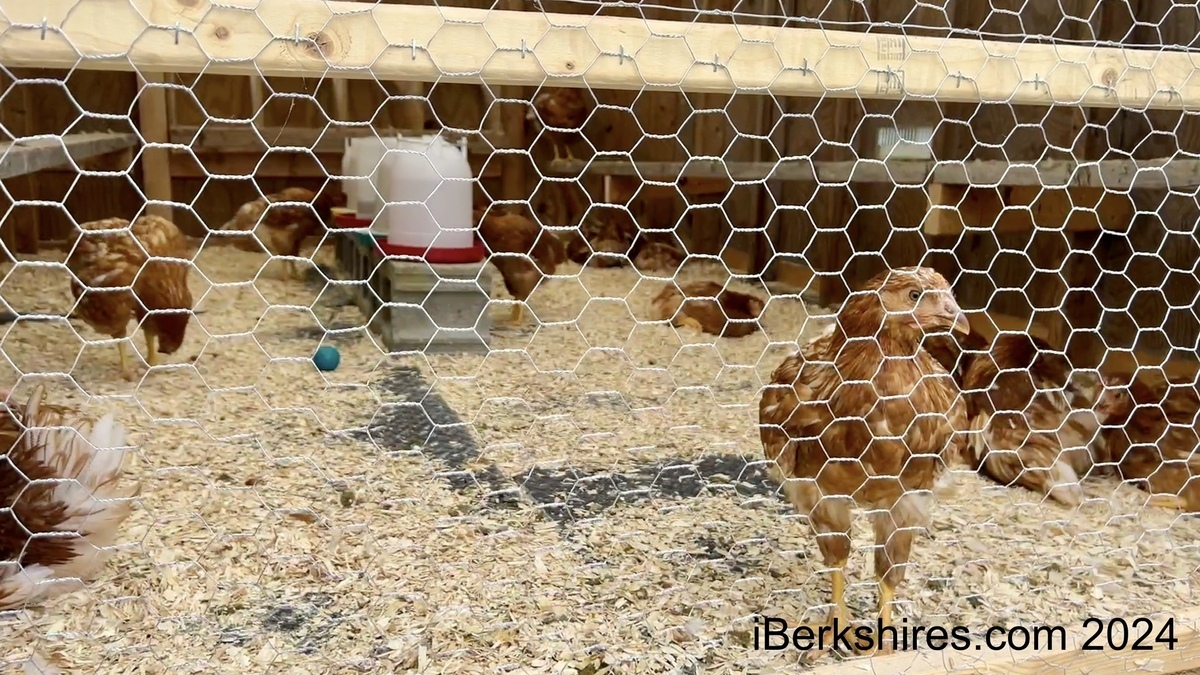
"As the farm develops, we anticipate growing our small flock of chickens and adding eggs to our offerings," Robinson explained.
"Right now in Hatfield, we've got 500 chickens and we produce a lot of eggs and actually a significant number of them go to the local survival center under a contract and those eggs are provided to local low-income families so we hope to do the same out here."
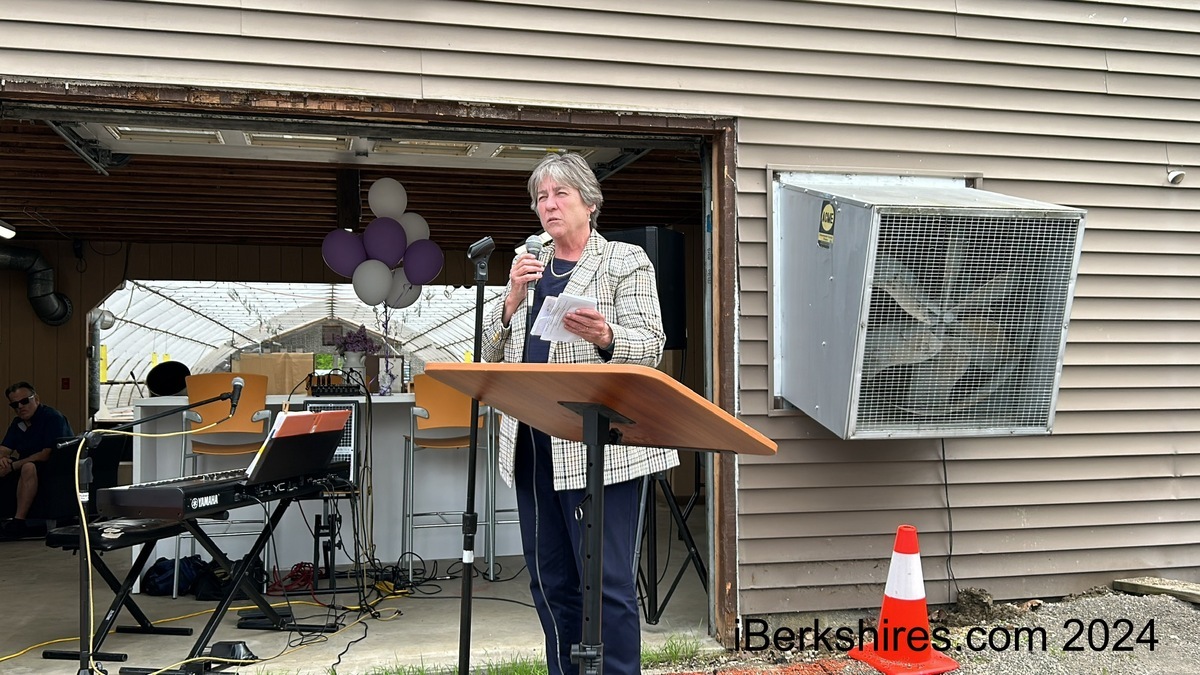
State Sen. Paul Mark said that the farm's work is "amazing" as well as having the opportunity to have a program in Pittsfield where people get engaged in farming and serving others while having the chance to learn vocational skills to make a better life for themselves.
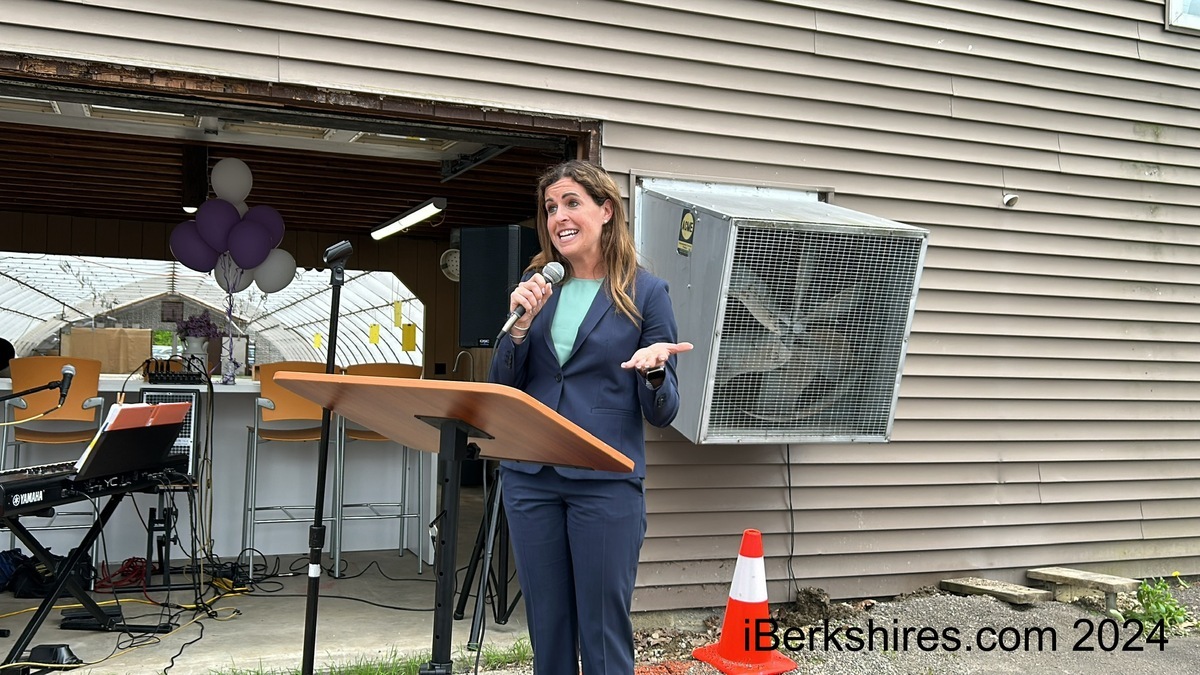
State Rep. Tricia Farley-Bouvier emphasized that when state and local government work together with nonprofits, that's when the best work is done.
"We might think that this very center of Prospect Farm is plants. That's what's on the signs, that's what we're seeing all over but the center of this endeavor are the farmhands," she said, asking that it remains that way.
She shared her background as a special education teacher when she worked in a children's home, remembering the government-issued food that was a vast difference from what is being produced on the farm.
"Government-issued food would come in sometimes and it was those great big blocks — they called it cheese, they call it cheese — and cans of soup that you needed the industrial can opener to open and you're just like 'OK, this is what the government does for people,'" Farley-Bouvier said.
"And now look at the difference that is locally grown food, healthy food, grown by the people who are going to eat it, sold to the community, and supporting other organizations. That is a change and that is a change that happens not because somebody wished it. First, we visioned it and then we work together to make it happen."
Agricultural Commissioner Ashley Randle and state Department of Developmental Services coordinator Jane Ryder traveled to Pittsfield for the event.
Randle seconded Farley-Bouvier's sentiment about focusing on the farmhands.
"We think about agriculture, we think about the food first, and that sometimes gets lost about the people behind the food production and producing the food to connect to seniors and low-income residents," she said.
"And today, I'm just leaving so inspired getting to talk with some of the farm hands and the team here. It's just such a wonderful example of the power of partnerships and what we can do to all help each other and provide access, care, and equity to all individuals across the state and in agriculture."
Ryder said that this is an incredible model for the state.
"Talk about a true partnership on what we're able to achieve with this project," she said.
"When I think of the state partners when I think of the local officials, the local businesses, ServiceNet, this is this is what it should be. This is exactly the type of opportunity we want to see from people with intellectual and developmental disabilities that we support."
City Council President Peter White looked back on a tour that city officials were given earlier this year, saying, "seeing the transformation from what this place was in March to now is just amazing."
Tags: agriculture, ribbon cutting, social services,