image description
Lyon Aviation, located in the Pittsfield Municipal Airport, plans to remove an existing "T" style hangar and replace it with a new, 22,000-square-foot hangar.

Pittsfield Community Development OKs Airport Project, Cannabis Amendment

By Brittany PolitoiBerkshires Staff
Print Story | Email Story

PITTSFIELD, Mass. — The Community Development Board has supported plans for a new hangar at the airport and a change to the cannabis ordinance.

Lyon Aviation, located in the Pittsfield Municipal Airport, plans to remove an existing "T" style hangar and replace it with a new, 22,000-square-foot hangar.  The existing one is said to be small and in poor condition while the new build will accommodate a variety of plane sizes including a larger passenger jet.

"There's no traffic impacts, there's no utilities to speak of," Robert Fournier of SK Design Group explained.

"I'll say that we did review this at length with the airport commission in the city council and this is the way we were instructed to proceed was filing this site plan review and special permit application."

The application states that the need for additional hangar space is "well documented" by Lyon, Airport Manager Daniel Shearer, and the airport's 2020 master plan. The plan predicts that 15 additional hangar spaces will be needed by 2039 and this project can accommodate up to 10 smaller planes or a single large aircraft.

Lyon Aviation was founded in 1982 as a fix-based operator that provided fuel, maintenance, hangar services, charter, and flight instruction.

This is not the only project at the Tamarack Road airport, as the City Council recently approved a $300,000 borrowing for the construction of a new taxi lane. This will cover the costs of an engineering phase and will be reduced by federal and state grant monies that have been awarded to the airport.

The local share required is $15,000, with 95 percent covered by the Federal Aviation Administration and the state Department of Transportation's Aeronautics division.


The board also approved a petition from the Office of Community Development to amend the city code's recreational and/or medical cannabis retail requirements to eliminate a potential conflict between a forthcoming ordinance addressing equity and Host Community Agreement policies.

Community Development & Housing Program Manager Nate Joyner explained that the language being taken out specifically refers to the cap of 35 retail dispensaries in the city.

"What we found since that ordinance was originally adopted is addressing a cap through the zoning isn't the best mechanism," he said.

"And we are currently facing new regulations issued from the state and the Cannabis Control Commission regarding how the city issues host agreements and equity policies so in order to update our host agreements and to comply with these new equity requirements we're kind of putting together a new comprehensive cannabis policy for the city that will come out of the mayor's office."

The existing zoning requirements were established in 2017 and, last year, the CCC approved changes to the state's adult and medical use regulations including policies that implement the agency's oversight of host community agreements, new equity requirements, and suitability reform.

HCAs must now be "reasonable," meaning that conditions can be required under local regulations, necessary for public health, and imposed on non-cannabis businesses. The new regulations also address impact fees, stipulating that the host community cannot collect them if the license is held for more than nine years.

"This is just kind of one little item we're going to clean up along the way and it just kind of happened that we're still waiting for guidance from the state on those equity ordinances and so this is coming out first," Joyner added.

"So we're just going to take this language out of the zoning ordinance and then in the future we'll cap the number of cannabis businesses through a policy, which is currently the way it's done in practice around host community agreements, how many the mayor is willing to enter into."


Tags: airport,   cannabis,   
If you would like to contribute information on this article, contact us at info@iberkshires.com.

BRTA Focuses on a New Run Schedule

By Breanna SteeleiBerkshires Staff

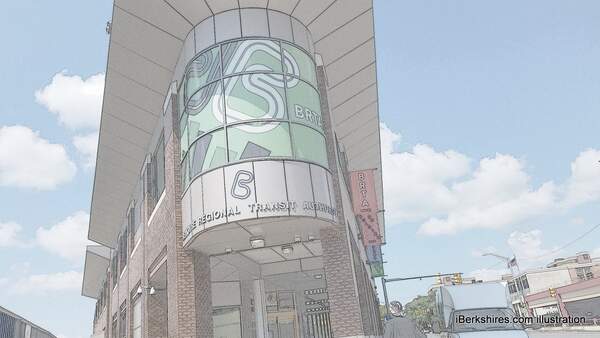
PITTSFIELD, Mass. — The Berkshire Regional Transit Authority is still working on maintaining its run schedules after dropping the route realignment proposal.

Last Thursday's meeting was Administrator Kathleen Lambert's first official meeting taking over the reins; retiring director Robert Malnati stayed during a transition period that ended last month.

Lambert is trying to create a schedule that will lessen cancellations. There was a two-hour meeting the week before with the drivers union to negotiate run bids and Lambert is working with the new operating company Keolis, which is taking over from Transdev.

The board spoke about anonymous emails from drivers, which Lambert said she has not seen. iBerkshires was not able to see those letters, but has received some. 

"They were lengthy emails from someone describing themselves as concerning BRTA employee, and there was a signed letter from a whole group of employees basically stating their concerns. So, you know, to me, it was a set of whistleblowers, and that, what my understanding is that this really triggers a need for some type of process to review the merits of these whistleblowers, not going to call them accusations, but basically expressions of concern," said member Stephen Bannon.

A letter iBerkshires received spoke of unhappy drivers who were considering quitting because of decisions being made without "input from frontline staff," frustration and falling morale, and the removal of the former general manager shortly after Lambert came in.

Lambert said it's difficult to navigate a new change. She also noted many drivers don't want to do Saturday runs and it has been hard negotiating with drivers on the new runs.

"I would like you all to keep in mind that the process of change is super difficult. Transdev has been here for 20 years, and some of these drivers have never known any other operating company, the way some of the operations have been handled has been archaic," she said. "So getting folks up to speed on how a modern transit system works is going to be painful for them. So I don't want to say that I'm unsympathetic, because I am sympathetic, but I am trying to coax people along with a system that's going to seem very strange to them."

The board spoke about better communication between them and Lambert, citing cooperation will be best moving forward.

"There's just a lot of stuff in the air right now, and there are a lot of fires to put out to make this a coordinated effort. And if we don't keep our communications open and be straightforward, then you get blindsided about how you know the input that you could get from us about your position, and how you know what's going on in your direction, and we get blindsided. And I think that we have to make sure that this is a collaboration," said member Sherry Youngkin.

"Both sides have responsibilities, because in the long run, this advisory board is going to have to make decisions as to how we brought forward and if we've gone forward in a fair and helpful way. And I think that's hopefully what everybody is looking for also." 

Transdev and Keolis held a three-day recruiting event interviewing almost 40 candidates and offering jobs to eight, but only three stayed on to start training. Lambert said it was disappointing but she will keep trying to retain more people.

In her first report to the board, she noted that ridership dipped a little over 10 percent, but still remains higher than last year, adding that was because of cancellations of services because of the lack of drivers.

Like the last meeting, some of the advisory board members were torn over the start of the Link413 service, worried that the start of the service took drivers away and the numbers of riders are low.

Lambert, however, said the ridership has doubled from last month.

"As I've spoken before, we have, generally, a six-month adoption for brand-new service before you can really go in and evaluate, are you being successful based on the grant that my predecessor wrote along with the team for PBTA and RTA, we are ahead of schedule, which is pretty good, so I'm hoping that will continue to improve," she said.

Member Renee Wood said the board never approved the service, adding the only thing she could find in the minutes was a vote to accept the equipment. She said it was supposed to be put on the agenda to discuss.

"The Link413 service has been three years in the making. It's been a grant that was accepted and has been working with our partners, PVTA and FRTA, to put into place. So I don't have the entire history of how that process worked, but it's been three years in the making, and did we not understand that once we accept that grant that we were going to put in new service?" Lambert said.

The board discussed if Title VI, the Civil Rights Act, was followed with an accurate review and accurate amount of time for public comment period on the service changes and if its attorney should review if the  grant conditions were properly followed.

Lambert said changes had the 60-day comment period included in the proposed route realignment packet, giving the opportunity for the community to respond to that as well but will look into the legality of the situation with their attorney.

View Full Story

More Pittsfield Stories