Letter: Homelessness May Have Contributed to Murder of Pittsfield Resident
 |
To the Editor:
At the turn of the century, I returned to Berkshire County, where I had grown up. I had been gone a score of years, starting just after high school. It is hard to impress how halcyon Pittsfield was in the '60s-'80s. Crime was virtually unheard of. I remember a big "news story" in The Berkshire Eagle about teenagers drinking beer in the woods by fires. During the '90s, when Pittsfield was in the very beginning of its economic downturn brought on by GE downsizing, there was little crime in Pittsfield. Historians generally agree that the 1990s represented a national high-water mark from crime, but the Berkshires by and large ducked it.
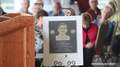
I remember sitting at the kitchen table as a child and my father talking about the one murder he knew of in Pittsfield. Apparently, sometime in the '40s, a man was having an affair with a married Lakewood woman. The husband of the adulterous wife knew that the man his wife cheated with commuted to GE going over the Newell Street Bridge over the Housatonic. The husband laid in wait, and as his wife's paramour was about to cross the bridge, the husband blew his brains out with a shotgun. Though it is an unresearched belief which should be taken with some skepticism, I believe for decades prior to the turn of the century, this was the only murder in Pittsfield. At least it was the only one that my parents seemed to know of. A quick search of the Internet reveals an unsolved murder of a "May Fosburgh [who] was found dead in her home on Tyler Street in Pittsfield, early in the morning of August 19, 1900." Perhaps a local historian could unearth other murders, but pre-2000, I suspect murders and shootings generally were relatively rare in the Berkshires. Research shows about six unsolved Berkshire murders in the entire 20th century. Today, on Merrill Street in Pittsfield, down the street from the Boys and Girls' Club where I played hockey as a kid, is a memorial for a murder victim in front of the old Notre Dame church.
I remember my father taking me and my siblings to Boston to Fenway Park. That was my first personal exposure to homelessness. The unhoused were called "derelicts" in those days: believe it or not, that benighted term was supposed to be the "polite" substitute for "bum." I spent much of the '80s and early '90s in Boston, when homelessness started to take off, but it was absent in the Berkshires upon my many returns. Then around the turn of the century, the unhoused population appeared at Park Square in Pittsfield and drive islands of shopping mall entrances. Then their numbers grew.
Then over the past five years I experienced a new phenomenon — several of the homeless people I met started to be people I personally first knew when they were part of the housed population. One of those beautiful but hapless people was Chris Hairston, the Pittsfield resident that was murdered while in Greenfield. A mutual friend and community leader Nicole Fecteau wrote on Facebook, "While it may never be known for sure, I believe the altercation that led to his murder at this apartment in Greenfield was Chris's attempt to find yet another couch for the night." When you don't have proper housing, you find yourself in questionable living circumstances.
Sure, Chris had his demons. Fecteau wrote, "I believe the chronic homelessness was the largest impedance to his ability to heal fully." As a nation, we have other priorities than homelessness: Congress just released $95 billion in foreign aid for wars.
Reading the Berkshire Eagle archives, you see a 2011 story about Chris appearing at a drum expo in Berkshire County: Chris was a drummer for many bands and drum circles. There is a 2007 story about Chris being a "Berkshire State Qualifier" in high school wrestling for Taconic in the 152-pound division. Chris in every normal sense was a part of our community.
I have a memory of many years ago, the Berkshire Fatherhood Coalition was in Pittsfield's Fourth of July Parade. I remember somewhere in the middle of North Street as our float progressed, marionetter Dion Robbins-Zust yelled to Chris. I remember Chris donning a Taconic band uniform with his drum. Chris was returning up North Street after the band was done. Dion yelled to Chris to get on the float. Chris, then young and buff, hopped on the float without hesitation, and smiled the whole way down the parade route for his second time, banging his drum and shouting glee to others. Chris was pure joie de vivre. On that day, with his future ahead of him, Chris was perfect, beautiful, and one of us. We should do better.
Rinaldo Del Gallo
Pittsfield, Mass.