Pittsfield's Wards 2 and 3 Candidates Take Questions
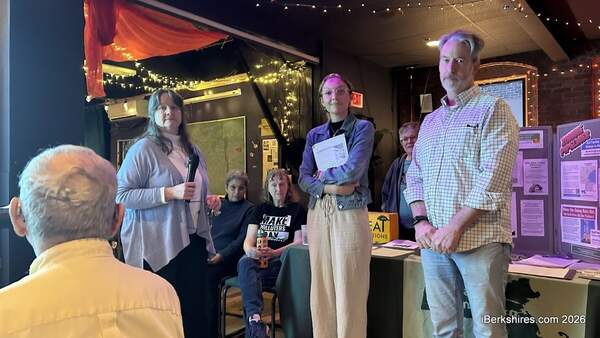
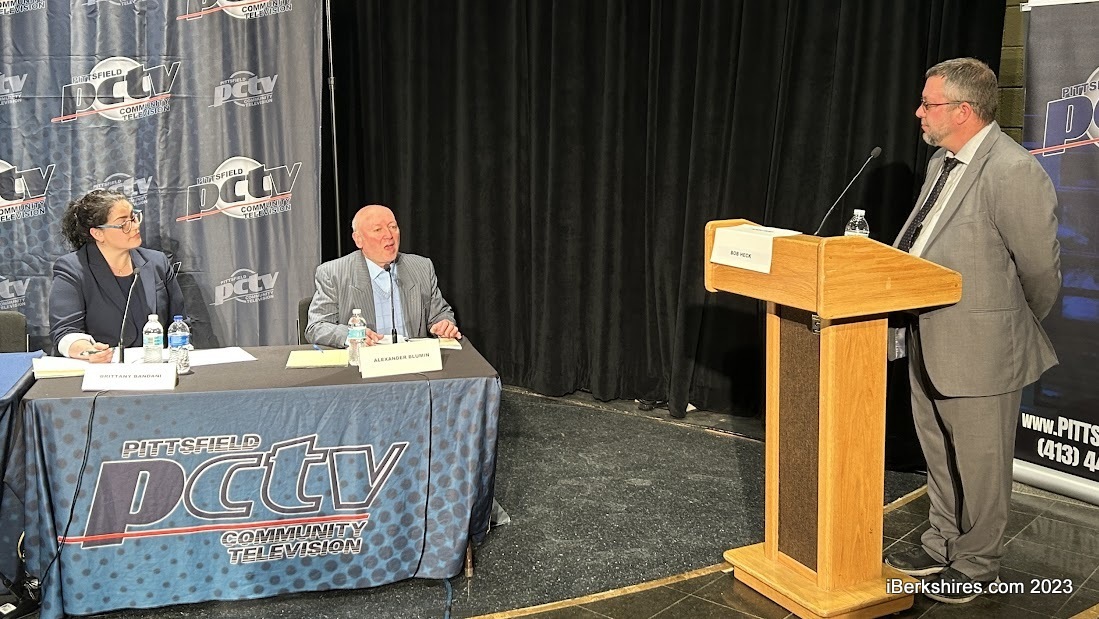
PITTSFIELD, Mass. — Three of the candidates in two wards showed up for a set of debates on Monday night at Berkshire Community College.
The debates, the first two that night, were hosted by Pittsfield Community Television in collaboration with iBerkshires.com. Bob Heck of PCTV was the moderator for both debates.
The Ward 2 debate started off rocky when candidate Alexander Blumin was late. Candidate Brittany Bandani had the first minutes to herself before Blumin arrived to take his seat.
The questions focused on infrastructure, finances, budgeting, employee residence, the actions of current Councilor Charles Kronick, and how involved each will be in the council.
Bandani is a newcomer to Pittsfield and to politics, which she said is a good thing for residents.
"As a newcomer, I'm not set in my ways. I'm ready to listen. As a practicing attorney, I understand the power that comes from careful consideration of all the facts and diligent decision-making. I do not come before you to promise that I'm going to completely change the city but I do promise that I know how to work in collaboration with others to achieve unified long-term goals," she said.
"My proposal to you is this: let's get back to basics."
She feels that much of local governance relies on simple questions about money, the community's needs, safety, business, and making the city a desirable place to live. Bandani said she does not pretend to have the answers but is prepared to have conversations and do the work.
Blumin is running to represent homeowners, business owners, and taxpayers in the city, promising that he will listen to the constituents of his ward before anyone else. He moved to the United States from Ukraine in the 1990s and is now a landlord for low-income and disabled tenants.
"I would like to bring power back to residents," he said. "We should make decisions, not special interest groups."
The candidate feels that the city's fiscal 2024 budget increase of nearly 9 percent is unprecedented and asked that voters choose wisely.
Before her opponent arrived, Bandani answered questions about economic development on Tyler Street and policing in the downtown. She stressed the importance of making commerce accessible in the corridor and making it a welcoming place to be.
On the financial end, she said there are grants and tax incentives to utilize but the city also has to be mindful of excessive code requirements that slow development.
"First and foremost, the financial aspect, making it usable for businesses to come here. Secondly, making Pittsfield a place people want to stay. It's one thing for people to come and be here for a year and then bounce. We don't want that. We want long-term talent here so that we can develop wealth, especially downtown, especially on Tyler Street," Bandani said.
"Part of that is cleaning up Pittsfield, making sure it's safe, making sure if people want to go out at night and want to go in and do things. We need more things for people to do so I think overall, making sure incentives are there and making sure that people want to be here and want to stay here is our most important priority."
She does not necessarily agree that the city needs more policing downtown but is not opposed. The candidate believes that there needs to be a focus on access to resources for people with mental health issues.
"Addiction is not a problem that can be solved overnight," she said. "So if people are struggling with that, especially downtown, then you need to focus on resources and resource availability."
Bandani sees a need for consistency in the Police Department, as it is currently under-resourced.
"We need new talent to come in. We need people who are ready to work. I know what things like mandatory overtime, it's costing the city a lot of money so we need good candidates to come here and work in the city," she said.
The two candidates were asked if they agreed with Kronick's sometimes controversial motions during his tenure, one being his charter objection that derailed the fiscal year 2023 budget approval.
Bandani appreciated Kronick and Ward 1 Councilor Kenneth Warren's efforts to request an audit for city and federal funds. She said in an ideal world, the city could do whatever it wants with American Rescue Plan Act funds, a focus of the audits after a discrepancy was found, but that is not the case because there are specific limitations to how it can be spent.
Blumin said people need to stop attacking Kronick and that he is a good councilor.
"Sometimes he makes mistakes. We've all seen them, however, let's get to the bottom of the issue," he said, explaining that he supports the audit of the ARPA spending.
Blumin said inequality between Precincts A and B is the most pressing issue in Ward 2.
"And definitely we have other issues like roads, like crime," he said. "Specifically where I live the area is saturated with homeless people, with certain people who commit crimes and that's a serious problem for Ward 2."
Bandani said infrastructure would be a top priority, citing the state of roads and sidewalks throughout the ward.
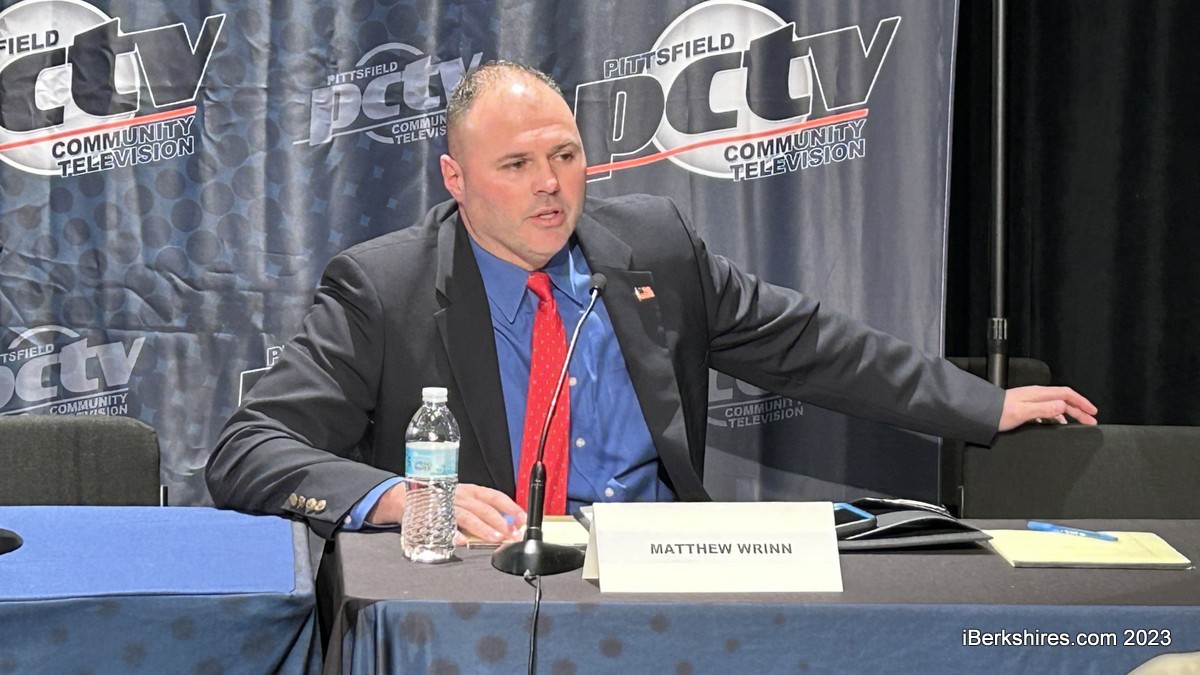
Matthew Wrinn had the Ward 3 debate all to himself when his opponent William Tyer was unable to participate.
Bandani was questioned about her lack of a website or social media campaign page. She apologized to voters for not making that effort but said she planned on holding constituent hours if elected. Blumin, a frequent attendee and speaker at City Council meetings asked why he had never seen her there. Bandani said she watches the meetings from home and takes notes.
He said he was ready to work with other councilors and the incoming mayor and pledged transparency if elected to succeed Kevin Sherman.
With a background in criminal justice, he's focused on public safety and, in terms of ward issues, he's heard from residents about flooding concerns and the recent installation of large speed bumps on a few streets in the ward.
"If the residents on this street want to slow down the traffic, it's a good thing. But let's figure out a way to do it," he said. "They're gaudy. They're ugly. They're gonna be problematic."
Wrinn said he'd support the pilot program on other routes used as speedways and would work with the city to find solutions for better pedestrian safety, especially for children walking to school.
He'll also be focused on the use of tax dollars "because I'm in the same boat as a taxpayer" stretching the dollars every month.
"I wouldn't say wasteful, but I think it could do better," Wrinn said of the budgeting process. "I think there's other ways to save money for taxpayers. Help the people in the city."
He is for the investment in historic Wahconah Park, seeing it as an opportunity to bring in revenue with games and tournaments. Bringing people into the city means they'll be spending money in businesses and restaurants and staying at hotels.
"Obviously it's wishful thinking but that's something that I am passionate about," he said.
He stood by his statement that he would have voted "100 percent" to continue mosquito spraying. "I'd say that the risk of mosquito-borne illness is higher than the potential to spray," Wrinn said.
He declined to be "pigeonholed" into supporting either mayoral candidate and thought that most of the councilors in this term had the best interests of the taxpayers but added, "I don't think that they all made the best decisions every time."
He thought the meetings were often chaotic and unorganized, and that the work of the council wasn't getting done because of the arguing.
No matter who's in office, he said, voters hope "they're going to do the best decision and make the best choices for the voters in the city."
Tags: debate, election 2023,