State Gets Millions for COVID-19 Testing Costs

Print Story | Email Story
BOSTON — The Federal Emergency Management Agency will be sending nearly $4.5 million to the Commonwealth of Massachusetts to reimburse it for the cost of providing testing for daycare facilities during the COVID-19 pandemic.
 
The $4,480,000 Public Assistance grant will reimburse the Massachusetts Department of Early Childhood Education and Care for contracting to provide testing services for early education and care (EEC) affiliated providers, staff, children, and families between March 2021 and June 2022.
 
The contractor operated mobile specimen collection sites, provided all equipment necessary for site operations, confirmed eligibility for testing, and handled collection and transport of all specimens.
 
"FEMA is pleased to be able to assist the Massachusetts Department of Early Childhood Education and Care with these costs," said FEMA Region 1 Regional Administrator Lori Ehrlich. "Providing resources for our partners on the front lines of the pandemic fight is critical to their success, and to our success as a nation."
 
FEMA's Public Assistance program is a source of funding for states and communities recovering from a federally declared disaster or emergency.
 
So far, FEMA has provided more than $1.5 billion in Public Assistance grants to Massachusetts to reimburse the commonwealth for pandemic-related expenses.


Tags: COVID-19,   FEMA,   


More Coronavirus Updates
Keep up to date on the latest COVID-19 news:


If you would like to contribute information on this article, contact us at info@iberkshires.com.

Berkshire Museum Explores Ancient Egypt With ‘Soulful Creatures’

By Sabrina DammsiBerkshires Staff
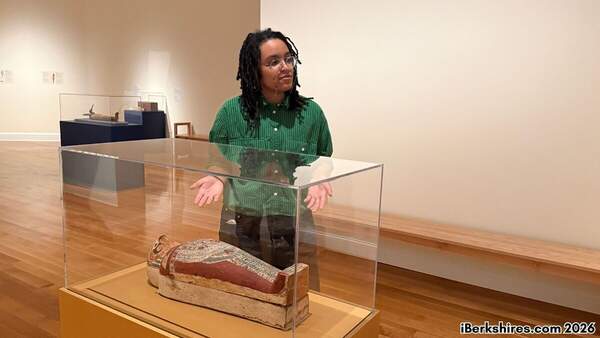
PITTSFIELD, Mass. — Following its multimillion-dollar renovation, the Berkshire Museum is welcoming an exhibition unlike any it has been able to host before.
 
Marking the museum's first major exhibition since its renovation, "Soulful Creatures: Animal Mummies in Ancient Egypt," opening Saturday, Oct. 10, thins the veil between the ever-evolving history of Egyptian culture and society and modern day people. 
 
"The most important thing about history is recognizing people from the past as actual people. Ancient Egyptians are no different than us," said William Dore, the museum's chief curator. "They have different cultures and beliefs and different viewpoints, but you can say the same thing about people today."
 
When audiences experience the exhibit, they will see the humanity in the people of the past, which in turn helps them connect with different views and perspectives around the world today, he said. 
 
Combining archeology with modern scientific imaging, Brooklyn (N.Y.) Museum curators Yekaterina Barbash and Edward Bleiberg designed an exhibit that works to uncover the mysteries behind these objects and the beliefs and rituals that surround them. 
 
"I think something that people kind of misunderstand about history is none of it's ever settled. ... History is a science that is constantly questioned,” Dore said. "It only works if everyone's constantly rethinking things, learning new things ... which is for me super exciting because as much as we know a lot about the ancient Egyptians, there's a lot we don't know.”
 
The installation features dozens of artifacts on loan from the Brooklyn Museum that explores the practice of animal mummification and the role animals played in ancient Egyptian religion. 
 
View Full Story

More Pittsfield Stories