Pollinators Abound in Search for Sweet Nectar
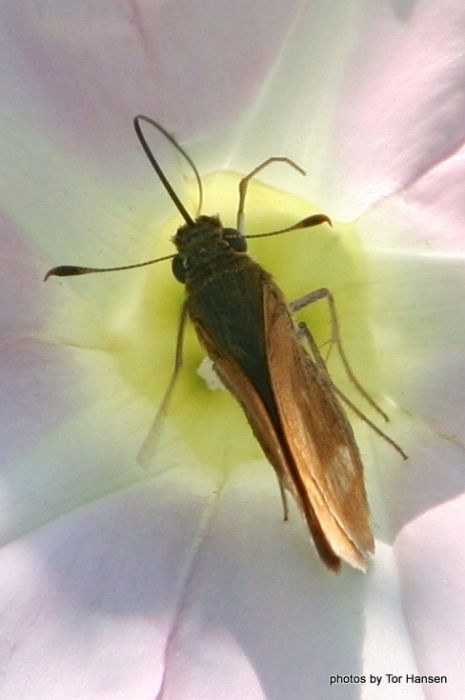
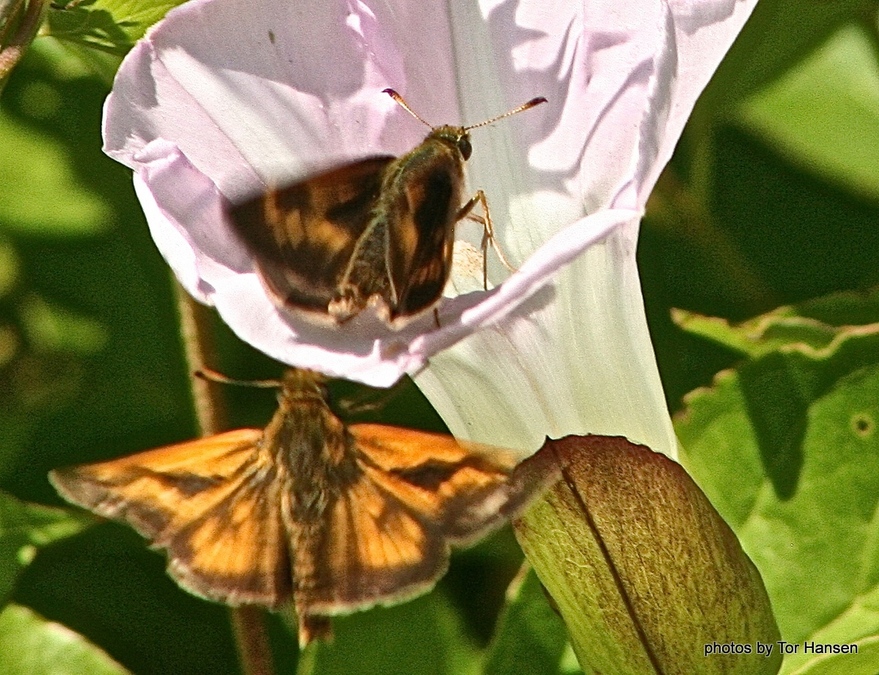
Long dash skipper stretching proboscis to secure nectar deep within a blossom.
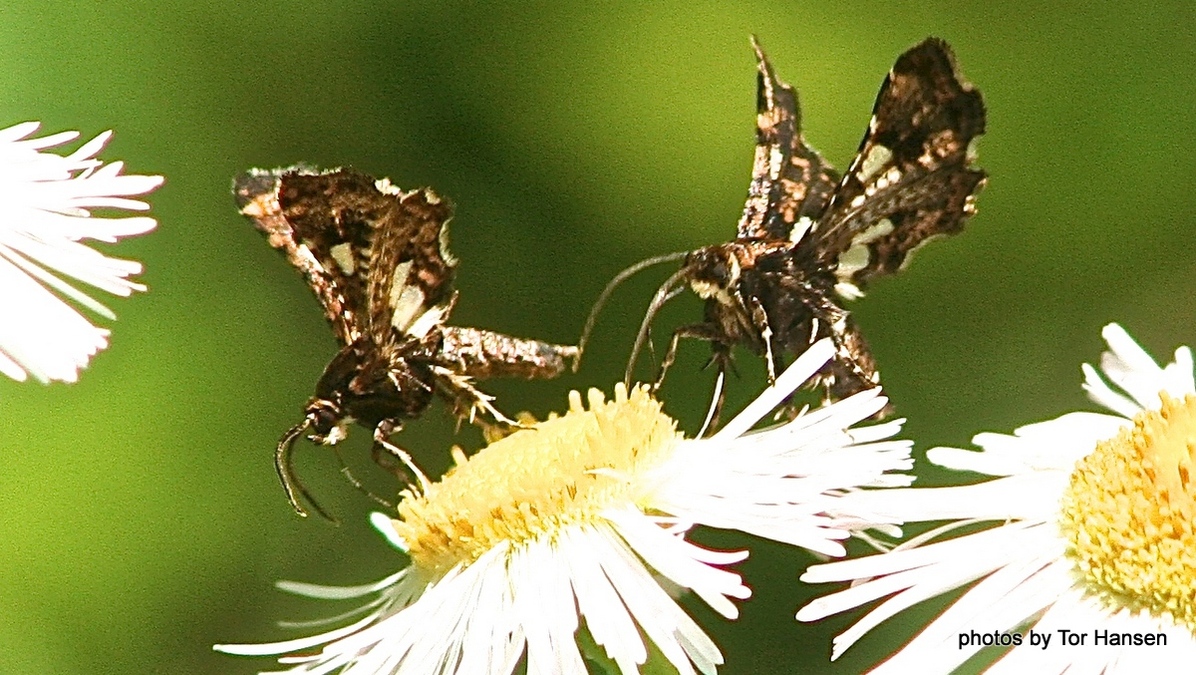
At first, the predominant moth is like a small sphingid moth with scalloped wings adorned with large white wing patches, with heavy body again like the hawk moths (family: Sphingidae).
However, the appearance may in turn mimic the sphinx moths. But this window-winged moth is Thyris maculata in family Thyrididae, not the Geometridae. See Charles Covell, author of "Eastern Moths" a Peterson field guide. Their abundance is well served, indeed a successful survivor much needed to complete the act of pollination, in comensal fulfillment likely promoting the floral DNA to fertilization.
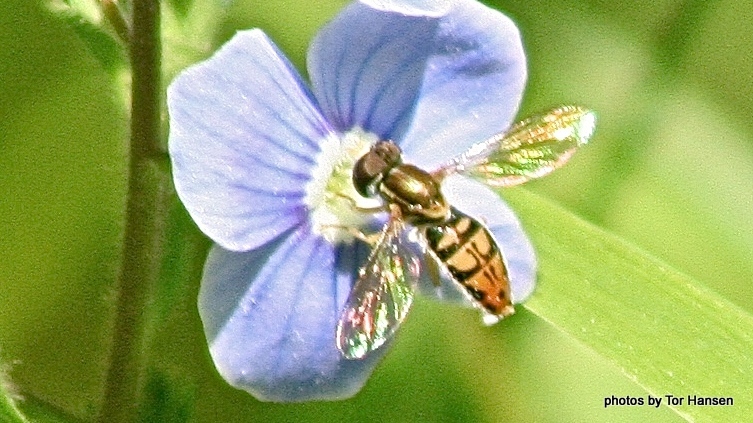
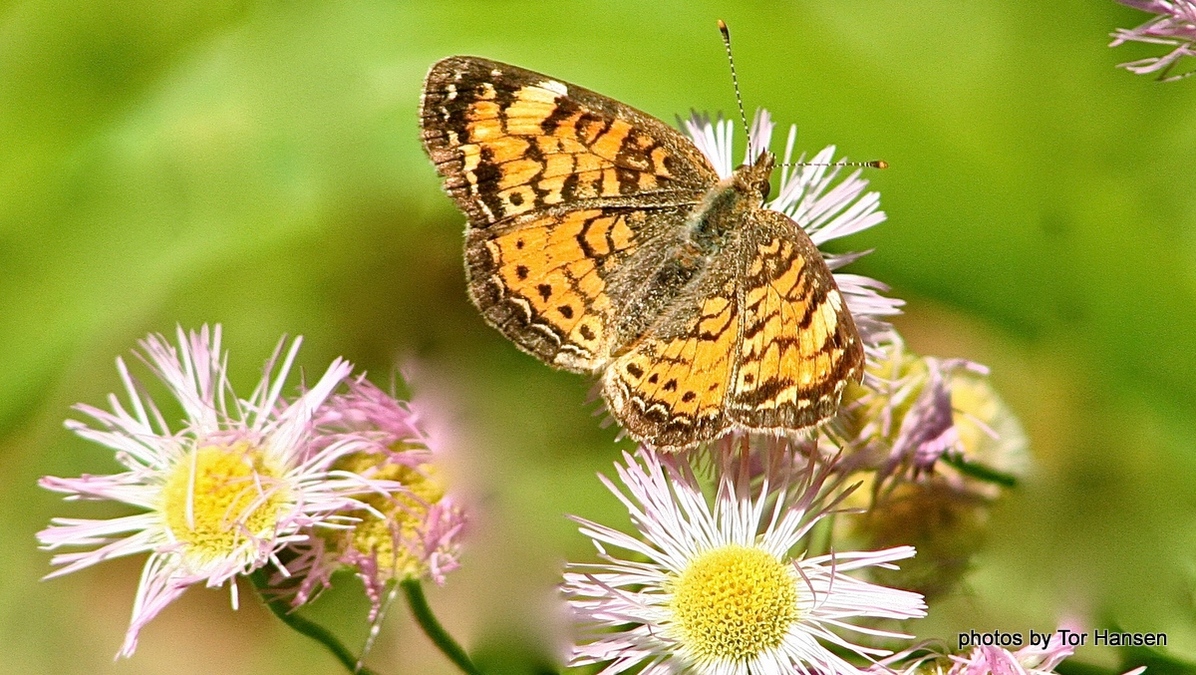
In exchange for cross-pollination, the moth imbibes fructose and glucose, natural sugars, to prolong its life and in time promote its own DNA. Thirsty wasps will bee-line to bump a butterfly off the oasis, as if to claim "Save some nectar or pollen for us!"
Often the moth holds its own; sometimes the wasp will displace the moth.
Another pollinator to follow is a dark-all but innocuous butterfly called the Southern cloudywing skipper (Thorybes bathyllus), widespread throughout eastern United States, and indeed a longstanding devotee of "sweet" pink clover nectar. As to morphology, external appearance, look for distinct white hourglass markings on deep brown. Its counterpart, the Northern cloudywing has less bold white marks. Both species may occur here in the Berkshires given the size variations in white spots found on the specimens seen.
To my own tastebuds, chewing a clover blossom does not reveal much sweetness. Coupled with other blossoms sampled for taste and noticeable nectar, hardly anything tangible leads me to conclude actual fructose or glucose obtained for fast energy by the butterfly remains a skeptical secret amongst the butterflies and other pollinating insects.
That is: For all that probing work to extract natural sugars to sustain spurious flight demands, their efforts may amount to not much reward for all their work. In their swift pursuit of nourishment in and about their microcosm, how commendable they are despite exposing themselves to possible predatory annihilation. Then again, I am not a butterfly!
Frequent rains in May and June help to grow the nectar rich weeds and shrubs that can enhance and sustain butterflies in July and August. Surface aquifers and springs extend the random root growth of likely clovers, fleabanes, ox-eye daisy, that will set the stage for milkweed, dogbane, and later blooming Joe-Pye weed, a welcome oasis when other nectaries are spent and senescent. Thick stands of goldenrod compete for living space, and creeping vines strewn over the fields in an overgrown pattern like bindweed, here showing sporadically, their pinkish-white trumpets like morning glory attract acrobatic long dash skippers (Polites mystic). Pollinators indeed!
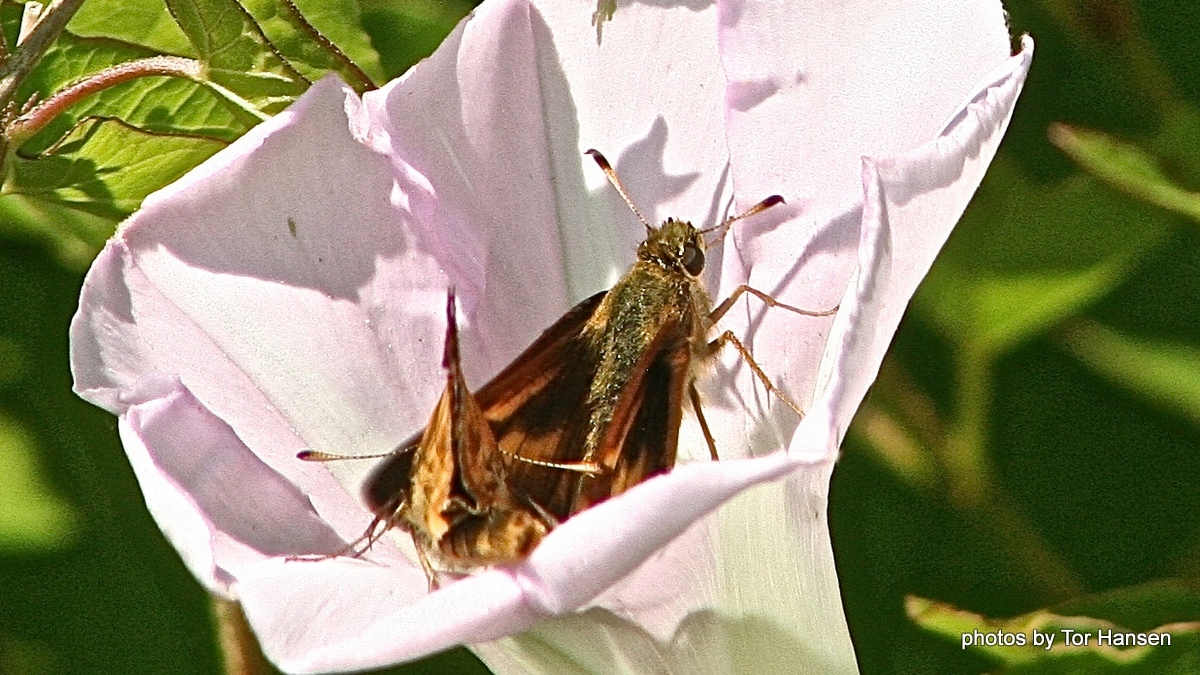
Talk about habitat utilization. These brown sugar-like busy bodies show acute skills in locating nectar wells, and securing a mate by pheromone attraction, and even ritualized procedure to promote mate selection. Long dash skippers are the only skipper specie that will alight inside the bind weed's corolla and proceed to extend its long proboscis to sip nectar.
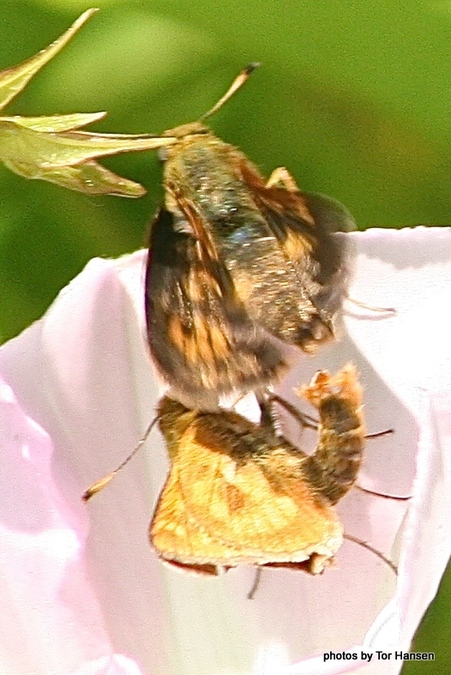
When both sexes are present in the bind weed's corolla, eager males with antennae atwitter, with one tarsal toe can stimulate mating by touching the female in a certain "vogel area" located near the vortex of wing veins on the ventral underside forewing. Equipt with specialized sensory cells, with the male's instinctual touch, the female vogel organ is thought to facilitate or induce mating. It is thought to be an ear to pick up vibrations warning the skipper to flee danger, or an incoming predator.
Skippers play an important role in pollinating herbaceous plants, are widespread, and are quite diversified with 36 species in the Berkshires, and 14 species recorded at Mountain Meadow. These skippers have evolved with long proboscises, specialized tongue-like sucking tubes that find the deep seated nectar, wielding lengthy flexi-straws with amazing agility. The photo record shows the male inverts his body and raises his abdomen with claspers to grip the female and attach its aedeoagus (the male reproductive organ), provided she is receptive.
Several species including monarchs can enact multi-tasking, such as while mating with one male the female can be imbibing for nectar, here at milkweed. These two long dash skippers did not couple, even though the bind weed appears like a giant chalice, and a fine choice for a honeymoon.
Tor Hansen is a naturalist writer, photographer, and musician, in North County.