Microcosm Holds Surprising Pollinators' Diversity
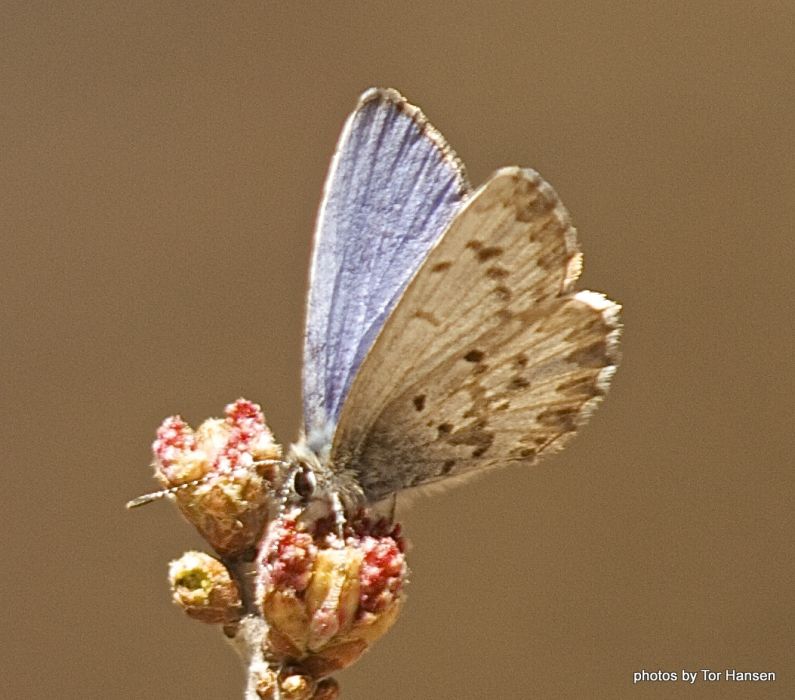
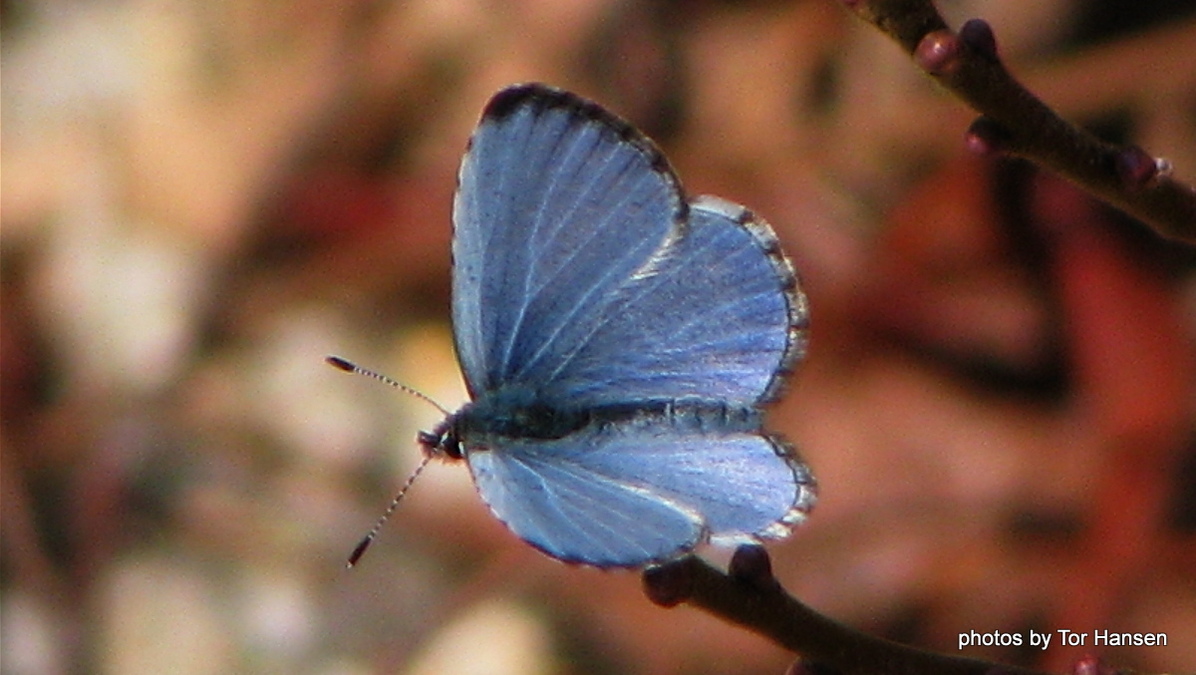
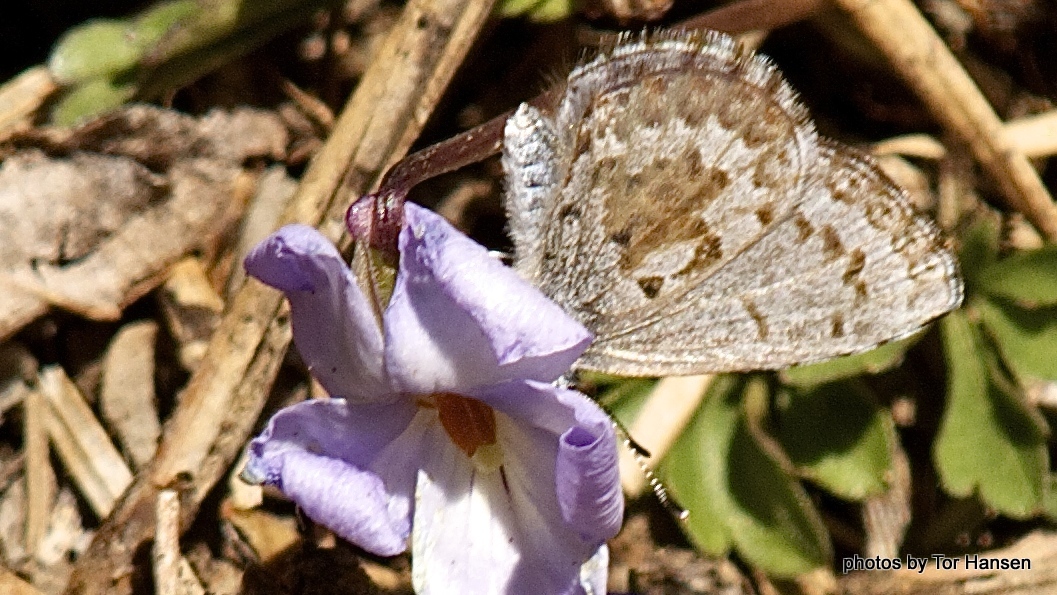
Note the underwing camouflage gray and the upper-side wing of sky blue for this spring azure on a red maple.
Just pretend to drop down in scale until you are a tiny person, like in "Gulliver's Travels" by Jonathan Swift, walking among the mushrooms and fleabanes in bold bloom towering above. What a dynamic environment is the microcosm surrounding you with its assorted insect fauna.
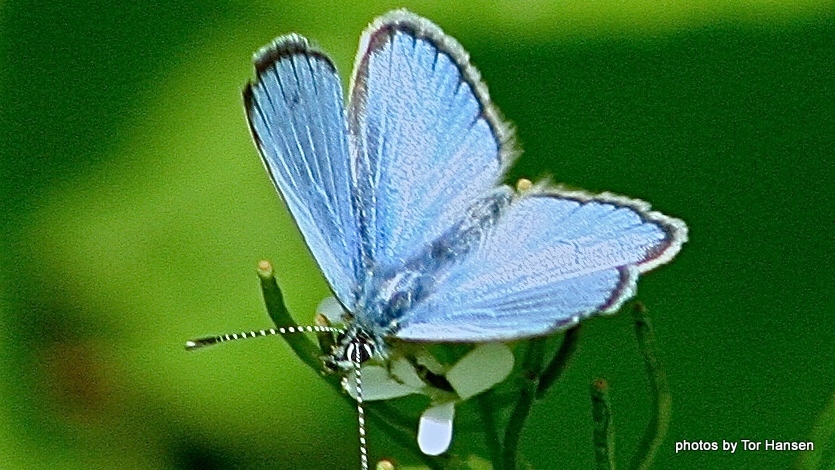
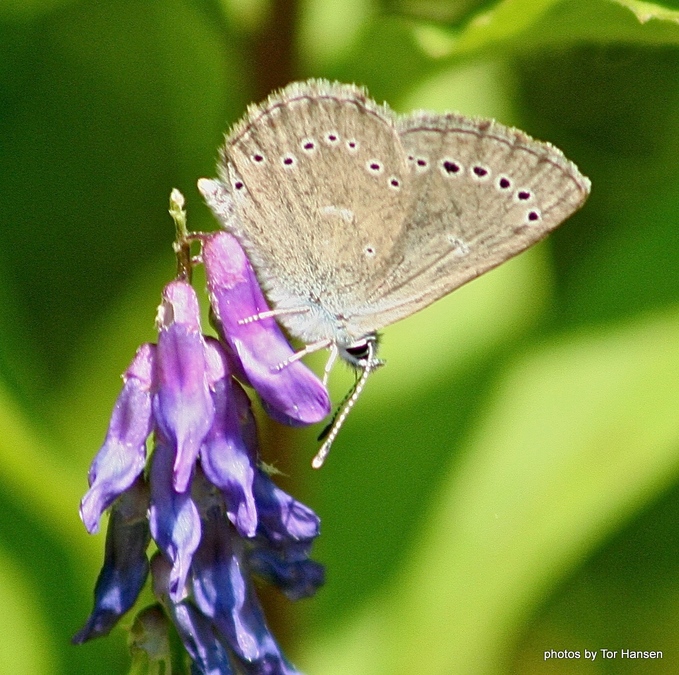
Before long you may encounter one of our smallest butterflies, a spring azure (Celastrina ladon) imbibing at red clover, appearing gigantic in reduced scale. Pause for awhile as you may become mesmerized by its stunning overall sky-blue upper wing scales, and become fascinated by its ability to suck up nectar with its uncoiled proboscis. Look for black ants not attacking with their huge powerful jaws, but with "antennae a twitter," tending the butterfly's segmented larva, that in appearance suggests a segmented gum drop.
Well known in research literature, this association is an expected novelty since like other "blues" that exhibit the same phenomena, spring azure is also a lycaenid, in the family Lycaenidae, wherein a curious and complicated story plays out.
Back in normal scale, I will have to wait until next spring to discover a real spring azure larva-milking event, since they are single brooded, and larval growth phase is passing with the seasonal calendar.
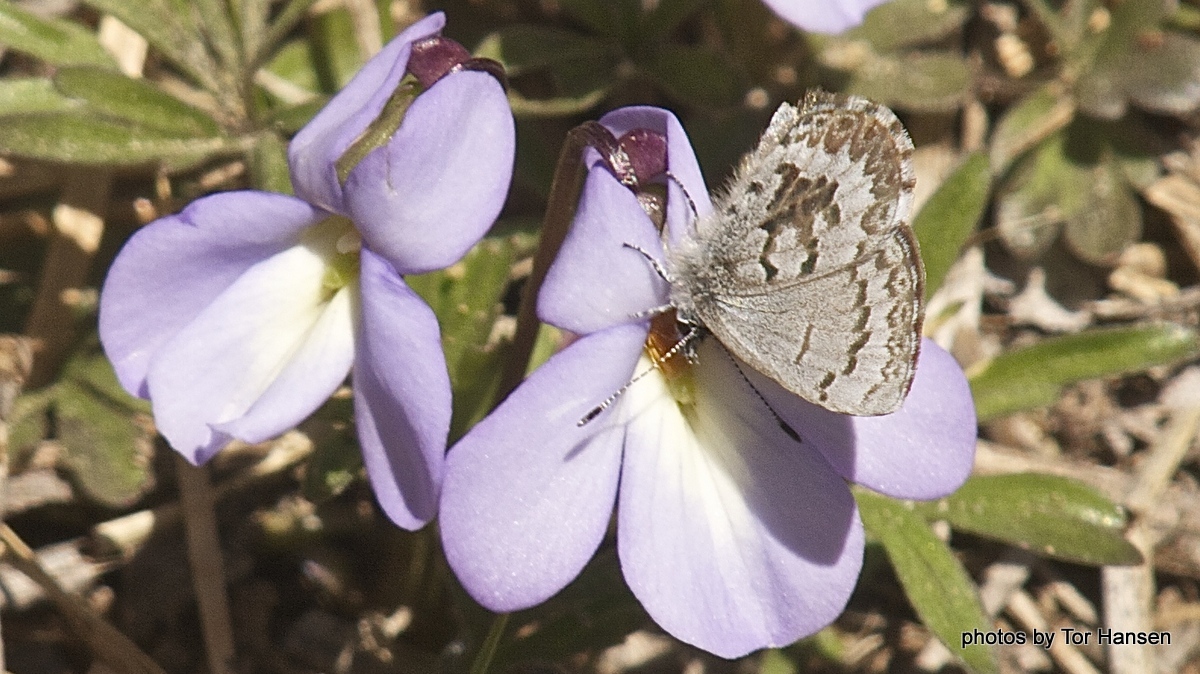
These early bird "spot of blue" tiny butterflies appearing along the trails in the Berkshires are certainly harbingers of spring. They seek out trailside violets where they imbibe nectar, often inverting upside-down in their assorted skills to rearch the nectar wells within the violet's blossom. However, I did observe this same phenomena in the ants and larva milking in another Lycaenid, the silvery blue.
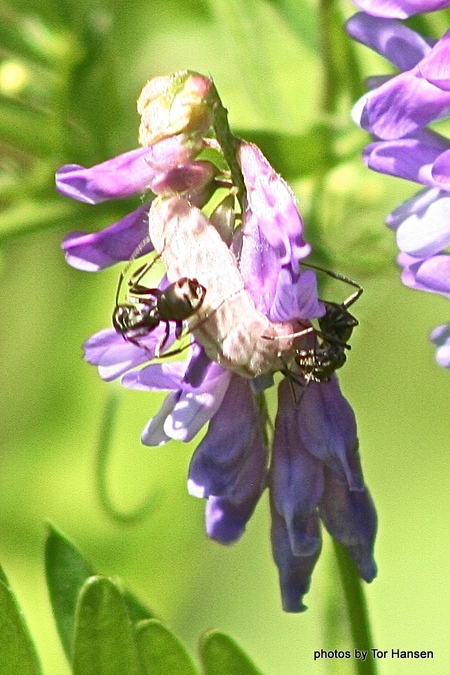
In my ramblings at key butterfly habitats, this important discovery was overlooked. Because I knew to take a closer look at cow vetch for its role in co-evolution as a nectar source, I found some ants fussing at the blossom. The date was June 23, 2019 at Mountain Meadow Preserve (Trustees of the Reservations) in Williamstown, the Berkshires. At first I thought the silvery blue larva (Glaucopsyche lygdamus) was part of the blossom of cow vetch.
Upon further review back at my studio I went to improve the focus in the photo — low and behold, there is a "segmented" flower ... wait ... I keyed it out to be not as expected, the eastern tailed blue, but another record for ants and the silvery blue instead!
Yes, this new observation adds yet another Lycaenid blue (family: Lycaenidae including coppers, blues, hairstreaks, elfins, and harvester) found to evolve in the commensal company of tending ants, that highly value its "sweet honey dew," a sweet secretion rich in nutritive substance secreted by the larva, indeed
valuable for growth and development for the ant colony!
By comparison a well-known human novelty is how much we welcome cold ice cream or frozen yogurt not only for the sugar lift, but also something nourishing all the while beating the heat. This shared craving is certainly worth a laugh. To the ants, the mermecophagous larvae (ant loving and sugar substance loving) have evolved specialized tentacular glands on segment A8, that may be open for business like an ice cream vendor, yet neatly evolved to attract the ants. Elaborate studies have revealed a symbiosis occurs here (association and dependency is beneficial to both). The "honeydew " secreted by the larva is important food for an ant colony. At day's end the ants may shepherd the larva down into the ant labyrinth and out with a new day.
Please see the remarkable book by David L. Wagner, "Caterpillars of North America" (2005 Princeton Univ. Press), to find a clear photo of the similar ants and the silvery blue, already known to science. I suspected there would be more to the role of cow vetch than previously known. Although not new to science exactly, this Lycaenid larva and the ants is still an evolutionary novelty and indeed a bio-gem at that. To key out what species of ants is involved in this mutualism may take some time. Just how much the ants depend on the presence of the silvery blue invites a thorough searching the literature in Wikipedia.
The funding of significant research to enhance our understanding as these discoveries come to light underlines our perceptions of the importance of biological diversity in nature. Speaking of novelty, when I served as an intern at Southwest Research Station of the American Museum of Natural History in the Chiricahua Mountains of Arizona, various scientists working on their own biological research would gather together for lunch in the co-op. We were treated to an amusing desert indeed by distinguished ant expert (hymenopterist) Jerry Rosen, Ph.D., then vice president of the museum, who served us honey-pot ants he had excavated from South Fork in Cave Creek Canyon.
Each ant selected by workers in the colony is suspended upside-down and is fed special nectar to become a large reservoir for honey-like fluids, and on a scale with Gulliver's Travels transformations, would amount to a huge storage Ali Baba jar for the larvae to grow into future ants. What a stir among those gathered to acclaim the sweet taste and big volume of each ant! Our cheers and applause acknowledged Doctor Rosen for bringing for us special attention to such hidden secrets in evolutionary biology.
Tor Hansen is a naturalist writer, photographer, and musician, in North County.
Tags: berkshires wild, butterflies,